Newsletter 659 – February 2026

By | HADAS, Latest Newsletter, News, Past Newsletters, Volume 12 : 2025-2029 | No Comments

No. 659 February 2026 Edited by Andy Simpson

HADAS DIARY – Forthcoming Lectures and Events

Tuesday 10 February 2026 Dr James Bromwich ‘Great archaeological discoveries and great archaeologists of France’ POSTPONED DUE TO UNFORSEEN CIRCUMSTANCES

Speaker will now be

An old friend of HADAS – Robert Stephenson – LABYRINTHS WORLDWIDE & IN LONDON

The labyrinth pattern is thousands of years old and found in nearly every culture around the world. This talk examines their construction and the secret of their enduring fascination with examples from abroad, the UK and in London. It also demonstrates how to draw a labyrinth.

Tuesday 10 March 2026 Les Capon from AOC Archaeology will talk about ‘archaeological materiel evidence from Bricks to Gold’

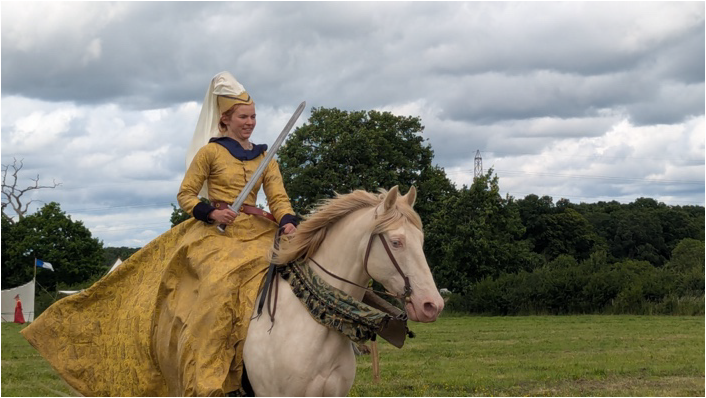
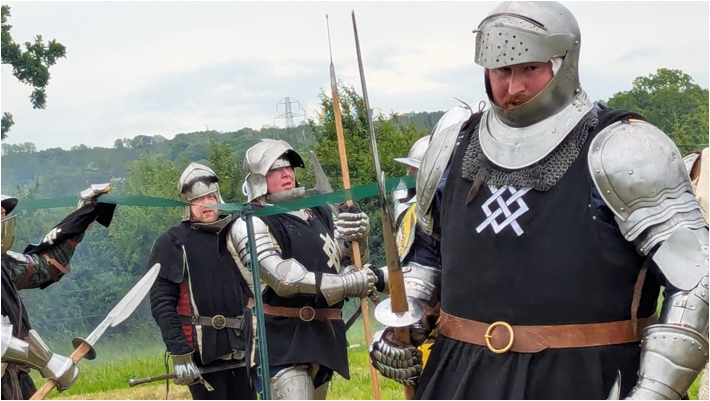
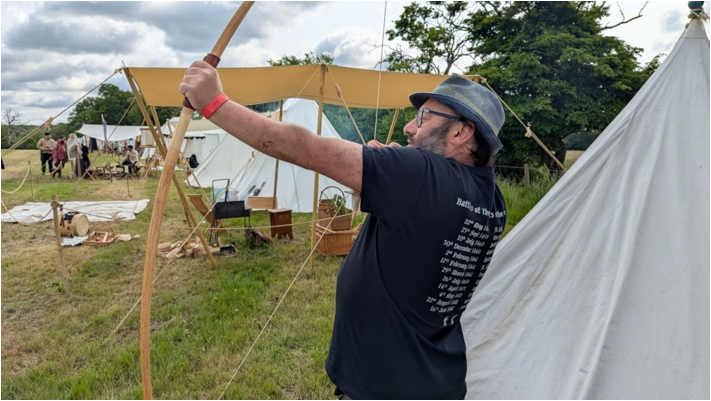
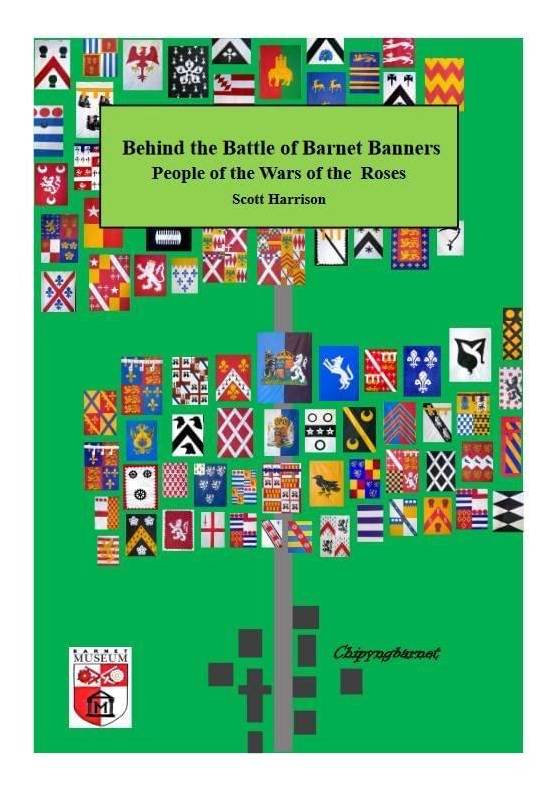
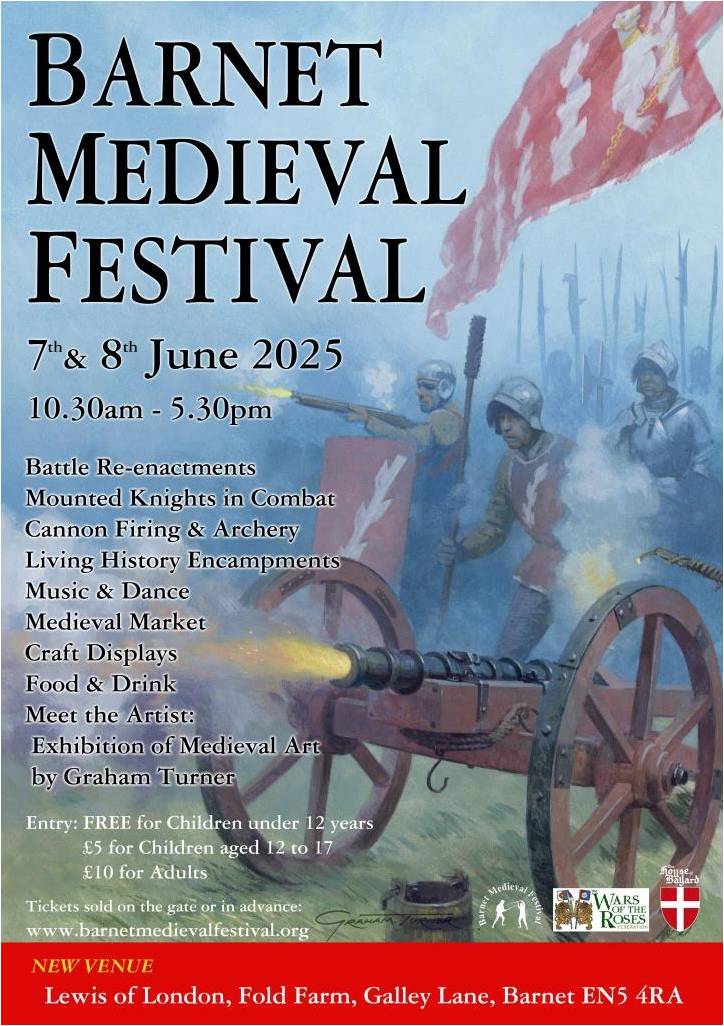
Tuesday 14 April 2026 Scott Harrison on ‘Behind the Battle of Barnet banners; People of the War of the Roses. The lives of people that fought at the Battle of Barnet and the life, society and culture of the late fifteenth century’

Lectures held in the Drawing Room, Stephens House& Gardens, 17 East End Road, Finchley N3 3QE.7.45 for 8pm.Tea/Coffee/biscuits available for purchase after each talk.

Buses 13, 125, 143, 326, 382, and 460 pass close by, and it is a five-ten-minute walk from Finchley Central Station on the Barnet Branch of the Northern Line where the Super Loop SL10 express bus from North Finchley to Harrow also stops.

THE APRIL HADAS TRIP SUE LOVEDAY

If interested, do let HADAS Chair Sandra Claggett know (contact details on back page) as we are currently under the number needed for the trip to go ahead at the price quoted. We are investigating other options such as the impact on the cost for less people and/or possible deferment of the trip to later in the year.

LAST DAYS OF POMPEII JANET MORTIMER

A few months ago myself and fellow HADAS member Barbara Thomas went on a tour in Italy where we were lucky enough to have a hotel room where we could sit on our balcony and gaze across the Bay of Naples, dominated by the magnificent Mount Vesuvius. On this tour we also visited both Pompeii and Herculaneum to see for ourselves the devastation caused by the eruption. So when we saw the Last Days of Pompeii immersive experience advertised at the Excel London, we were keen to go.

1

And what a fun experience it was. It started with exhibits and information on Pompeii and you proceeded through several different rooms all with different experiences.

One room told the story of life before and during the eruption, and in others you wore a headset to become part of the action with frightening reality. You are right in the centre of the arena with two fighting gladiators and you find yourself shrinking away from them as they almost brush past you.

When the volcano starts erupting and flaming boulders hurtle towards you, you actually dodge out of their way.

There is another room where you wander around with your headset on, becoming a disembodied statue’s head and hands, moving from room to room in a Roman villa where it shows you how rooms would have looked before and after the destruction. In reality you are just wandering around one room, where the staff are greatly amused by your actions as you try to touch things or avoid things that are not really there.

It really was a brilliant way to spend an hour or two and to experience what life must have been like then.

2

THE SANDERS LANE BRIDGE ANDY SIMPSON

Some readers will know of Sanders Lane NW7, which joins Bittacy Hill just north of Mill Hill East station on the Northern Line. Until August 2025 it crossed the disused tracked of the former Edgware, Highgate and London Railway, later successively Great Northern Railway/London North-Eastern Railway/British Railways operated line by a bridge constructed around 1880.

The line itself had received Parliamentary Authorisation in June 1862, and opened to Edgware on 22

August 1867, a month after the financially troubled original company was absorbed by the Great Northern Railway, forming one of the three ‘Northern Heights’ lines also serving Alexandra Palace and High Barnet on a low range of hills forming the Hampstead Ridge and the 430ft summit at High Barnet.

Steam- hauled passenger services shuttling the four mile, ten-minute journey between Finchley Church End (renamed Finchley Central 1 April 1940) via Mill Hill East and Mill Hill the Hale (Bunns Lane) to Edgware LNER ceased on 10 September 1939, replaced by buses, supposedly a temporary suspension to permit electrification and the planned and part-built extension beyond Edgware via Brockley Hill (where the part demolished uncompleted arches can still be seen) and Elstree (South) to Bushey Heath with anew depot at Aldenham (later used to assemble Halifax Bombers during WW2, and then as a London Transport bus overhaul works) as part of the 1935-40 New Works Programme.

The sleepy Edgware line was known locally as ‘The Pig’ for reasons lost in time, with 26 trains a day each way by 1938 on a ‘one engine in steam’ basis with limited signalling.

Work actually began at East Finchley in November 1936, and beyond Edgware in June 1939. This work was never completed, being suspended due to wartime conditions in November 1939, the section beyond Brockley Hill to Bushey Heath abandoned in October 1950 and eventually the whole extension was cancelled on 9th February1954.

Although double track with current rails had been laid as far as Mill Hill (The Hale) intended as an interchange with Mill Hill Broadway LMS station on the St Pancras – Bedford main line, the only part actually completed was the 0.9 mile-long single line branch from Finchley Central to Mill Hill East, opened mainly to serve Mill Hill’s Inglis Army infantry Barracks on Sunday 18th May 1941. Passenger services beyond to Edgware never resumed.

With closure initially proposed in October 1962, the last regular freight service to Edgware Goods, carrying mostly inwards bound coal and other bulk goods, which from December 1961 were all diesel hauled using 800hp Type 1 Bo-Bo locos, ran on 4th May 1964 with official closure from 1 June 1964.

Due to construction of the M1 motorway extension in the Mill Hill Broadway area the track beyond the current buffer stops at Mill Hill East was rapidly lifted for scrap, the last few yards beyond Sanders Lane bridge to Mill Hill East using a demolition train hauled by diesel D8235 on Saturday 19th September1964; the last BR train of all to Mill Hill East ran four days later to remove redundant materials. The land was gradually auctioned off.

A dwindling need for BR locos on Underground stock transfers to Highgate Sidings south of East Finchley saw the last BR train leave Highgate Sidings for Drayton Park via Crouch End on Sunday 4thOctober 1964. Since then only London Underground stock has run on these lines, although the three miles of former BR track from Highgate to Drayton Park was last used on 29th September 1970 and was lifted in January 1972.

3

In recent years the bridge has become badly cracked with areas of brickwork falling away, making it unsafe for further use. It was closed to road vehicles in 1993 and to pedestrians in March 2023.

In the 1960s B/W view on the following page, the current Mill Hill East terminus is behind the photographer; on the left is the site of part of the former Mill Hill East North Goods Yard, extended around 1942 to accommodate wartime army traffic, but closed 1 October 1962 along with the BR goods yards on the Barnet branch of the Northern Line.

These sidings had included a private siding serving the former Mill Hill East gasworks, opened in 1886, which under later North Thames Gas Board auspices ceased gas manufacture – and hence the need for coal trains, invariably hauled by LNER Gresley 0-6-2 tank engines which handled all freight on the Edgware and High Barnet lines – in November 1961.

By 1956 four coal trains a day were needed to serve the gasworks plus two daily goods trains to Edgware. In 1960 the gasworks received some 68,000 tons, mostly coking coal for coal gas manufacture at the gasworks, in 5,640 wagons – a significant loss of traffic.

Despite rules on number of wagons on tube lines, on a Monday morning trains of over 60 empties frequently came out of Mill Hill Gas Yard, since the Saturday and Sunday trains always returned to King’s Cross light engine, leaving their loads to be emptied over the weekend. They ran via East Finchley at 40mph or more. All those clanking and banging coal wagons must have been a sight (and sound) to behold…

In the opposite direction, the rules permitted one train down the single line to Mill Hill at any one time, so the Edgware goods train could be followed by a gasworks train and then one for Mill Hill Military Yard.

Each train was protected by a ground frame controlling the points that was locked by a passenger train being in the platform at Mill Hill, so the signalman could let all three goods trains out, one at a time.

After the gas works coal trains ceased, there was a reduced freight service on the Edgware branch as of 6th November 1961 with just one train to High Barnet and one to Edgware daily. A regular morning freight worked to Edgware via Finchley Central and Mill Hill East throughout 1963, becoming an ‘as required’ service in 1964 until final closure.

Just to confuse matters, Edgware was part of the London Midland Region, served by Eastern Region trains running over tracks maintained by London Transport!

Steep gradients of up to 1 in 59/60 meant trains were normally limited to 14 loaded wagons worked at 20 mph over LT tracks.

The Edgware branch averaged 12 loaded wagons a day outward to Clarence Yard, Finsbury Park. There was a rule that no more than 19 wagons, including the brake van, were to work over the tube lines.

4

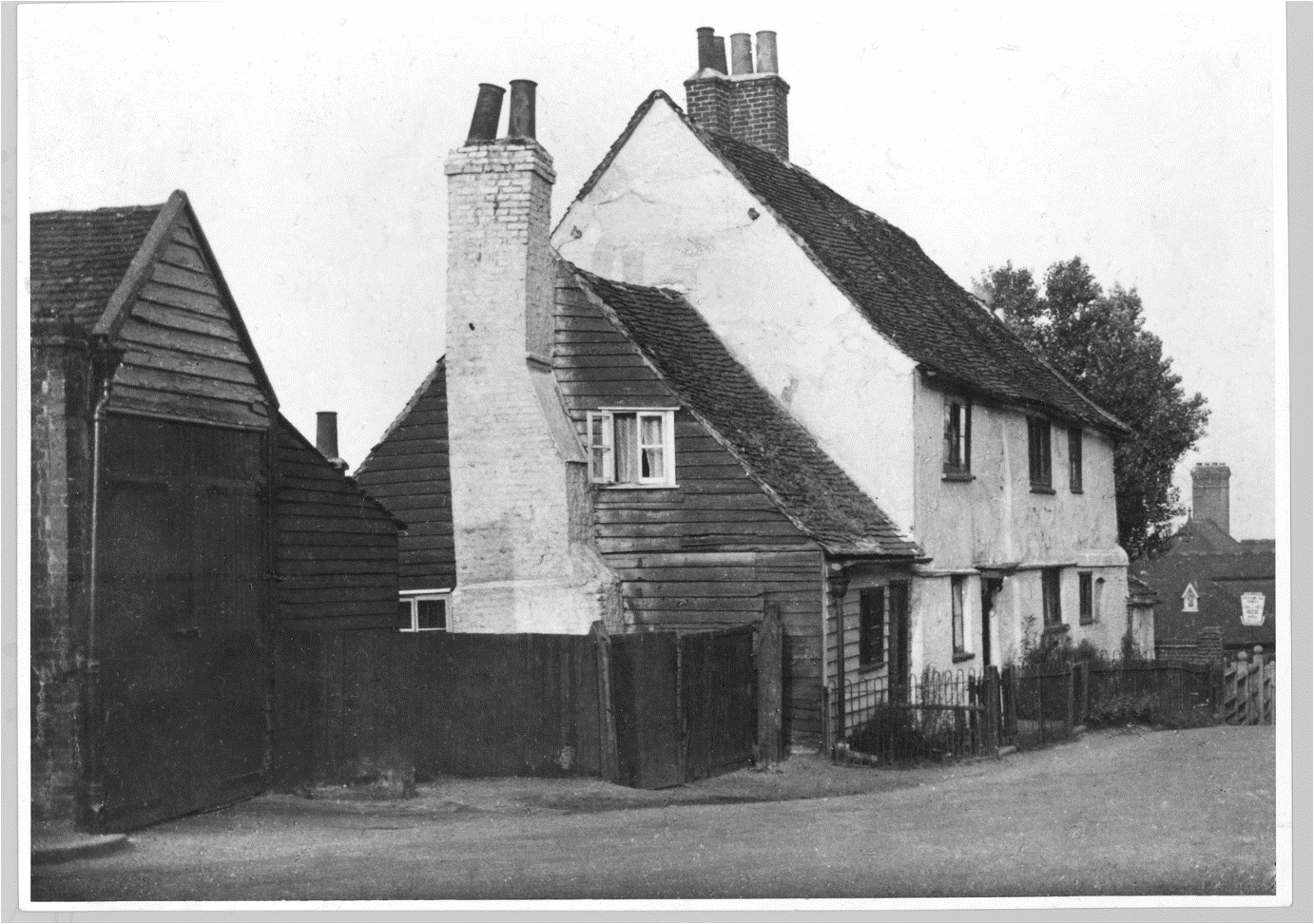
Sanders Lane bridge in the mid- 1960s, not long after track lifting looking towards Edgware;
Original photographer unknown; Author’s Collection.

(next page) View from similar angle just prior to demolition, August 2025.

The area behind the photographer is now occupied by two blocks of 1960/70s houses, recently extended, with the grassed area as their communal garden. They would have been in the way of a proposed late1980s re-extension of the line as a single track around 1.3km to serve a basic station and probable shuttle service to serve Copthall Stadium and golf course and the surrounding parkland.

The original 1930s scheme had also considered a station in that vicinity. Barnet Council wanted to improve access to the stadium, but they were somewhat startled when London Underground announced that it was investigating the proposal on 16 July 1990; it would also serve the housing planned for the 22-acre Inglis Barracks site. It was anticipated that if the million pound plus funding could be found it would open by 1997. The scheme was halted on cost grounds but discussed again in 1992, but the cost-benefit analysis did not support the plan, and it does not seem to have been mentioned since.

A decade or so later The Brent Cross Coalition, in advance of the construction of Brent Cross New Town, proposed a similar route extension, to be built as a light railway extended beyond Copthall past the RAF Museum via Grahame Park Way to Colindale and Kingsbury Road to Hendon National Rail station. Again, nothing came of this proposal.

The recent housing extensions and blocking of the track bed by the new pedestrian/cycleway causeway now blocking the track bed where the bridge used to stand would seem to mitigate against any further such proposals.

5

The HADAS connection

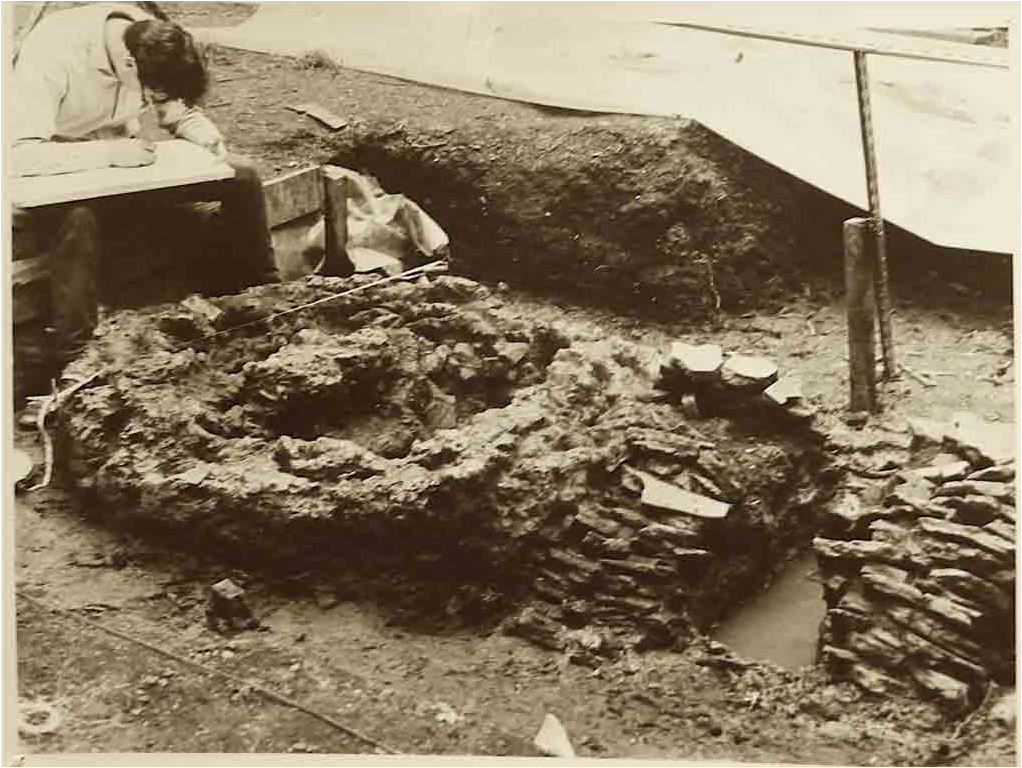
Interestingly, HADAS excavated close to the Sanders Lane bridge between 27 July and 28th August 1967, Site B, at OS ref. TQ 23239139, SMR ref 081961 and 081877. Directed by Brian Robertson, HADAS dug in the south bank of the disused railway cutting of the former line to Edgware, at a point where a stile adjacent to a public footpath had formerly permitted pedestrians to cross the track.

This was during investigations into the line of a postulated late Roman Road from Verulamium to Londinium via Mill Hill, known as Viatores route 167 from the 1960s research group who suggested it.

As reported by Robertson, Site B comprised both the south bank of the railway cutting and the relevant portion, of Copthall Fields (Areas 1 and 2) which were included in one grid based on the Sanders Lane road bridge over the railway at TQ 232914. The base line of the grid was laid along the track bed from a point 14 ft. along a line joining the west face of the two supporting piers. This point was at a perpendicular distance of 11 ft. 1in. from the brickwork of the northern pier. The north-west corner of the grid was located 240 ft. from this point and a grid of 10 ft. squares was laid.

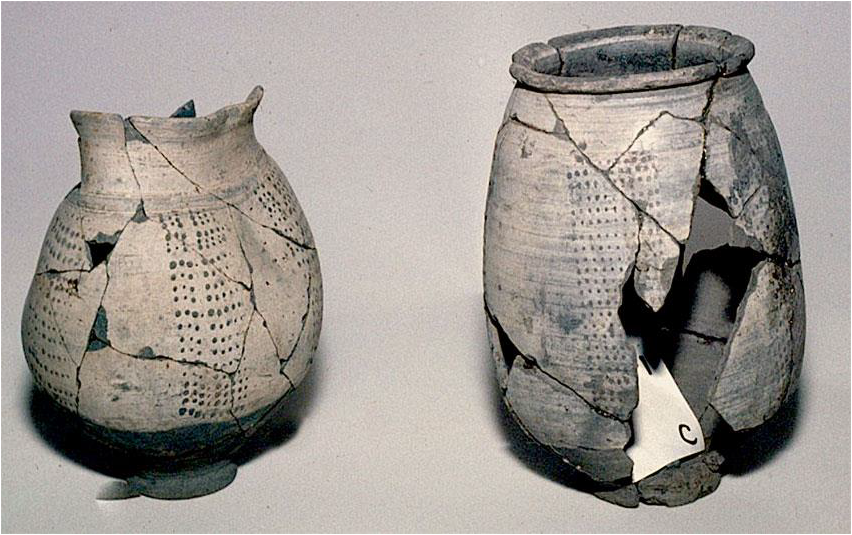
Following a resistivity survey HADAS found not this road but another one, relatively short-lived and of mid-late first century date from the 120 or so sherds of mostly greyware pottery (some of native Celtic British style, and others similar to pottery from the Highgate kilns) found in or near the roadside ditches,21 feet wide with a packed pebble and cobble surface, running north-south.

The Society corresponded with a Mr. Morris, the Clerk of Works of the Estates and Surveying Department of the London Midland Region of British Rail as the cutting was still BR property at the time just three years after track lifting, and he visited the site and approved the proposed works.

6

It was reported in Helen Gordon’s paper ‘A Roman Presence in the Borough of Barnet’ HADAS NL 102,10-11 (1979) and AN INVESTIGATION OF ROMAN ROAD No. 1671 BY BRIAN ROBERTSON (Hendon and District Archaeological Society) TLAMAS 22 pt 3 1

The original site archive folder, including the excavation diary and exhibition captions, is held by HADAS. Herewith the original site plan;

7

Further view taken August 2025

Note the unused London Transport iron cable brackets for the intended 1930s ‘New Works Programme’ Northern Line electrification to Edgware over the central arch; the track to Edgware would have been doubled and much of the line side cabling structure as far as Edgware was in place by 1940.

The bridge immediately after demolition earlier that day, 20th August 2025; the work of two JCBs.

For details of the Barnet Council Sanders Lane project, including construction of a replacement footpath, seemingly using crushed brickwork from the former bridge as a foundation, see

Sanders Lane Bridge works | Barnet Council Landscaping work ongoing when site visited 18 January.

8

Bibliography

The First Railway to Edgware Opened 22 August 1867 (Church Farm House Museum Exhibition guide) London Borough of Barnet 1967

Underground Number 9 The Northern Line Extensions Edited by David Hayward The London Underground Railway Society 1981

The Hampstead Tube A History of the First 100 Years A. Badsey-Ellis Capital Transport 2007

The Northern Line Extensions Brian Hardy & MRFS Supplement to Underground News No. 599 November 2011 London Underground Railway Society

Plus various issues of Railway Magazine from 1919 to 1973, Railway World, Railway Observer and London Railway Record.

Membership Matters

Members are kindly reminded that the HADAS membership year runs to 31st March, so renewals are due in April.

We are also in need of a membership secretary – contact our secretary Janet Mortimer if you are willing to stand for the post. And from the next AGM we will be looking for a Treasurer.

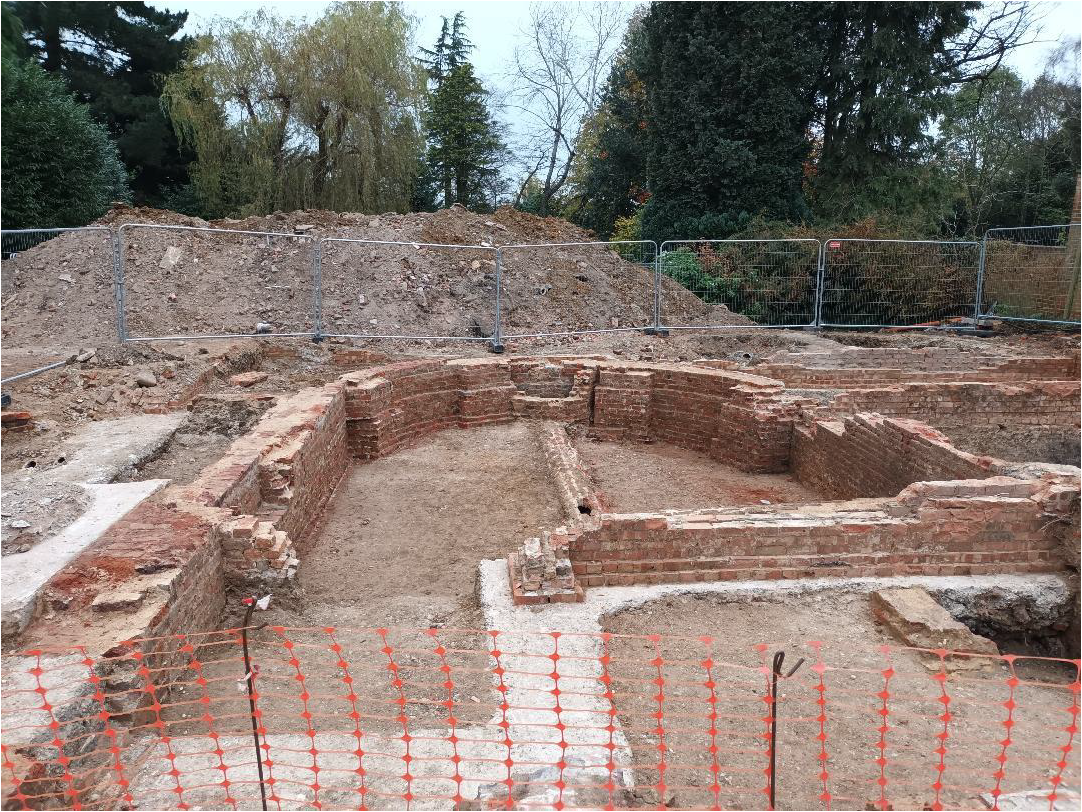
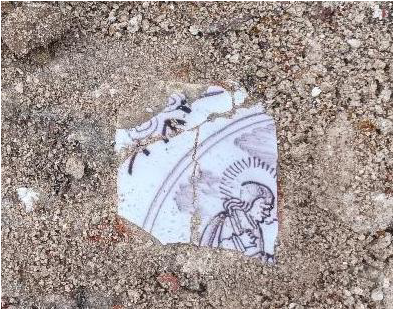
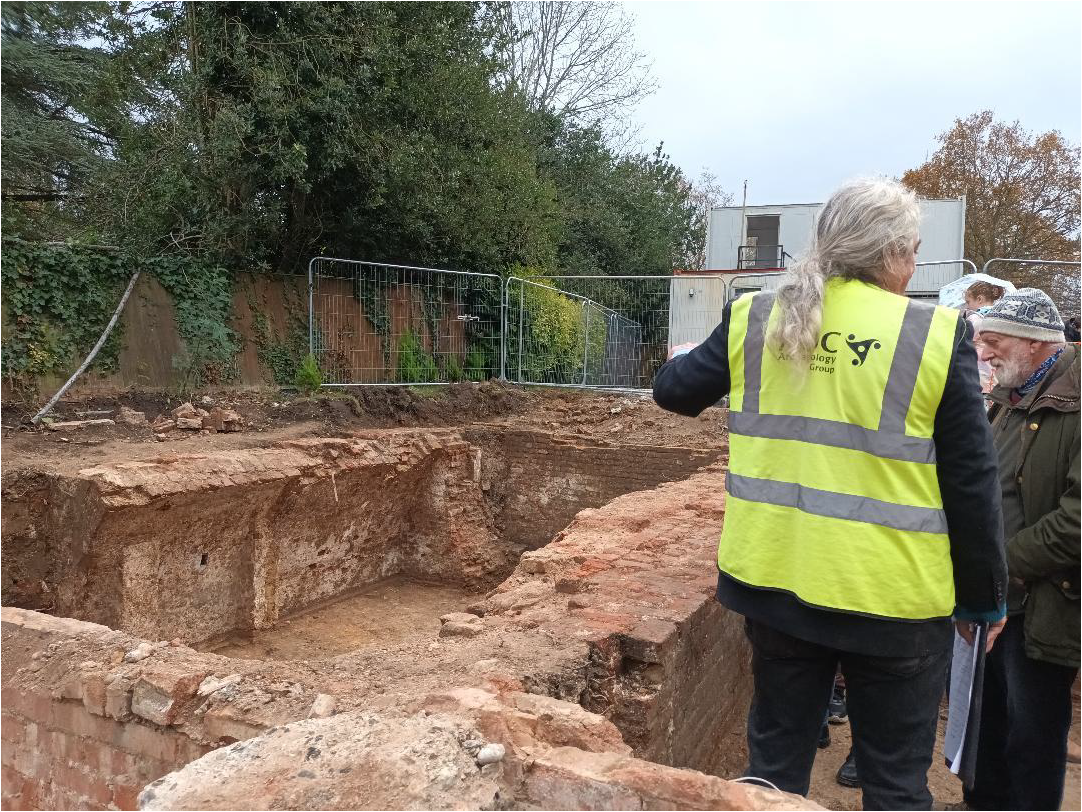
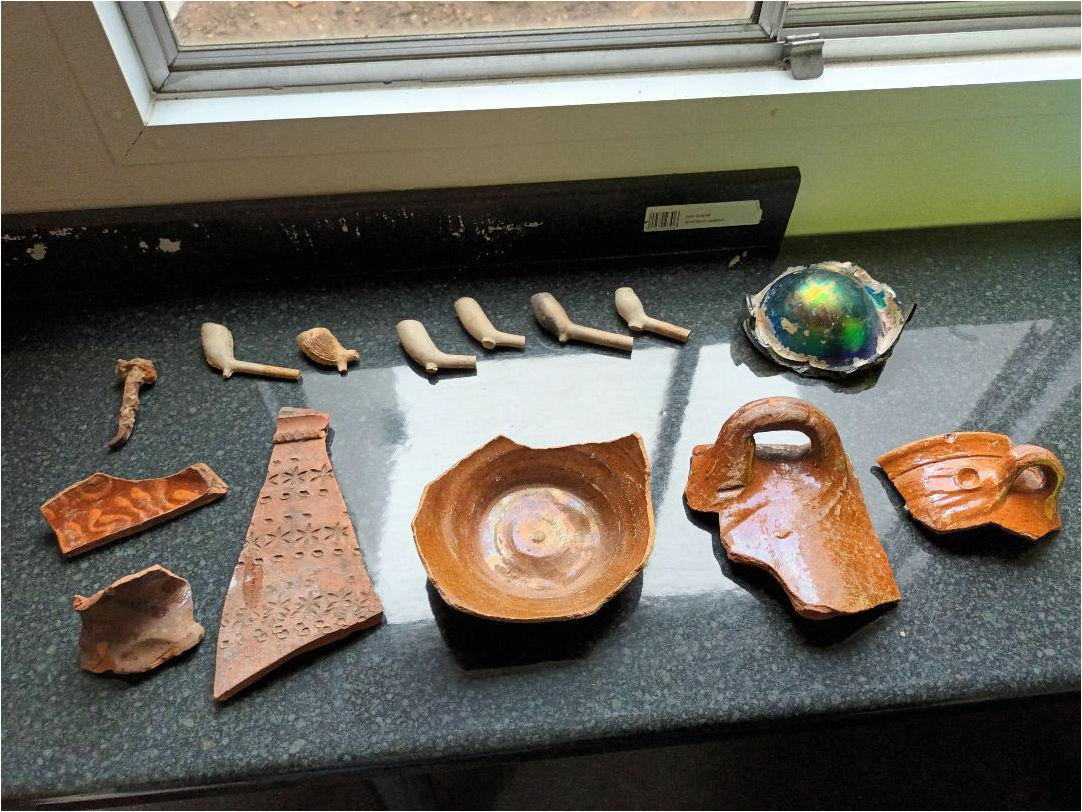
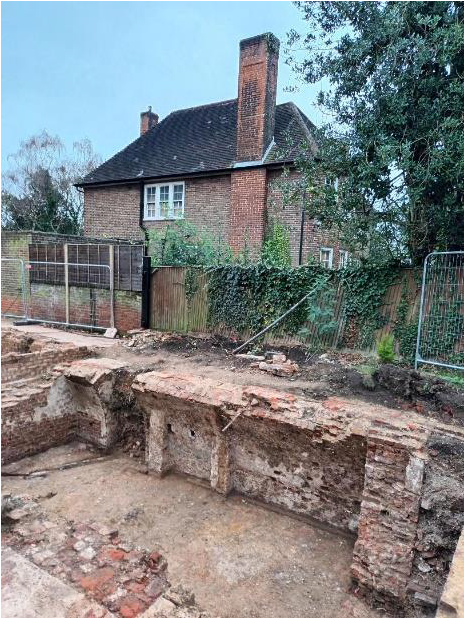
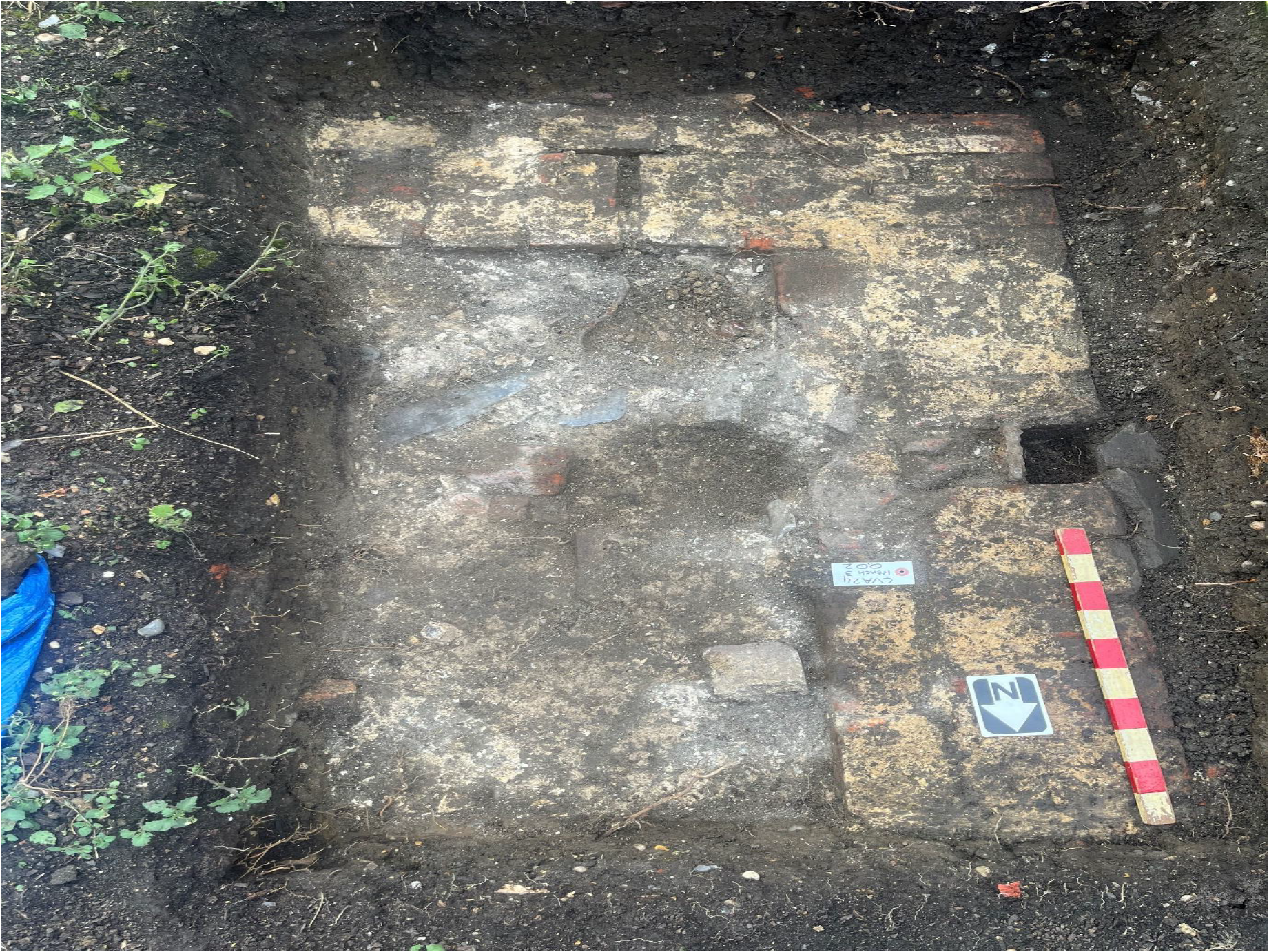
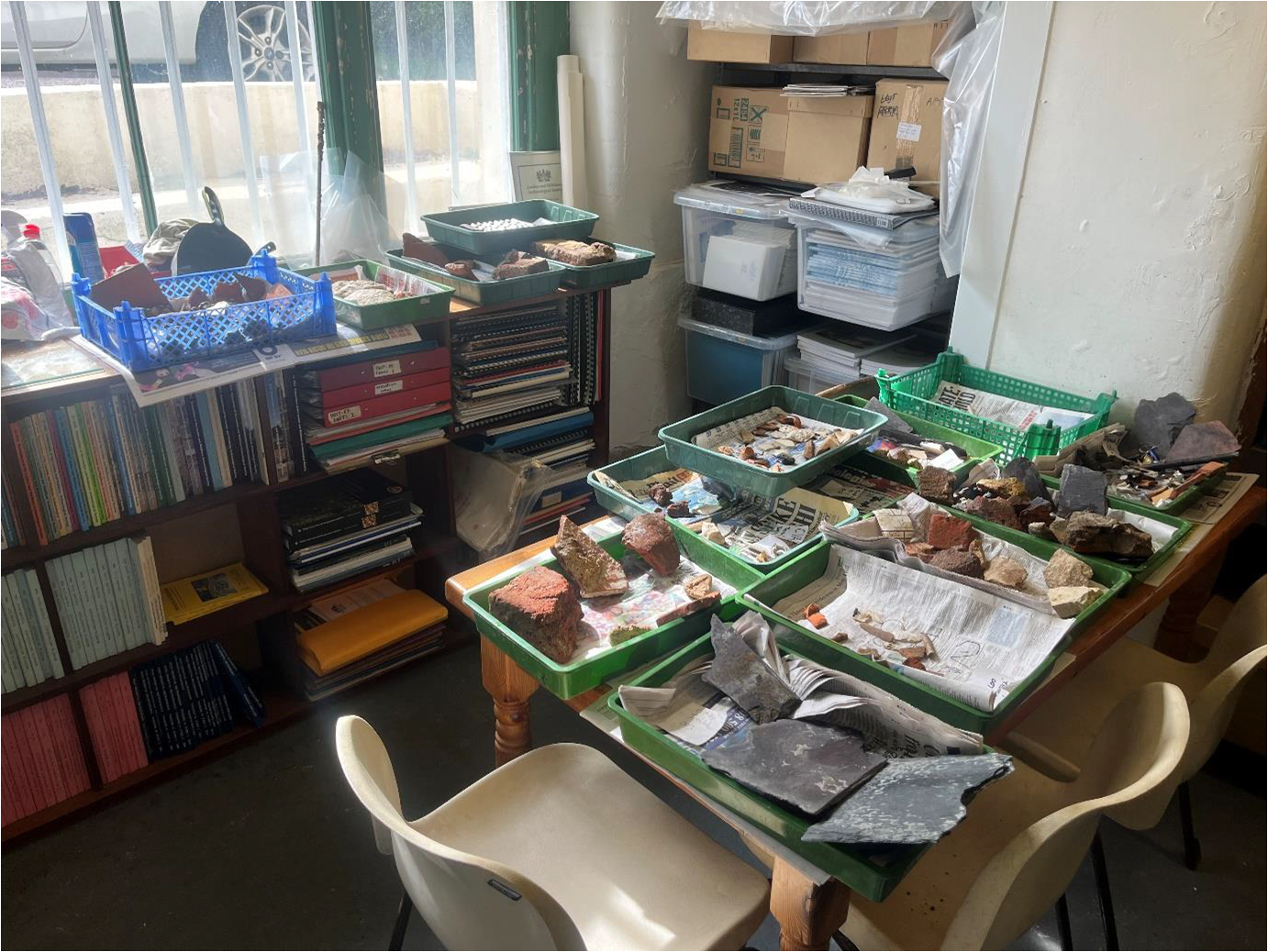
SUNDAY MORNING POST EXCAVATION WORK continues on the material from our 2025 Vine Cottage Hendon dig. All finds are now washed and sorted with the Bulk Finds Sheets completed, ‘Small Finds’ picked out and listed and virtually all the individual finds type record sheets have been filled out, with thoughts now turning to specialist reports on various categories of finds. There is certainly a smattering of seventeenth/eighteenth-century material amongst them.

RETURN TO CLITTER HOUSE ANDY SIMPSON

On Sunday 7 December 2025 several HADAS members attended a small informal event at Clitterhouse Farm in Claremont Road NW2, near the Brent Cross shopping Centre, site of HADAS excavations in 2015, 2016 and 2019.

This was at the invitation of Jenny Lawry from the volunteer group, hosted by the Our Yard Clitterhouse Farm social enterprise team (www.ouryard.org), who wished to mark the 2026 centenary of the adjacent extensive Clitterhouse playing fields established by Hendon Urban District Council on the Eastern/North Eastern fields of the farm after the last of the farm’s dairy cow livestock and equipment was auctioned off in 1925. The volunteers – The Clitterhouse Secret River Sweepers (SRS) – clear the Clitterhouse brook of accumulated rubbish and monitor its condition through citizen science techniques on the first Sunday of every month. They meet in the café built exactly on the site of the HADAS 2019 excavation.

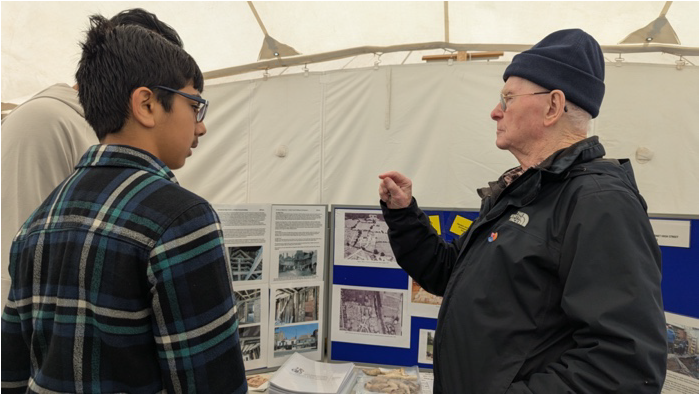
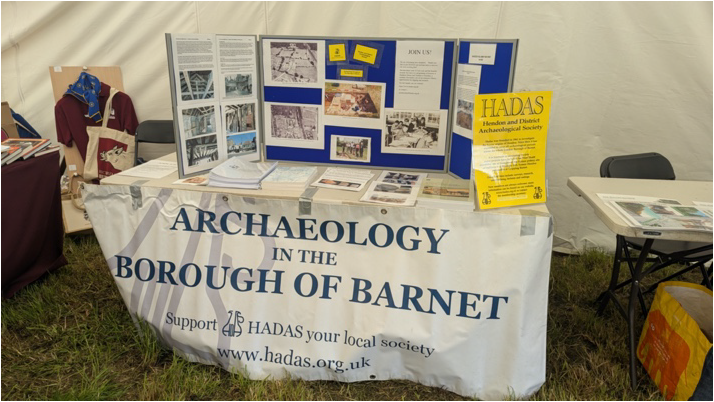
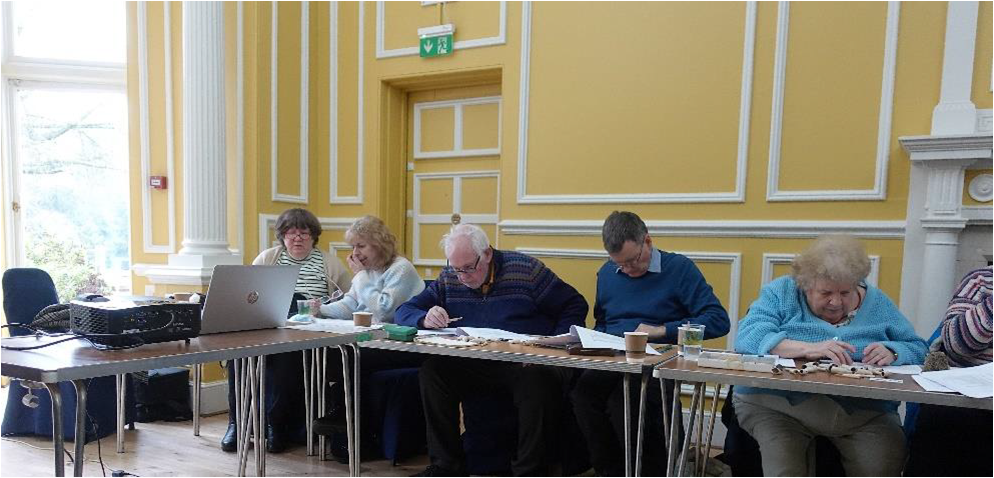
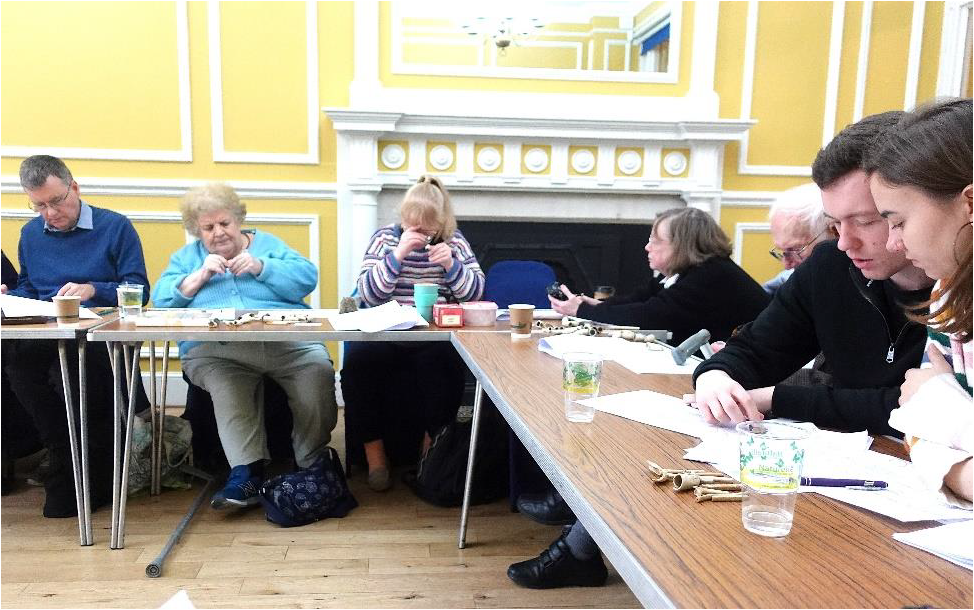
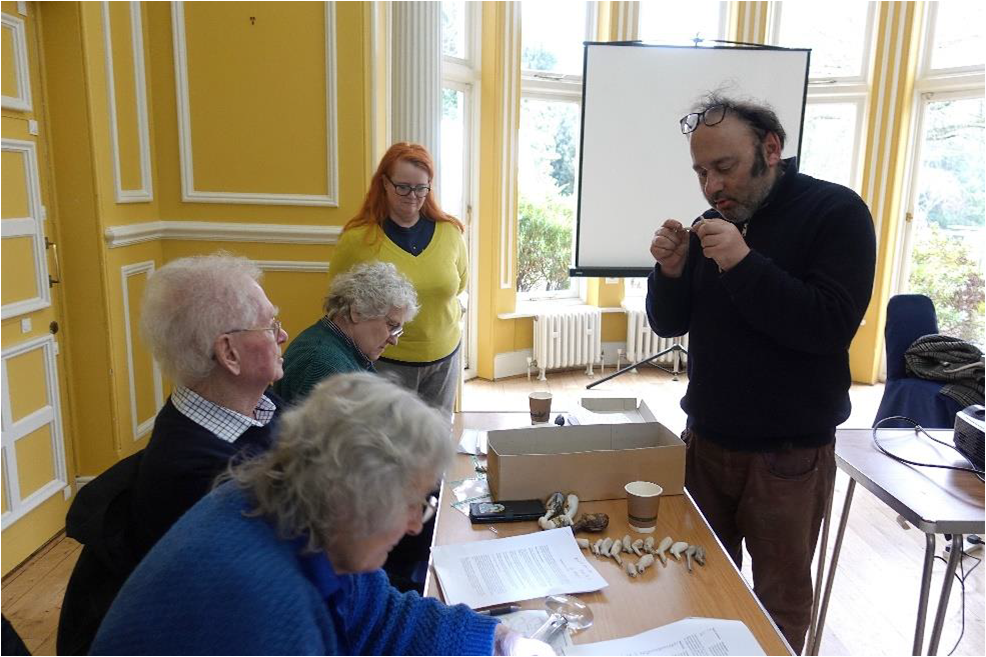
The HADAS team took along a display produced by the Sunday morning team made up of Clitterhouse maps, plans, photos and finds, plus HADAS publications and souvenirs, which were much appreciated by the small but engaged group of volunteers and visitors of all ages. The coffee and cake kindly provided went down well too!

9

Above; The HADAS display. Below – Janet and Bill gave short but informative presentations to
visitors. More photos on the HADAS facebook page…

BILL BASS adds …

10

As well as our work on immediate environs of Clitterhouse Farm we also spoke on the survey and evaluation undertaken on the Clitterhouse Playing Fields in conjunction with the possible redevelopment of the sports surfaces and such like. In 2015 a large ranging geophysical survey was done by Cranfield University led by Peter Masters, HADAS worked with Peter a year or so ago when surveying Old Fold Golf Course and in Kew Gardens Archive in connection with alternative theories on the Battle of Barnet. The Clitterhouse survey revealed a number of features and targets including possible a medieval farming practice called ‘ridge and furrow’. These features could be tested by a field-evaluation and in 2021/2022Museum of London Archaeology undertook a project of 72 trenches placed over the fields and likely targets.

The evaluation found Roman pottery, brick and tile as well as environmental evidence in association with Roman field boundary ditches. This provided a useful context as Watling Street Roman-road (now the Edgware Road) runs not far west of the site. Also found were many Victorian glass bottles. Some of the known buried air-raid shelters surrounding the fields were investigated.

Mola archaeologist Giulia Rossi and some of the Roman pot found on site. (Photo: Mola website).

Other Societies’ Events Eric Morgan

As always, please check with the societies – for example via their websites – before planning to attend in case of any late changes, since not all societies and organisations have returned to pre-covid conditions.

Friday 13th  February, 7.30 pm. Enfield Archaeological Society. Jubilee Hall, 2, Parsonage Lane/Junction Chase Side, Enfield, EN2 0AJ. Roman Cemetery at Holborn Viaduct. Talk by Alex Banks. Please visit www.enfarchsoc.org.uk for further details. Visitors charge £1.50. Refreshments, sales and information from 7 pm.

Wednesday 18th February, 7.30 pm. Willesden Local History Society, St Mary’s Church Hall, bottom ofNeasden Lane (Round corner from Magistrates’ Court) London, NW10 2DZ. The Grodzinsky Family. Talk by Jonathan Grodzinsky (4th Generation Master Baker). Will talk about the history of his family and the Grodzinsky Bakery in Willesden Green. Grodzinsky’s Bakery firm had late C19th roots in the East End of London and went on to become the largest Kosher Bakers in Europe. Please visit www.willesden-local-history.co.uk for further details.

11

Monday 9th March, 3 pm. Barnet Museum and Local History Society. St. John the Baptist Church,Chipping Barnet, Corner High Street/2, Wood Street, Barnet, EN5 4BW. Remembering Bungo: The life and Career of Field Marshall Lord Byng of Vimy. Talk by William Frank. Please visit www.barnetmuseum.co.uk  for further details. Refreshments available afterwards. Visitors £3.

Wednesday 11th March, 2.30 pm. Mill Hill Historical Society. Trinity Church, 100, The Broadway, London. NW7 3TB. Farms and Farming in Mill Hill. Talk by Michael Worms. Please visit www.millhill-hs.org.uk. Preceded by A.G.M.

Friday 13th March, 7.30 pm. Enfield Archaeological Society. Jubilee Hall (Address as for Friday 13thFebruary). A.G.M. followed by Review of 2025 Excavations and Further Plans. By Martin Dearne (Director of Archaeology).

Thursday 19th March, 8 pm. Historical Association: Hampstead and N.W. London Branch. Fellowship House, 136A, Willifield Way, London, NW11 6YD (off Finchley Road, Temple Fortune).P.G. Wodehouse and the Decline of the British Empire. Talk by Dr. Sean Lang. Also on Zoom. Please email Dudley Miles (HADAS) on dudleyramiles@googlemail.com or telephone 07469 754075 for details of link and how to pay (there may be a voluntary charge of £5). Refreshments available.

Friday 20th March, 7.30 pm Wembley History Society, St Andrew’s Church Hall (Behind St. Andrew’s New Church) Church Lane, Kingsbury, London, NW9 8RZ. The Early History of the Grand Junction Waterworks. Talk by Bob Casey. Visitors charge £3. Refreshments available.

Wednesday 25th March, 7.30 pm.  Friern Barnet and District Local History Society. North Middlesex Golf Club, The Manor House, Friern Barnet Lane, N20 0NL London Underground Architecture. Talk by Mark Andrew Pardoe. Please visit www.friern-barnethistory.org.uk. Non-members. £2 Bar to be available.

Thursday 26th March, 7.30 pm. Finchley Society. Drawing Room. Avenue (Stephens’) House, 17, East End Road, London. N3 3QE. Alexandra Palace Theatre. Talk by Pat Brearey and Nigel Willmot. (Friends of Alexandra Palace Theatre). For further details please visit www.finchleysociety.org.uk. Non-members. £2. Refreshments in the interval.

With thanks to this month’s contributors; Bill Bass; Sue Loveday; Janet Mortimer; Eric Morgan

Hendon and District Archaeological Society

Chair   Sandra Claggett, c/o Avenue House, 17 East End Road, Finchley N3 3QE
email : chairman@hadas.org.uk

Hon. Secretary   Janet Mortimer 34 Cloister Road, Childs Hill, London NW2 2NP
(07449 978121), email: secretary@hadas.org.uk

Hon. Treasurer  Roger Chapman, 50 Summerlee Ave, London N2 9QP (07855 304488)
email: treasurer@hadas.org.uk

Membership Sec.  Vacant; membership@hadas.org.uk

Website:              www.hadas.org.uk – join the HADAS email discussion group via the website.

12

Newsletter 658 – January 2026

By | HADAS, Latest Newsletter, News, Past Newsletters, Volume 12 : 2025-2029 | No Comments

No. 658                                      January 2026                       Edited by Peter Pickering

HADAS DIARY – Forthcoming lectures and Events

Lectures take place in the Avenue House Drawing Room.17 East End Road, Finchley N3 3QE, 7.45 for 8pm. Buses 13, 125, 143, 326 and 460 pass close by, and it is a five to ten-minute walk from Finchley Central Station on the Barnet Branch of the Northern Line. Bus 382 also passes close to Finchley Central 3QE, 7.45 for 8pm. Buses 13, 125, 143, 326 and 460 pass close by, and it is a five to ten-minute walk from Finchley Central Station on the Barnet Branch of the Northern Line. Bus

382 also passes close to Finchley Central Station. We are also on the SuperLoop Bus, Tea/Coffee/biscuits will be available for purchase after the talk.

Tuesday February 10th, 2026. Dr James Bromwich. “Great archaeological discoveries and great archaeologists of France: Alexandre du Mège: a founder of archaeological research in France – or rogue? Léon Joulin: an outstanding intellect and a founder of modern archaeology. Émile Chénon: a leading nineteenth century lawyer with a love for archaeology. Sophie Krausz: in the forefront of twenty-first century archaeology and museum presentation”

Tuesday March 10th,  2026. Les Capon from AOC Archaeology is back after his last very interesting lecture.  This time he will talk about archaeological material evidence from Bricks to Gold.

Tuesday April 14th, 2026. Scott Harrison on “Behind the Battle of Barnet banners. People of the War of the Roses. The lives of people who fought at the Battle of Barnet and the life, society and culture of the late fifteenth century.”

PROPOSED HADAS TRIP 23 APRIL 2026                                                  Sue Loveday

Step out of town for a while, group get together, see more and explore… the Peak District. Britain’s First National Park.

As mentioned in the previous Newsletter we are looking to resume a HADAS trip. 4 days, 3 nights, Bed, Breakfast and Evening meal staying in Derby. An area of various natural resources including lead, limestone, brought settlers over time. Its water powered the first Industrial revolution bringing roads, canals and railways. Visit to the Mills which brought change in production. Find out how the area also became a main place for the railways and have ride on heritage railway and later how it became a Centre of manufacturing, including even the red post box! A visit also to one of its caves – it has a few – and will also go to the Plague Village, site of an early lockdown and see its interesting museum with further information on the epidemics. Couple museum stops, church and other stops where settlers left their mark. Coventry Cathedrals on way there and intention to see Stoke on way back.

Price as per previous newsletter includes entrance fees. A Preferred number to make trip viable as can reflect coach price. Chance to see more together. Please email Sandra, Chair if interested. Deposits would be collected in January.

1

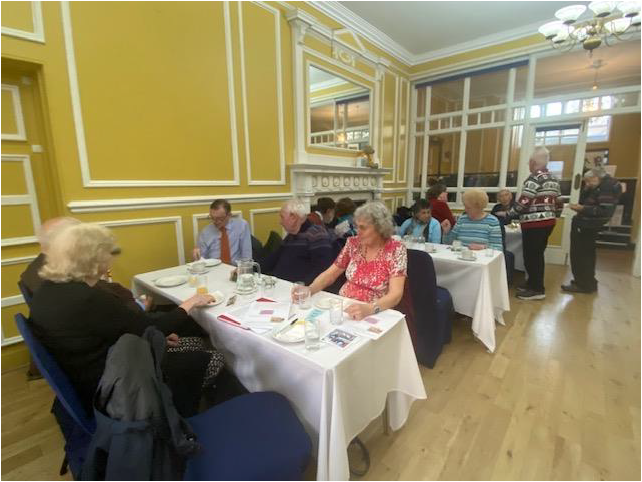
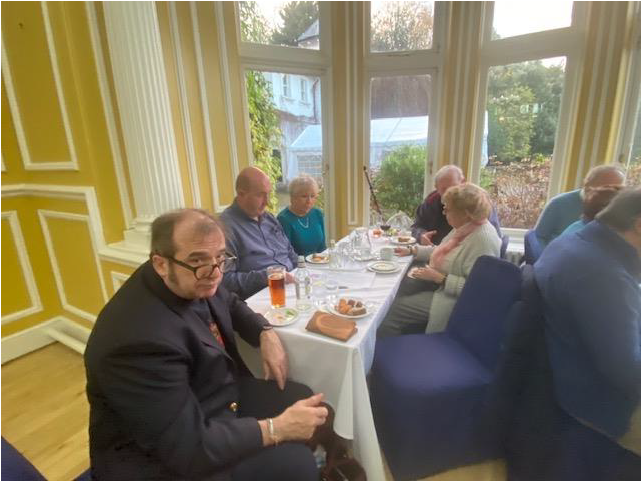
On 14 December a number of HADAS members had a most enjoyable Christmas Sunday lunch at

Avenue House, with all the seasonal trimmings. Thanks to Eric Morgan for organising.

Rutland                                                                                            Barbara Thomas

Rutland may be the smallest county in England but in 2022 it proved to be huge in respect of discoveries of the past. Not only were the remains of the largest ever ichthyosaur found at Rutland Water but a unique mosaic was uncovered in a village called Ketton. This is the story of the mosaic.

Ketton is the fourth largest area in Rutland for population with a count of some 2000 souls. It’s not a sleepy village by any means, being bisected by the busy A47 and is also home to a huge cement works and one of the largest solar farms in the UK at 9MW which supplies power to the works. It is also an area for farming.

The winter of 2019/2020 was very wet and farmers were struggling to grow crops in wet and sometimes flooded conditions. Ketton has the River Chater running through it and the river had risen over many fields.

The spring of 2020 brought drier weather – and the Covid lockdown. Jim Irvine, the son of a Ketton farmer, was visiting his family farm with his daughters in June of that year as there were few places available to visit in lockdown. They walked through a field on the banks of the Chater which had previously flooded, the girls picking up bits and pieces on the ground that they found interesting. These scraps included pottery shards and oyster shells which surprised Jim as he had ploughed this field many times before but had never seen such items. He reported the finds to Historic England and started investigating further.

Looking at the field on Google maps proved fruitless until he looked at the maps for 2018 which had been a particularly long hot summer. These maps showed crop marks which looked as if there was the outline of a building underground.

The family returned to the field and started to dig. Jim expected to find some sort of wall and dug an 8 ft trench. Instead of a wall, he found a floor made up of tiny tiles and as he cleared the soil away, there was a face.

2

Photo : Jim Irvine

Realising there was something extraordinary under the ground Jim contacted the County Archaeologist who in turn brought in University of Leicester Archaeological Services. Further digging was done and geophysical analysis carried out.

The mosaic has been painstakingly drawn and detailed for record by David Neal, who has been a mosaic expert since the early seventies.

A more detailed dig under the auspices of Historic England was done in 2022.  At this time the Digging for Britain programme was involved and the episode can still be found on iplayer (series 9 Episode 1).

Prof Alice Roberts uncovering the mosaic

3

The mosaic is now covered up with sand and stones, and the land is able to be farmed again. If there is any further funding in the future, more work could be carried out. Only 10% of the site has been excavated to date.

What we know so far:

The mosaic covers an area 11m x 7m of a Roman villa dating from 2nd to the 4th century AD. It is the floor of an area probably used as a dining room or entertainment area and was designed to impress visitors to the villa. The mosaic depicts the story of the Trojan War and the battle between Hector and Achilles in a series of pictures reading from bottom to the top, but not quite in the way described by Homer in the Iliad. For example, where Homer describes the battle between the two being on foot, the villa owner has them on chariots.

The mosaic is part of a villa which is part of an estate covering about 5 hectares. For every villa there were about four wooden farmsteads. The estate was principally for the production of food but also a place for meetings and worship.  After the Romans left the building had a more industrial use with evidence of burning, some of which has damaged the mosaic.

There is an aisled building on the estate which is built in a particular “British Roman” style. There is an east wing where work and productivity was carried out and a west wing for living quarters. This building also has a domestic bath suite with hypocaust, sauna and plunge pool. This building was later used for drying grain, principally sprouted spelt which was used for beer making.

Interestingly a lot of the building materials were found to be locally sourced. The roofing was either Collyweston slates or ceramic tiles made at a workshop near Corby. The marble came from Alwarton near Peterborough. Pottery came from the Nene Valley.  300 boxes of artefacts have been removed, containing some personal items such as jewellery, hairpins, brooches, buckles, gold rings; Styluses for writing; oyster shells and animal bones; and grinding stones which indicate that it was a mill at some point.

At the moment they have just come to the end of the assessment phase of the current project, next comes the analysis phase.

The subject matter of the mosaic is of great interest to scholars. An article appeared in the 2024 journal of the Association for the Study and Preservation of Roman Mosaics (ASPROM) and another is being published in ‘Britannia’ published by the Society for the Promotion of Roman Studies.

The Archaeology of Rapa Nui                                                by Sandra Claggett

I recently had the opportunity to visit Easter Island or Rapa Nui for a few days to see the main archaeological sites led by a local guide. Rapa Nui is located in the southeastern Pacific Ocean; it is one of the most remote inhabited places on Earth. Despite its isolation, the island is world-renowned for its monumental stone statues known as moai.

This is an overview of the places I visited rather than a detailed guide.

We began with a visit to the quarry area Rano Raraku where the statues or Moai were cut out of the surrounding rock and the work started on the figures. The moai were carved between approximately 1250 and 1500 CE by the Rapa Nui people. The head size by itself is around a third of the total height with a large part of the statue buried below the surface. Some unfinished moai reach up to 20 meters in height and weigh over 150 tons, there are completed examples of average 4–10 meters tall. (Van Tilburg, 1994). We were observing the incomplete examples that are still in-situ. The styles of the faces of these varied and I was informed by our guide that this was due to the period when they were started.

4

Rano Raraku quarry site (Author’s own photo)

The Moai main body was constructed out of grey hardened volcanic ash and the pukao or topknots pieces out of hardened red volcanic ash. A large moai could take 2 years to be carved by a team of workers under a master carver. (Grant-Peterkin, 2019).

There has been debate about how the completed pieces were moved to their standing platforms or ahu and there have been various suggestions and archaeological experiments discussing the use of wooden rollers, but it is now accepted that the moai were not dragged horizontally but moved vertically using ropes in a rocking motion like walking (Hunt & Lipo 2011). This fits the local oral history that says the Moai ‘walked to their resting places’ that they were imbued with a special spirit or mana.

The Moai were nearly always placed facing inwards to protect the islanders and represented the deified ancestors. (Fischer, 2005) They were not considered complete until their eyes made out of coral were added and this would be at the last stage as they were placed on the platforms or ahu. There is currently only one moai on its ahu that has eyes this is Ahu Tahai. 

Ahu Tahai (Author’s own photo)

5

                        One of the best restored sites is Ahu Tongariki above (Author’s own photo)

Much later in the history of the settlement of the island there was internal conflict and war over the increasing population and territorial demands part of this conflict resulted in the toppling of the island’s moai. (Many are reconstructed into their upright position).  In order to create peace, the Bird man competition linked to the fertility god Make-Make was inaugurated. This competition was carried out by a designated representatives of each of the seven tribes of the island; he was to climb down from the rocks into the sea and swim to the nearby island or motu where he would collect an egg from the returning migratory birds that were nesting. If he was the first to return with the unbroken egg his chief was to be the overall leader for a year. It was not without casualties.  This site is called Rano Kau and is where the Orongo Ceremonial village is. 

References

  • Fischer, S.R. (2005) Island at the End of the World: The Turbulent History of Easter Island. London: Reaktion Books.
  • Grant-Peterkin, J. (2019). A companion to Easter Island. Grafica LOM, Chile.
  • Hunt, T.L. and Lipo, C.P. (2011) The Statues that Walked: Unraveling the Mystery of Easter Island. New York.
  • Van Tilburg, J.A. (1994) Easter Island: Archaeology, Ecology and Culture. London: British Museum Press.

OTHER SOCIETIES’ EVENTS                                                       compiled by Eric Morgan

Please check with the organisations before setting out in case of any changes / cancellations and since since not all Societies or organisations have returned to pre-Covid conditions.  Many organisations expect a small contribution from visitors.

Friday 9th January, 7.30 pm.  Enfield Archaeological Society. Talk on Zoom. Spies, Lies and Amnesia: London’s Civil War Rewritten by Peter Mills.  Please visit www.enfarchsoc.org.uk for further details and the link.

Monday 12th January, 3 pm. Barnet Museum and Local History Society.  St. John the Baptist Church, Chipping Barnet, corner of High Street/2 Wood Street, Barnet EN5 4BW.  Buried Voices: Stories of St Mary’s, Hendon.  Talk by Reverend Dr. Julie Gittoes.  Please visit www.barnetmuseum.co.uk for further details.  Refreshments to be available after the talk.  Visitors pay £2.

6

Thursday 22nd January, 7 pm.  Hornsey Historical Society.  Union Church Hall, Corner of Fermepark Road/Weston Park, London.  N8 9PX.  The Tower Gardens Estate: A Jewel in the heart of Tottenham.  Talk by Ruth Crowley.  Also on Zoom.  Please visit www.hornseyhistorical.org.uk for further details and possible link.

Wednesday 28th January, 7.30 pm.  Friern Barnet and District Local History Society.  North Middlesex Golf Club, The Manor House, Friern Barnet Lane, London. N20 0NL.  London Colney Airfield, Talk by Guy Thomas.  Please visit www.friern-barnethistory.org.uk.  Non-members pay £2.  A drinks bar will be available.

Sunday 1st February, 10 am.  Heath and Hampstead Society.  Meet at the entrance to the Kenwood Walled Garden, opposite the Stable Block, off Hampstead Lane, London, NW3 7JR.  Explore the Hidden History of the Heath with Michael Hammerson (Highgate Society Archaeologist).  Guided walk lasts approximately 2 hours, Free.  Further information from the organiser, Tereza Pultarova on 07776 649163 or email hhs.walks@gmail.com or please visit www.heathandhampstead.org.uk Turn up 5 – 10 minutes before start time.

Monday 9th February, 3 pm. Barnet Museum and Local History Society. St. John the Baptist Church (address as for Monday 12th January).  On the Beat in Kings Cross.  Talk by Chris Foster.  Visitors pay £3.

Tuesday 10th February, 6 pm. L.A.M.A.S.  Also on Zoom.  A.G.M. and Presidential Address Given by Professor Vanessa Harding (Birkbeck, U.C.L.) on Mapping Restoration London.  Please visit www.lamas.org.uk for the link.

Wednesday 11th February, 2.30 pm. Mill Hill Historical Society. Trinity Church, 110, The Broadway, London, NW7 3TB.  The Hunting of Hephzibah (A Family History), Talk by Jim Nelhams (HADAS).  Please visit www.millhill-hs.org.uk

Thursday 19th February, 8 pm.  Historical Association: Hampstead and N.W. London Branch.  Fellowship House, 136A, Willifield Way, London, NW11 6YD (off Finchley Road, Temple Fortune).  1983 – The World at the Brink of Nuclear Armageddon.  Talk by Taylor DowningAlso on Zoom.  Please email Dudley Miles (HADAS) on dudleyramiles@googlemail.com or telephone 07460 754075 for details of the link and how to pay (There may be a voluntary charge of £5).  Refreshments to be available.

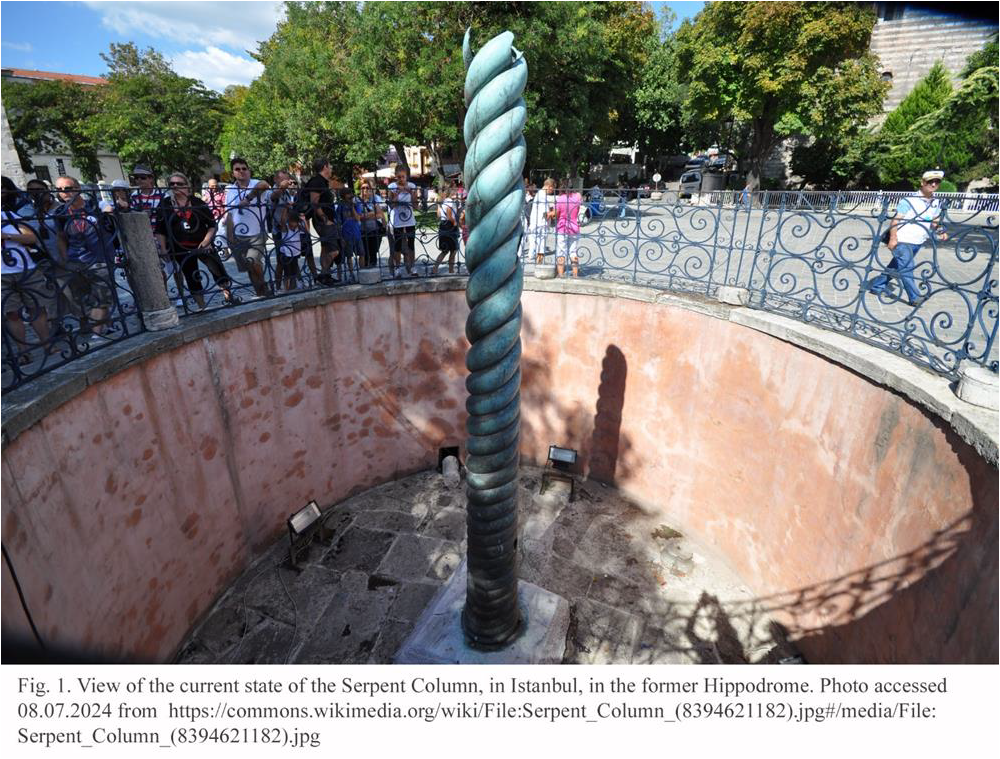
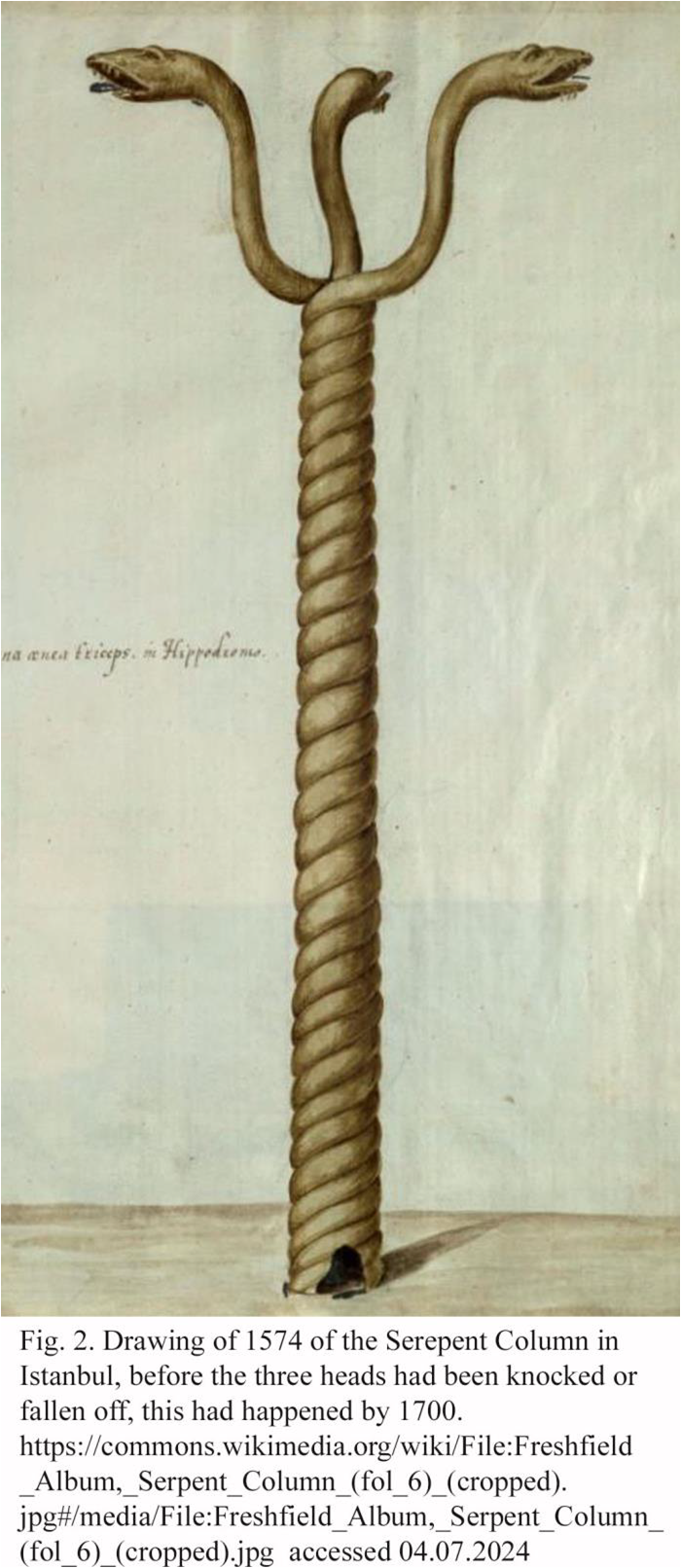
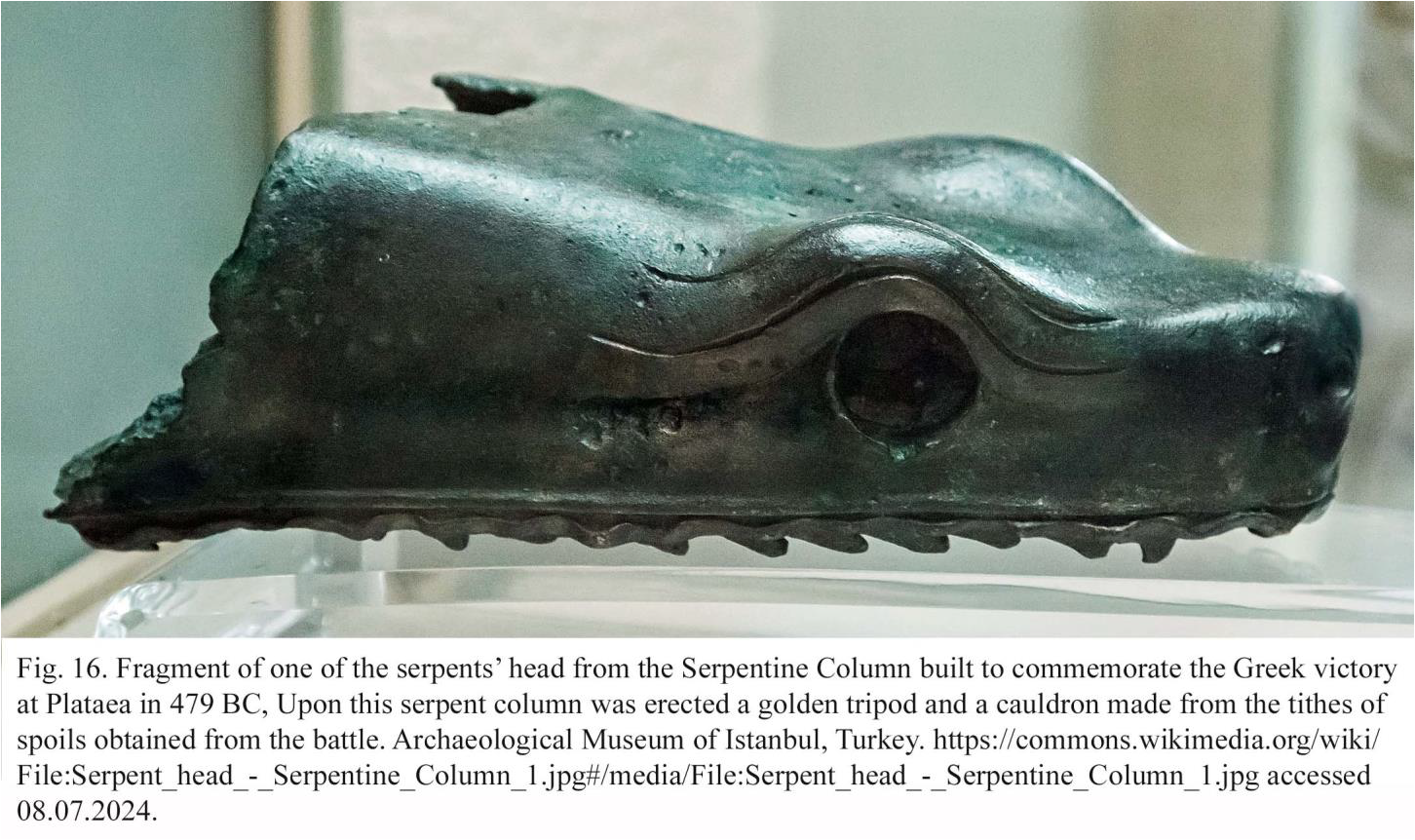
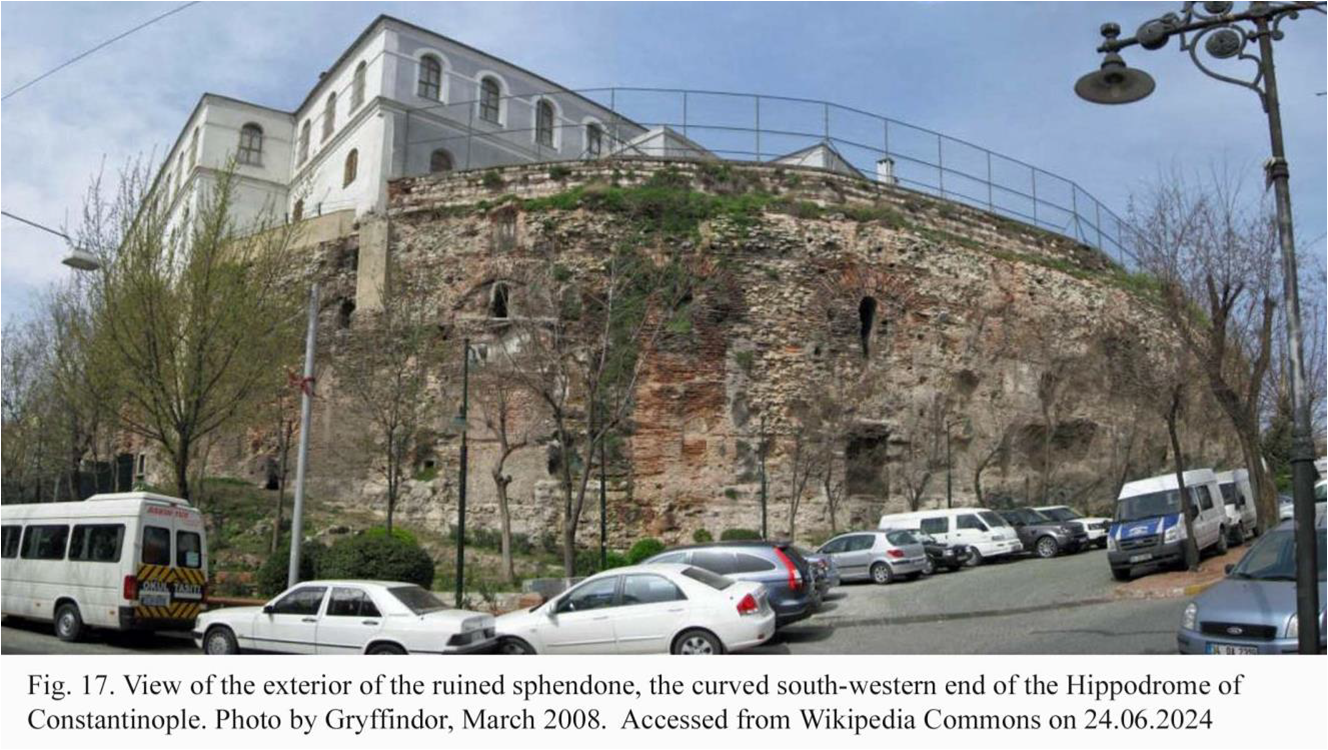
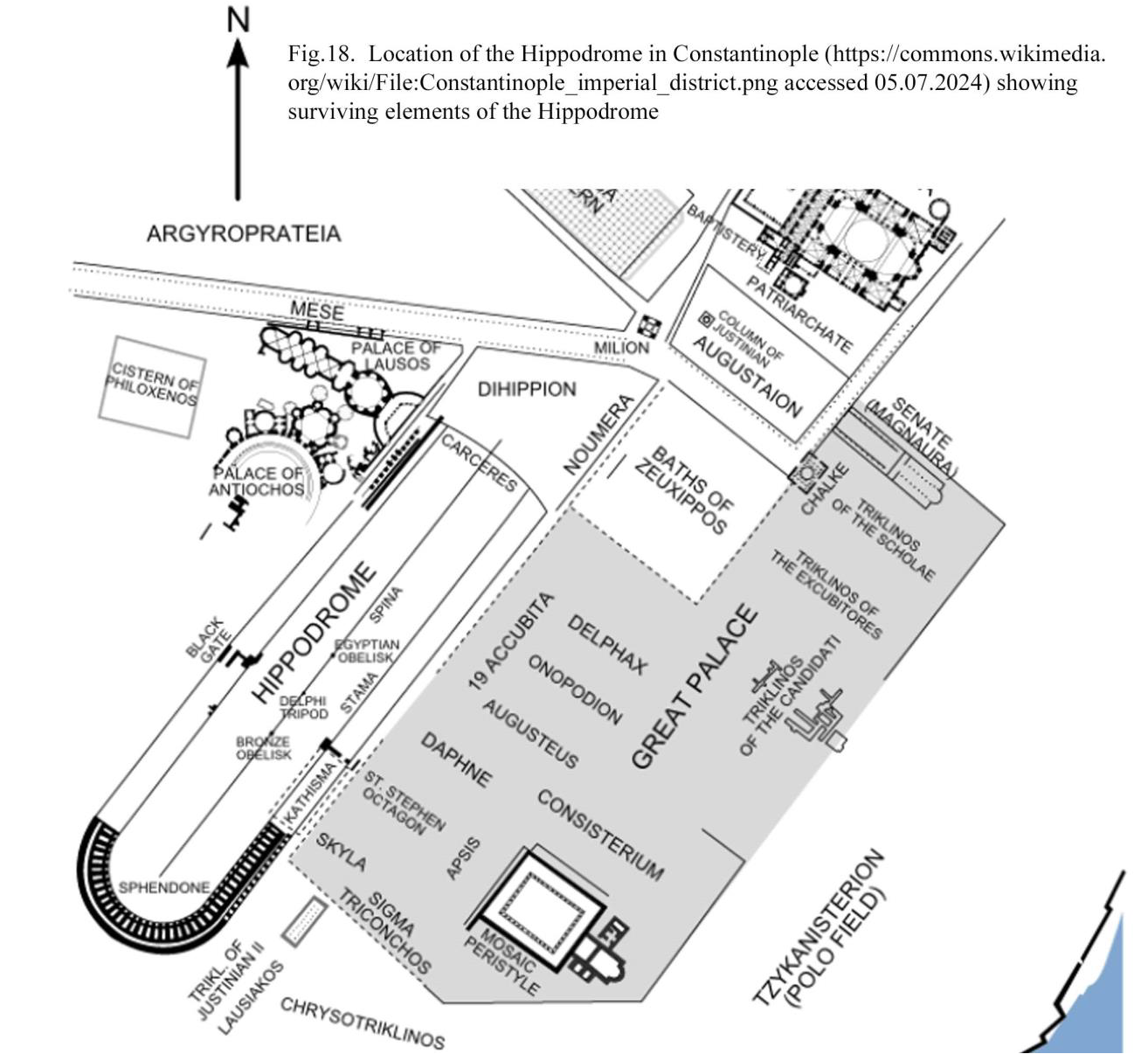
Friday 20th February, 7 pm. C.O.L.A.S.  Also on Zoom.  The Serpent Column, Istanbul, talk by Robin Densem (HADAS).  Please book via Eventbrite.  Visit www.colas.org.uk.  HADAS may send out a link details to its members.

Friday 20th February, 7.30 pm.  Wembley History Society.  St. Andrew’s Church Hall (behind St. Andrew’s New Church), Church Lane, Kingsbury, London. NW9 8RZ.  Journeys for the Brotherhood of Man!  Talk by Jim Moher (Chair).  Visitors pay £3.  Refreshments to be available.

Wednesday 25th February, 7.30 pm.  Friern Barnet and District Local History Society.  North Middlesex Golf Club (Address as for Wednesday 28th January) Chicken Shed Theatre History.  Talk by Adam Blackwell.  Non-members pay £2.

Thursday 26th February, 7.30 pm.  Finchley Society.  Drawing Room, Avenue (Stephens’) House, 17, East End Road, London.  N3 3QE.  Postman’s Park/Watts Memorial –Uncovering historical secrets of London.  Talk by Dr. John Price who will describe heroic stories of individuals in the 19th and 20th century London who have been memorialised in Postman’s Park, including a couple relatively close to Finchley.  For further details please visit www.finchleysociety.org.uk Non-members pay £2.  Refreshments to be available in the interval.

7

Saturday 28th February, 9.30 am – 5 pm.  Current Archaeology Live 2026.  U.C.L. Institute of Education, 20 Bedford Way (off Russell Square) London, WC1H 0AL held in partnership with U.C.L. Institute of Archaeology.  Tickets now on sale and are available until 15th January from www.archaeology.co.uk/live at an early bird rate of £49 (after which the price increases to £65).  Further details in next month’s Newsletter.

Exhibition London in WW2 extended to Thursday 19th February at the London Archives (as detailed in the September 2025 Newsletter).

Hendon and District Archaeological Society

Chair: Sandra Claggett, c/o Avenue House, 17 East End Road, Finchley N3 3QE email: chairman@hadas.org.uk

Hon. Secretary: Janet Mortimer 34 Cloister Road, Childs Hill, London NW2 2NP (07449 978121), email: secretary@hadas.org.uk

Hon. Treasurer: Roger Chapman, 50 Summerlee Ave, London N2 9QP (07855 304488), email: treasurer@hadas.org.uk

Website: www.hadas.org.uk

HADAS Festive Afternoon Tea Sunday 18th January 2026

If you have not already booked and would like to attend and meet up with other members.

Time: 2.30pm to 5.30pm.   Place: Avenue House, 17 East End Road, N3 3QE.  Cost: £20 per person

Includes: Finger Buffet (and tea/coffee) – Good company, Cash bar – Raffle – Quiz

Please contact Roger Chapman by the 2nd of January 2026 latest at treasurer@hadas.org.uk  by email to see if there are places left (and how to pay).

________________________________________________________________________________________________________________

8

Newsletter 657 – December 2025

By | HADAS, Latest Newsletter, News, Past Newsletters, Volume 12 : 2025-2029 | No Comments

________________________________________________________________________________________________________________

No. 657 DECEMBER 2025 Eds. Don Cooper / Bill Bass

On behalf of the HADAS Chair and Committee, we would like to take this opportunity to wish all our readers a Merry Christmas and Healthy, Happy and Prosperous 2026.

HADAS DIARY – Forthcoming lectures and Events

HADAS Festive Celebration will take place at Avenue House on Sunday 18th January 2.30-5.30pm. £20 per head with quiz and buffet. The cost is £20 pp as last year. The booking forms have already been sent out and we are asked for them to be returned by the end of November in order to establish numbers. However, if members . guests are still deciding we can have some flexibility here and extend the deadline to around mid-December. Payment to the Treasurer as per the forms.

Tuesday February 10th 2026. Dr James Bromwich. “Great archaeological discoveries and great archaeologists of France: Alexandre du Mège: a founder of archaeological research in France – or rogue? Léon Joulin: an outstanding intellect and a founder of modern archaeology. Émile Chénon: a leading nineteenth century lawyer with a love for archaeology. Sophie Krausz: in the forefront of twenty-first century archaeology and museum presentation”

Tuesday March 10th, 2026. Les Capon from AOC Archaeology is back after his last very interesting lecture this time he will talk about archaeological material evidence from Bricks to Gold.

Tuesday April 14th, 2026. Scott Harrison on “Behind the Battle of Barnet banners. People of the War of the Roses. The lives of people that fought at the Battle of Barnet and the life society and culture of the late fifteenth century.”

Lectures are held in the Drawing Room, Avenue House, 17 East End Road, Finchley N3 3QE. 7.45 for 8pm. Buses 13, 125, 143, 326, 382, and 460 pass close by, and it is a five-ten-minute walk from Finchley Central Station on the Barnet Branch of the Northern Line where the Super Loop SL10 express bus from North Finchley to Harrow also stops.

Tea/Coffee/biscuits available for purchase after each talk.

1

A note from Susan Loveday on the proposed HADAS TRIP TO DERBY IN APRIL

We have looked into resuming a trip for the group. Reserved Date 23rd April 2026. – 3 nights to Derby area, Dinner, Bed and Breakfast. This area is one of considerable natural resources that brought settlers there through a long period of time. We’ll hear about discoveries and how the area became a centre of innovations. We would get a group rate on the hotel, but coach price reflects numbers.

To stop at Coventry on way, once a wealthy medieval town. Hear more and visit Cathedral and its story via a talk. Propose to include visit to a Cave, Plague Village and its interesting Museum, with new information, Mills and other stops. Centre of Railways, a ride on heritage railway. Updated price I have been given is £589 sharing and £685 for single occupancy. Numbers reflect coach price. Entry fees included. If viable, deposits would be collected during January.

HADAS members visit to Tudor Hall in Barnet on 23rd October 2025 Don Cooper

This visit had been arranged by Mike Noronha, the Curator of Barnet Museum and Sandra Claggett our chairman. We assembled at Barnet Museum at 16.00 on a damp cold evening and had time to explore this fascinating museum. Once all had arrived, we walked to Tudor Hall.

The history of this Grade II listed building (List entry 1286564) goes back a long way as witnessed by the date over the entrance. The 1573 date refers to the granting of a charter by Queen Elizabeth the first on a petition of Robert Dudley, the Earl of Leicester. The charter allowed for creating of a Free Grammar School. The charter describes its role as:

“Bringing up and instruction of boys and youth, to be brought up in grammar and other learning, and the same to continue for ever, and the said School for one Master and one Usher for ever to continue and remain and that there shall be for ever four-and-twenty discreet, honest governors.”

However, the present building was not erected until 1577 funded by collections from London Churches and the first governors of the school.

2

Throughout the next two and a half centuries the school continued to expand and prosper. For example, a masters house was added, dormitories for pupils built and ancillary buildings added. By 1932 the Queen Elizabeth school had outgrown the building, and it moved to its present site in Queens Road, Barnet where it has continued to prosper.

The Tudor Hall building was then bought by the Jesus Hospital charity for £1750 and was used by them as offices and for their meetings. The rest of the site was bought by Hertfordshire County Council for £3000. South Herts. College moved on to the site in 1948, and the college was built on land surrounding the hall. Jesus Hospital Charity sold the hall to Hertfordshire County Council to be used for educational purposes.

In 1965 Barnet Council assumed responsibility for the whole site and embarked on a large expansion including demolition the Masters House, other classrooms and ancillary building around the hall.

In 1968 the Hall was remodelled by Barnet Council at a cost of £30,000 and became part of Barnet and Southgate college. The Hall continued to be used as classroom.

In 2024 the College decided that the hall was surplus to their requirements, and the college have put the hall up for sale. The target price is £1m.

A number of local societies (Barnet Museum among others) have looked at purchasing the property, but it has no land around it and is an isolated building in the midst of Barnet and Southgate College and would need refurbishing to the upper floor.

Estimated running are expected to around £50k a year.

At the time of HADAS visit the hall was empty but was occasionally used for classes, conferences etc. The upper floor is not in use.

Description of inside of the hall.

On entry the is an entrance lobby with toilet facilities. The main hall (see photo below) is currently laid out has a classroom. It is well lit and heated. The only reminders of its history surviving are the Inglenook fireplace with its shield and the so called “Whipping Post”. There is a mezzanine gallery overlooking this hall. From the mezzanine gallery there is a staircase leading to the 1st floor and it also goes down to a fire exit.

There is another staircase at the far end of the building that serves the same purpose

In their current state the staircases are not suitable for regular access.

3

Figure 1 Main Hall

Figure 2 Fireplace in the hall

4

Figure 3 Spiral staircase

The rooms on the upper floor need some TLC.

Summary

The Elizabethan Tudor Hall is the last remaining building standing of what had been an extensive complex of structures including the Masters House, classrooms, dormitories, kitchen, laundry and laboratory etc. supporting a successful school.

It would be a great shame if this iconic building was lost to community use.

Thanks are due to Mike and Sandra for making this interesting visit possible.

5

Below are three photos showing the upper floor area:

Figure 4 Upper floor area

Figure 5 View to offices spaces

Figure 5 Large office space

6

HADAS bus pass outing to London Docklands Museum

At the beginning of November we had a HADAS “bus pass” outing to the Secrets of the Thames exhibition at the London Museum in Docklands.

The exhibition set out information on the history of mudlarking and had a fine collection of finds, ranging from tiny pins and Roman intaglios to the Battersea Shield.

All who attended enjoyed the exhibition very much, as well as the adjournment to the pub next door for lunch afterwards.

CVA24 Church Road – Pottery Report – Trench 2 and Trench 3. Melvyn Dresner

Please see newsletters August and September 2025 for previous Church Road dig finds articles.

Trench 2

Trench 2 included pottery in context 001, 006 and 007.

Context 001 (Topsoil)

This context is dominated by 18th, 19th and 20th pottery refined white earthenware (REFW), post medieval redware (PMR), also English stoneware (ENGS), English porcelain (ENPO), transfer printed ware (TPW), one piece of tin glaze ware (TPW H) and two pieces of Staffordshire slipware (STSL).

Image (below) shows Staffordshire slipware, and tin glaze ware with geometric design compared to reference examples

7

Of the REFW, over half of circa 200 sherds are burnt and too fragmented to represent identifiable vessels. This includes mainly plain ware and some decorated ware with blue and gold banding, green and brown glaze. Where identifiable, the sherds represent a typical domestic assemblage of cups, plates and bowls.

The second largest group (8 sherds) include transfer printed ware (TPW and TPW3) including blue and white, buff, yellow and orange decoration, and one with vine or grapes. 11 pieces of PMR include PMR Slip with brown glaze and white slip. There were three sherds of English porcelain (ENPO), blue and white with red scrolling on one piece. The twelve pieces of English stoneware included burnt pieces, bowls and jugs. Also, four pieces of cream ware (CREA) dating from late 18th century/ early 19th century, with applied decoration (compare to examples from Downer 1978, below) with the tin glaze wear and Staffordshire slipware, probably represent 18th century occupation of the site.

This context also includes a possible saltshaker in the form of a porcelain mouse.

8

Creamware from Donald Towner’s Creamware (1978, Faber and Faber)

Context 006

This pottery assemblage is mainly 19th and 20th century, with traces of 18th century pottery. This context includes post medieval redware (PMR) and refined white earthen ware (REFW), as well as post medieval black glazed redware (PMBL), English stoneware and Staffordshire slipware, sewer pipe and piece of tin glaze ware (TGW Blue).

Handle (T2, context 006)

Handle (T2, context 006)

9

PMR, stoneware and PMBL

Context 007

Seven pieces of post medieval redware (PMR) – base and body sherd- and one piece of stoneware handle.

Trench 3

Context 001

This represents 19th and 20th century occupation of the site. Sixteen pieces of refined white earthen (REFW), three pieces of English stoneware, two sherds of tin glaze ware (TPW), and five sherds of post medieval redware.

Context 005

Complete stoneware (ENGS) ink bottle or boot black, 3 ½ inches tall (circa 89mm)

This ink bottle alongside the slate pencil found on site (trench 1. Context 001), may link to the school on site.

10

Examples in museum collections at the National Trust Museum of Childhood: https://www.nationaltrustimages.org.uk/image/1265085.

Portable Antiquities Scheme: https://finds.org.uk/database/artefacts/record/id/476756/recordtype/artefacts.

OTHER SOCIETIES’ EVENTS Eric Morgan

As always, please check with the Societies’ website before planning to attend, since not all Societies or organisations have returned to Pre-Covid conditions.

Tuesday 13th January, 6.30 pm. L.A.M.A.S. Talk on Zoom. Digging Up the Future – 23 years of the Central London Young Archaeologists Club. By Karen Thomas and Annie De Saulles (Central London Y.A.C). Please visit www.lamas.org.uk for further details and link.

Tuesday 13th January, 8 pm. Amateur Geological Society. Talk on Zoom. Dinosaurs: New Visions of a Lost World by Professor Michael J. Benton. Please visit www.amgeosoc.wordpress.com for further details and link.

Tuesday 13th January, 8 pm. Historical Association (North London Branch), Jubilee Hall, 2, Parsonage Lane / Junction Chase Side, Enfield, EN2 0AJ. Nicholas II and Stalin – A Comparison in Tyranny? Talk by Dr. George Gilbert. Non-members £2, payable at the door.

Wednesday 14th January, 2.30 pm. Mill Hill Historical Society. Trinity Church, 100, The Broadway, London NW7 3TB. Tales of a Mill Hill Amateur Clock Maker. Talk by Martin Bourn. Please visit www.millhill-hs.org.uk.

11

Thursday 15th January, 8 pm. Historical Association: Hampstead and N.W. London Branch. Fellowship House, 136A, Willifield Way, London NW11 6YD (off Finchley Road, Temple Fortune). The Fourth Crusade. Talk by Professor Jonathan Harris. In the year 1204, Constantinople was attacked, captured and pillaged by an army composed of Christian co-religionists who were supposedly on a crusade to recover Jerusalem.

The talk explores how that strange contradiction came about, what the consequences were and how the events still resonate today. Also on Zoom. Please email Dudley Miles (HADAS) on dudleyramiles@googlemail.com or telephone 07469 754075 for details of link and how to pay (there may be a voluntary charge of £5). Refreshments to be available.

Friday 16th January, 7.30 pm. Wembley History Society. St. Andrew’s Church Hall (behind St. Andrew’s new church) Church Lane, Kingsbury, London, NW9 8RZ. Remembering the General Strike 1926-2026. Talk by Christine Coates. Visitors £3. Refreshments available in the interval.

Tuesday 27th January, 7.30 pm. Hounslow and District History Society. Talk on Zoom. Thames Islands by Nick Pollard. Non-members charge £2. For log-in please contact James Marshall at ajmarshall@gmail.com.

Thursday 29th January, 7.30 pm. Finchley Society. Drawing Room, Avenue (Stephens’) House, 17 East End Road, London, N3 3QE. The White Lady…Another fascinating talk about Espionage in WWII by Helen Fry about the British Secret Service networks in Belgium behind Enemy lines in the First and Second World Wars. For further details please visit www.finchleysociety.org.uk. Non-members charge £2. Refreshments to be available in the interval.

With thanks to this month’s contributors: Don Cooper, Melvyn Dresner, Sue Loveday, Eric Morgan

Hendon and District Archaeological Society

Chair: Sandra Claggett, c/o Avenue House, 17 East End Road, Finchley N3 3QE email : chairman@hadas.org.uk

Hon. Secretary: Janet Mortimer 34 Cloister Road, Childs Hill, London NW2 2NP (07449 978121), email: secretary@hadas.org.uk

Hon. Treasurer: Roger Chapman, 50 Summerlee Ave, London N2 9QP (07855 304488), email: treasurer@hadas.org.uk

Membership Sec: Vacant email: membership@hadas.org.uk

Website: www.hadas.org.uk

12

Newsletter 656 – November 2025

By | HADAS, Latest Newsletter, News, Past Newsletters, Volume 12 : 2025-2029 | No Comments

No. 656 November 2025 Edited by Sue Willetts

HADAS DIARY – Forthcoming Lectures and Events

Tuesday November 11th 2025 Dr. Signe Hoffos – “Lost Churches of the City of London: 500 years of City churches lost to fire, war and urban redevelopment”

No lecture in January 2026

Tuesday February 10th 2026 Dr James Bromwich. “Great archaeological discoveries and great archaeologists of France: Alexandre du Mège: a founder of archaeological research in France – or rogue? Léon Joulin: an outstanding intellect and a founder of modern archaeology. Émile Chénon: a leading nineteenth century lawyer with a love for archaeology. Sophie Krausz: in the forefront of twenty-first century archaeology and museum presentation”

Lectures held in the Drawing Room, Avenue House, 17 East End Road, Finchley N3 3QE. 7.45 for 8pm.

Buses 13, 125, 143, 326, 382, and 460 pass close by, and it is a five-ten-minute walk from Finchley Central Station on the Barnet Branch of the Northern Line where the Super Loop SL10 express bus from North Finchley to Harrow also stops. Tea/Coffee/biscuits available for purchase after each talk.

There is a correction to the last newsletter (Oct 2025). Page 2, second paragraph, ref the Avenue House Sunday morning working parties. If you are interested in these please contact me at: bill_bass@yahoo.comThe address given in the newsletter will not work

HADAS Festive Celebration will be on something to look forward to in the new year it will be on Sunday the 18th of January 2.30-5.30 pm in the larger Drawing room of Avenue House. Please return the Booking Form to Roger Chapman by the end of November if you are interested. The cost is £20 pp and will be finger food as before. The booking details are on the enclosed booking form.

PROPOSED HADAS TRIP 2026 DATE. April 3 nights, 4 days Sue Loveday

We have looked into resuming a HADAS trip for next April 2026 as so many people enjoyed the previous trips organised by Jim and Jo. The trip would be to the Derby / Peak District area and would only be viable if enough people were interested. Some have visited the area before but there is a lot to see in the area. The outward trip would be with a stop in Coventry and tour / history of Coventry Cathedral – possibly another site – before heading to Derby to the hotel where we will be based. Our stay will include Dinner, Bed and Breakfast there. (Looking into lunch stops/if individuals can request packed lunch). The next day it is our intention to visit one of the area’s larger caves (Derby is known for the number of caves) with wondrous formations and to learn about its history through the ages, explored by archaeologists. The main chamber /entrance has accessibility to mobility users – there are some steps up and down involved in inner chamber. The Visitor Centre, Shop and cafe site says it’s accessible. Another day we will

1 of 8

visit the Mills, very much part of the area and we’d hope to include a heritage train ride. Then going on to some museums with archaeological finds and also learn more about the area’s history of innovation.

The higher price is for single occupation/supplement but looking to see if anything can be done further. Entrance fees also included in price, i.e. cavern, train ride plus other etc. The coach price reflects number of people we get. If would like to come please email Sandra, chairman@hadas.org.uk.

Open day Janet Mortimer

On Sunday 21st September HADAS held an Open Day at Stephens House and Gardens. Despite there being rain predicted earlier in the week, the sun shone bringing lots of visitors to the gardens. HADAS had a stand in the courtyard showing finds from their summer dig in Church End, Hendon where their star find was a Saxon pin dating back to the 7th or 8th century.

The HADAS stand – with new table covers showing our logo- showed why, where and how we carry out archaeological digs and what happens to the finds as they are processed afterwards. On the lawn a resistivity demonstration took place with members of the public able to try out the equipment for themselves. Inside the house were more finds from previous digs including a display of flint artefacts made by Mesolithic people over 7,000 years ago which were discovered during a dig on Hampstead Heath.

2 of 8

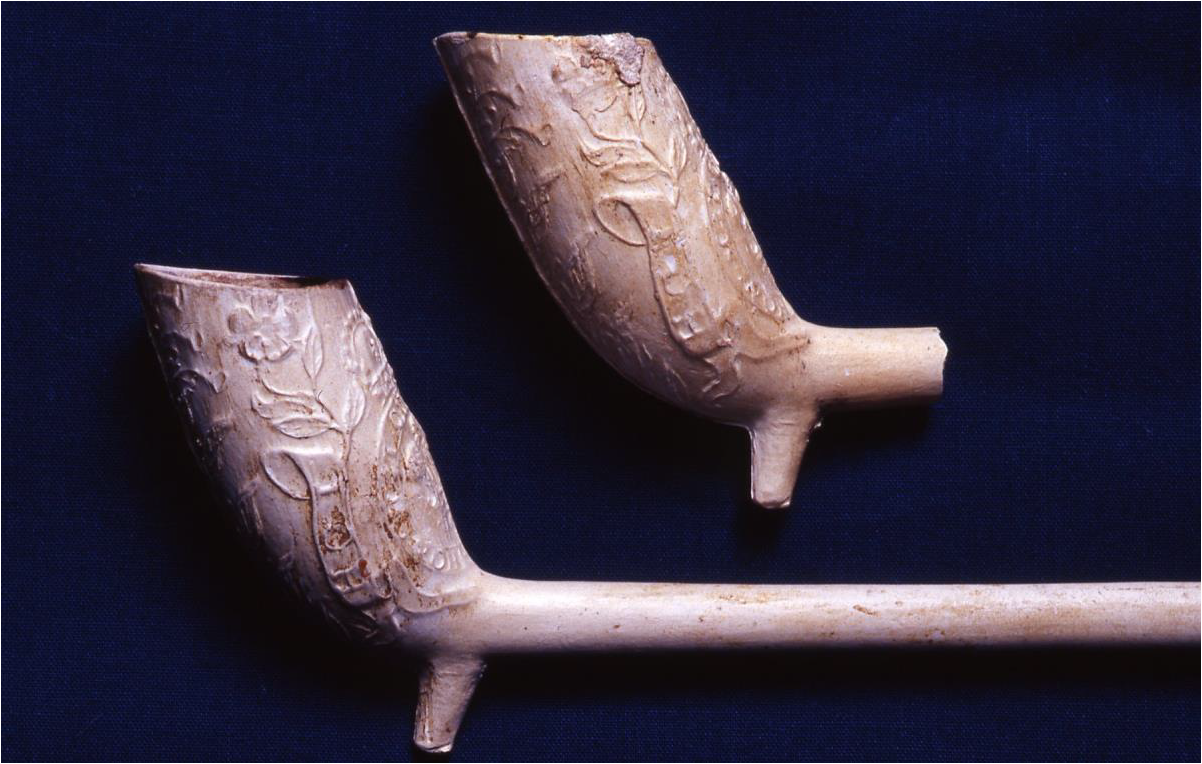
There was a display of clay pipes with explanations of how they are a useful dating aid and a collection of ancient fossils. Children were catered for with free activities such as colouring roman mosaics, making their own Saxon shields on paper plates, making bookmarks with their name in Viking runes and a fun quiz. There was also a popular tombola with children’s items with an archaeological theme. It was very pleasing to see a steady stream of visitors throughout the day.

CVA24 Church Road – Pottery Report – Trench 1 Melvyn Dresner

Toast Rack (Tim Curtis, text and photos)

It comprised 9 conjoining fragments of about 2/3 of a white glazed ceramic toast rack base, with the attachment scars of 4 vertical partitions for holding toast slices (see picture 1).

Picture 1

The base was a flat hexagonal plate with raised edges to retain stray toast crumbs. The partitions were constructed from hollow tubes in a figure-8 pattern (Picture 2).

Picture 2

Only 1 separate partition tube fragment was recovered.

3 of 8

There were probably 5 partitions to hold 4 slices of toast, with a ring handle on the central one for carrying and passing round the table (see example picture 3).

Picture 3

The earliest known examples of toast racks date from the 1770s,

This decorative ceramic example is probably of mid-Victorian age. It’s location in context 003 places it potentially in phase 3 of the occupation of the site, the Baptist Church and the working men’s club.

Stove top (Susan Trackman, pers comm)

Ceramic tiles, with ridges and perforations, probably from stove top or room heater, probably imported from continental Europe (Belgium, France, or German/ Austrian), decorative and small scales suggested used to warm parlour.

Photo shows perforations of stove top:

4 of 8

Photo shows lip to enable cover to sit securely on stove:

Photo from below

Bat roosts may halt study of Marlborough Mound Stewart Wild

Plans to cut into a 4,000-year-old mound to allow further research on its history could be stopped by the presence of bats. The Castle Mound in Wiltshire, also known as the Marlborough Mound, is the second largest Neolithic mound in Europe at 62ft high. Marlborough College has applied for planning permission to try to “enhance its setting” by demolishing school buildings that “cut into” the west side of the mound. The aim is to carry out further archaeological research when the buildings are gone – and eventually put in a curved stone-faced support to reinforce the mound.

But the presence of bats, which are protected, could halt the project. In documents to support the application, the College said the mound was a “nationally important scheduled monument” with significance including its prehistoric use, artistic interest and historic links to the Seymours, the family of Henry VIII’s third wife Jane. The mound has been carbon dated to 2400BC and features part of a medieval castle as well as some 17th- and 18th-century garden features.

Wiltshire Council is expected to decide on the application in September, but the council’s ecology team has raised concerns that the buildings being earmarked for removal could be a haven for bats. It said in a report:”The buildings on site appear to have some potential for roosting bats and there are records of bats in the local area. “The ecology team should be reconsulted once the results of all the surveys are available. In carrying out its statutory function, the authority must be reasonably sure that the proposal will not result insignificant adverse effects on protected habitats or species.”

The works are intended to enhance the visitor experience of the new Mound Information Centre which is being completed in the College grounds. The buildings embedded into the mound include a decommissioned plant room, disused toilet block and a carpentry workshop which all have little or no heritage value, according to the College. SOURCE: Daily Telegraph, 21 July 2025, item edited by Stewart Wild

5 of 8

Ancient Egyptian’s handprint found on clay model Stewart Wild

A hand print left 4,000 years ago on a clay model crafted to go inside an Egyptian tomb has been discovered during preparation for an exhibition later this year. The imprint was left on the base of a “soul house”, a clay model in the shape of a building which would then be placed inside a burial chamber. The model on which the hand print was discovered has been dated to around 2050 to 1650 BC. It had an open front space where items of food were laid out, in this example, loaves of bread, a lettuce and an ox’s head. Soul houses may have acted as offering trays or provided a place for the soul of the deceased to live within the tomb.

Helen Strudwick, senior Egyptologist at Cambridge’s Fitzwilliam Museum, said: “We’ve spotted traces of fingerprints left in wet varnish or on a coffin in the decoration, but it is rare and exciting to find a complete handprint underneath this soul house. This was left by the maker who touched it before the clay dried. I have never seen such a complete handprint on an Egyptian object before.”

The researcher, who is also curator of the museum’s new Made in Ancient Egypt exhibition, continued:”You can just imagine the person who made this, picking it up to move it out of the workshop to dry before firing. Things like this take you directly to the moment when the object was made and to the person who made it, which is the focus of our exhibition.” Analysis of the item suggests that the potter who made it first created a framework of wooden sticks and then coated it with clay to make a building with two storeys supported by pillars. Staircases were formed by pinching the wet clay. During firing the wooden sticks burnt away, leaving empty spaces in their place. The hand print found underneath was probably made when someone, perhaps the potter, moved the model out of the workshop to dry before firing in a kiln.

The soul house will be on display in the museum’s Made in Egypt exhibition which opens to the public on Friday 3 October. SOURCE: Daily Telegraph, 28 July 2025, item edited by Stewart Wild.

Exhibitions

Bloomberg Mithraeum – Exhibition. 17 July – 10 January 2026 https://www.londonmithraeum.com/bloomberg-space/

Jane and Louise Wilson: Performance of Entrapment. This exhibition centres 2,000-year-old oak stakes discovered during excavations for Bloomberg’s European headquarters believed to have once supported a crossing over the River Walbrook – an ancient waterway that flowed beside the Temple of Mithras and still runs beneath the streets of modern London. Using microscopic imagery, the Wilsons draw inspiration from the wood’s structure and DNA sequencing, to create large-scale, visually layered artworks.

Performance of Entrapment investigates parallels between the Roman Temple of Mithras and Ise Jingu shrine in Japan — two sacred sites – the Roman Temple of Mithras (3rd Century AD) and Japan’s Ise Jingu shrine (4th Century BC). Though geographically and culturally distant, they both feature similarities in iconography and house significant relics: the head of Mithras in London, and the Sacred Mirror of the Emperor at Ise Jingu. A film by the Wilsons, created with shrine authorities within the grounds of Ise Jingu, explores sisterhood, duality and renewal. Please note: this exhibition contains occasional flashing lights, which may affect individuals with light sensitivity or photosensitive epilepsy. Strobe lighting is not in use.

British Library, London. Secret Maps. 24 October 2025 – 18 January 2026.

Who shapes your world? Who decides what you see? What hides behind grid lines? Tickets £20

Concession and off-peak pricing available. Step into the shadows at Secret Maps, a major new exhibition revealing the stories hidden in some of history’s most mysterious maps from the 14th century to the present day.

6 of 8

OTHER SOCIETIES’ EVENTS Eric Morgan

As always, please check with the Societies’ websites before planning to attend, since not all Societies or organisations have returned to Pre-Covid conditions.

17th November, 7.30 pm. Enfield Society. Jubilee Hall, 2 Parsonage Lane/Junction Chase Side, Where are London’s Monasteries? Talk by Andrew Gray on the monasteries that existed in London before the Dissolution. Please visit www.enfieldsociety.org.uk Non-members charge £1.

Tuesday 25th November, 1 pm. Society of Antiquaries, Burlington House, Piccadilly, London, W1J 0BE.Wedded to the Realm: Queen Mary I, The Guildhall Speech, and a Spousal Ring. Talk by Valerie Schutte. Also on Zoom. Free. Visit https://www.sal.org.uk/events/ to book.

Tuesday 25th November, 7.15 pm. Hornsey Historical Society. Union Church Hall, Corner Ferme Park Road/Weston Park, London. N8 9PX. English Public Libraries’ Architecture, 1850-1930. Talk by Ray Rogers (HHS). Please visit www.hornseyhistorical.org.uk here may be a request for a donation of £5.

Tuesday 2nd December, 11am. Enfield Society. Jubilee Hall, 2 Parsonage Lane/Junction Chase Side, Enfield, EN2 0AJ. Pleasure Gardens: A Place to see and be seen. Talk by Julie Chandler on London’s famous Pleasure Gardens. Please visit www.enfieldsociety.org.uk Non-members charge £1.

Wednesday 3rd December, 4.30 pm. Thames and Docklands History Group – London Museum of Docklands, No 1, West India Quay, off Hertsmere Road, London. E14 4AL. The Thames Tunnel- 8thWonder of the World! Talk by Robert Hulse (Brunel Museum). https://www.tdhg.org.uk/event-details/the-thames-tunnel-eighth-wonder-of-the-world.

Sunday 7th December, 10.30 am. Heath and Hampstead Society – Known and Unknown Landmarks of the East Heath. Meet at Parliament Hill Bandstand, off Gordon House Road, Gospel Oak, NW5. Walk from Bandstand to Kenwood House. Led by Jeska Harrington-Gould. Lasts approx. 2 hours. Free. Further information from Tereza Pultarova on 07776 649163 or email hhs.walks@gmail.comhttps://www.heathandhampstead.org.uk/.

Tuesday 9th December, 6.30 pm. L.A.M.A.S. Talk on Zoom. Farms, Playhouse and Taverns: by Sarah Wolfaston and Steve White. Radical Experiments and Liberation in Whitechapel. Excavations on the site of Stepney Way, Whitechapel in 2018-19 and its main discoveries from Iron Age to Medieval and Tudor. Please visit www.lamas.org.uk.

Tuesday 9th December, 8 pm. Amateur Geological Society. Talk on Zoom. Fossil Bryozoans from the Chalk, by Dr. Paul Taylor (National History Museum). Among the most common fossils in the chalk of colony forming animals. Please visit https://amgeosoc.wordpress.com/meeting-dates/  for details and link.

Tuesday 9th December, 8 pm. Historical Association (North London Branch). Jubilee Hall (Address as for Tuesday 2nd December). Christmas on Trial during the English Revolution. Talk by Dr. Ariel Hassayon (U.C.L.). Non-Members charge £2.

Wednesday 10th December, 2.30 pm. Mill Hill Historical Society. Trinity Church, 100, the Broadway, London, NW7 3TB. Baths and Bathing through the Ages. Talk by Ian Betts. www.millhill-hs.org.uk.

Thursday 11th December, 5 pm. Society of Antiquaries. Burlington House (Address as for Tuesday 25th November). Scholars and Scandal – The First Publication of Samuel Pepys’ Diary. Talk by Professor Kate Loveman (FSA). Also on Zoom. Free. To book visit www.sal.org.uk/events.

7 of 8

Friday 12th December, 7.30 pm. Enfield Archaeological Society. Talk on Zoom. Roman Painting and Decoration. By Han Lie (MoLA). Please visit https://www.enfarchsoc.org/  for further details and link.

Thursday 18th December, 10.40 am. The Arts Society, Enfield, Revival Christian Church, 47, London Road, Enfield. EN2 6DS. Christmas in Bach’s Leipzig – The Christmas Oratorio of 1734/5. Talk by Sandy Burnett. Visitors fee £10. https://theartssocietyenfield.org.uk/Lectures/FutureLectures.aspx.

Thanks to our contributors this month: Melvyn Dresner, Sue Loveday, Eric Morgan, Janet Mortimer, Stewart Wild

Hendon and District Archaeological Society

Chair   Sandra Claggett, c/o Avenue House, 17 East End Road, Finchley N3 3QE
email : chairman@hadas.org.uk

Hon. Secretary   Janet Mortimer 34 Cloister Road, Childs Hill, London NW2 2NP
(07449 978121), email: secretary@hadas.org.uk

Hon. Treasurer  Roger Chapman, 50 Summerlee Ave, London N2 9QP (07855 304488)
email: treasurer@hadas.org.uk

Membership Sec.  Vacancy. A new volunteer is needed. If you are interested please contact
Sandra on the Chairman email address above to discuss.

Website:             www.hadas.org.uk

HADAS is registered with the UK Charity Commission (Registration number 269949)

8 of 8

Newsletter 655 – October 2025

By | HADAS, Latest Newsletter, News, Past Newsletters, Volume 12 : 2025-2029 | No Comments

______________________________________________________________________________________________________________________________

No. 655 OCTOBER 2025 Edited by Robin Densem

HADAS DIARY – Forthcoming lectures and events

Tuesday October 14th 2025. Dr. Wendy Morrison – “Our Cross to Bare: Chalk carvings in the Central Chilterns”

Tuesday November 11th 2025. Dr. Signe Hoffos – “Pre Fire Churches of the City of London churches lost to the great fire of London in 1666” this replaces the previous lecture entitled “Lost Churches of the City of London: 500 years of City churches lost to fire, war and urban redevelopment” as this had been heard by members a few years ago.

No lecture in January 2026

Tuesday February 10th 2026. Dr James Bromwich. “Great archaeological discoveries and great archaeologists of France: Alexandre du Mège: a founder of archaeological research in France – or rogue? Léon Joulin: an outstanding intellect and a founder of modern archaeology. Émile Chénon: a leading nineteenth century lawyer with a love for archaeology. Sophie Krausz: in the forefront of twenty-first century archaeology and museum presentation”

Tuesday March 10th 2026. Les Capon from AOC Archaeology is back after his last very interesting lecturethis time he will talk about archaeological material evidence from Bricks to Gold.

Tuesday April 14th 2026. Scott Harrison on “Behind the Battle of Barnet banners. People of the War of the Roses. The lives of people that fought at the Battle of Barnet and the life society and culture of the late fifteenth century.”

Lectures held in the Drawing Room, Avenue House, 17 East End Road, Finchley N3 3QE. 7.45 for 8pm.

Buses 13, 125, 143, 326, 382, and 460 pass close by, and it is a five-ten-minute walk from Finchley Central Station on the Barnet Branch of the Northern Line where the Super Loop SL10 express bus from North Finchley to Harrow also stops. Tea/Coffee/biscuits available for purchase after each talk.

Events news

Some HADAS members are going on a “bus pass” visit to the Secrets of the Thames exhibition at the London Museum in Docklands in early November. This will be on a Saturday and the cost of entry is from £16. If you are interested in joining them, please email secretary@hadas.org

HADAS have been granted special access to Tudor Hall in High Barnet on Thursday the 23rd of October before this Barnet Museum is staying open beyond normal hours from 4.30 pm just for HADAS we will visit the Hall afterwards. This will be a rare opportunity to have access to a genuine Elizabethan Building especially as the building is likely to be privately sold. I urge members to take advantage of this one off special access for the Museum and the Hall. Please email chairman@hadas.org.uk to express interest or if you have questions. Meanwhile here is a link to Barnet Museum BARNET MUSEUM – Home and information on the building: https://www.highlivingbarnet.com/tudor-hall/

1

HADAS Coach trip. HADAS are planning a coach trip next April the cost would be between £599 and £699 for 4 daysand 3 nights to the Peak District area. However, we would need a minimum number to go ahead. If you are interested please email stating whether you require a single or double room with your name and the name of any guests coming with you by the 14th of November to the chairman@hadas.org.uk

The archaeology and heritage working party sessions in the HADAS workroom at Avenue House are held on Sunday mornings, from 10.30am. The sessions are open to all HADAS members and are both important and convivial. It would be wise to check with the committee (committee-discuss@hadas.org.uk) that the session will be held before you travel as just occasionally a session is cancelled.

Images of St Pancras Old Church, Kings Cross: A Worthwhile Site to Visit. Robin Densem

I visited the church in late 2024 and early 2025 while assembling this article. I had walked past the church some 40 years ago and its location, away from a visible ancient settlement, was mysterious to me, as was its name. Recently, one of the owners of the main archaeological firm I work for wrote a piece extolling the worthwhileness of visiting the church that he often saw from his train window. And that spurred me on.

2

3

There is a plaque in the church listing of the pretty much continuous succession of priests at the church since 1181, and a list 1183-1938 can also be seen on the internet at https://www.british-history.ac.uk/survey-london/vol19/pt2/pp124-131#h2-s1 (accessed 28th January 2025).

The church was restored and enlarged in 1847-8 when the tower that had stood at the west end was demolished, and the building was extended in that direction, over the site of the old tower. A new tower was built on the south side of the church. When excavating in the old foundations of the west tower workmen stumbled across a trove of treasures that had probably been hidden there during the course of the 17th century English Civil War when the church had been used as military lodgings. Six feet down, the current guidebook explains, the workers found an Elizabethan silver chalice, and a paten that is used nowadays, every Sunday at mass. They also uncovered an altar stone believed to date from the eleventh century, but which might be earlier, and that is kept behind a clothe below the present altar.

4

5

7

8

9

10

OTHER SOCIETIES’ EVENTS Eric Morgan and Sue Loveday

As always, please check with the Societies’ website before planning to attend, since not all societies and organisations have returned to pre-covid conditions.

Wednesday 8th October, 2.30 pm. Mill Hill Historical Society. Trinity Church, 100, the Broadway, London.NW7 3TB. Brent Cross Town, An exciting new development in North London. Talk by Carol McNish. Please visit www.millhill-hs.org.uk

Saturday 1st November, 10.30 am. – 4.30 pm. Geologists’ Association Festival of Geology. Geological Society, Burlington House, Piccadilly, London. W1J 0BG. Free. Lots of stalls from Geological Societies from all over the country including The Amateur Geological Society selling jewellery, gems, fossils, rocks, minerals, books, maps, etc. Also talks. Please visit www.geologistsassociation.org.uk

Wednesday, 12th November. 2.30 pm. Mill Hill Historical Society. Trinity Church (address as for Wednesday8th October above). St. Lawrence Church, Little Stanmore (Handel’s Church). Talk by Stuart Cawthorn. Please visit www.millhill-hs.org.uk

Wednesday 12th November, 7.30 pm. Willesden Local History Society, St. Mary’s Church Hall, bottom of Neasden Lane (around corner from the Magistrates’ Court) London, NW10 2DZ. Volunteer for the International Brigade. Talk by Dave Chapple. The story of young Howard Andrews of Kilburn who joined the International Brigade in July 1936 to volunteer to fight in the Spanish Civil War against Fascism. Please visit www.willesden-local-history.co.uk for further details.

Friday 14th November, 7.30 pm. Enfield Archaeological Society, Jubilee Hall, 2 Parsonage Lane/Junction Chase Side, Enfield, EN2 0AJ. The Battle of Barnet, 1471. Talk by Peter Masters (Cranfield University).Please visit https://www.enfarchsoc.org/ for further details. Visitors charge £1.50, Refreshments to be available, Sales and Information from 7 pm.

Saturday 15th November, 10.30 am. – 5.30 pm. LAMAS Local History Conference. Wilberforce Room,London Museum at Docklands, West India Quay, off Hertsmere Road, London. E14 4AL. Food Glorious Food, on the theme of Food in London History. Conference starts at 11 am. Afternoon refreshments included. Tickets are £15 (£17.50 after 1st November or £20 in cash only on the day, subject to availability).For more information, including the full programme and to book online please visit www.lamas.org.uk/conferences-and-lates/ via the Events page.

Wednesday 19th November, 3 pm. Edmonton Hundred Historical Society. Jubilee Hall (address as for E.A.S. Friday 14th November, above). 150 years of Christ Church, Enfield Chase Side. Talk by Stephen Gilburt (Enfield Society). Please see Saturday 13th September in the August Newsletter.

Thursday 20th November 8 pm. Historical Association. Hampstead and N.W. London Branch. Fellowship House, 136A Willifield Way, London, NW11 6YD (off Finchley Road, Temple Fortune). The Armenian Genocide. Talk by Paula Kitchin, also on Zoom. Please email Dudley Miles (HADAS) on dudleyramiles@googlemail.com or telephone 07469 754075 for details of link and how to pay (there may be a voluntary charge of £5). Refreshments to be available.

11

Friday 21st November, 7.30 pm. Wembley History Society. St. Andrew’s Church Hall (behind St. Andrew’s new church) Church Lane, Kingsbury. London. NW9 8RZ. Victorian London’s Health Crisis. Talk by Rob Casey will show how water and sanitation infrastructure made London susceptible to water born disease. Visitors charge £3. Refreshments in the interval.

Wednesday 26th November, 7.30 pm. Friern Barnet and District Local History Society. North Middlesex Golf Club, the Manor House, Friern Barnet Lane, London. N20 0NL. How the Trains came to Barnet. Talk by Denis Bird (Barnet Local History Society). Please visit www.friern-barnethistory.org.uk. Non-members charge £2. A Bar will be available.

********************************************************************************************

With many thanks to this month’s contributors: Eric Morgan and Sue Loveday

********************************************************************************************

______________________________________________________________________________________________________________________________

Hendon and District Archaeological Society

Chair   Sandra Claggett, c/o Avenue House, 17 East End Road, Finchley N3 3QE
email : chairman@hadas.org.uk

Hon. Secretary   Janet Mortimer 34 Cloister Road, Childs Hill, London NW2 2NP
(07449 978121), email: secretary@hadas.org.uk

Hon. Treasurer  Roger Chapman, 50 Summerlee Ave, London N2 9QP (07855 304488)
email: treasurer@hadas.org.uk

Membership Sec.  Jim Nelhams, 61 Potters Road, Barnet EN5 5HS (020 8449 7076)
email: membership@hadas.org.uk

Website:            www.hadas.org.uk

HADAS is registered with the UK Charity Commission (Registration number 269949)

______________________________________________________________________________________________________________________________

12

Newsletter 654 – September 2025

By | HADAS, Latest Newsletter, News, Past Newsletters, Volume 12 : 2025-2029 | No Comments

 No. 654 September 2025 Edited by Sandra Claggett

HADAS DIARY – Forthcoming Lectures and Events

Tuesday October 14th 2025 Dr. Wendy Morrison – “Our Cross to Bare: Chalk carvings in the Central Chilterns”

Tuesday November 11th 2025 Dr. Signe Hoffos – “Pre Fire Churches of the City of London churches lost to the great fire of London in 1666” this replaces the previous lecture entitled “Lost Churches of the City of London: 500 years of City churches lost to fire, war and urban redevelopment” as this had been heard by members a few years ago.

No lecture in January 2026

Tuesday February 10th 2026 Dr James Bromwich. “Great archaeological discoveries and great archaeologists of France: Alexandre du Mège: a founder of archaeological research in France – or rogue?Léon Joulin: an outstanding intellect and a founder of modern archaeology. Émile Chénon: a leading nineteenth century lawyer with a love for archaeology. Sophie Krausz: in the forefront of twenty-first century archaeology and museum presentation”

Tuesday March 10th 2026 Les Capon from AOC Archaeology is back after his last very interesting lecture this time he will talk about archaeological material evidence from Bricks to Gold.

Tuesday April 14th 2026 Scott Harrison on “Behind the Battle of Barnet banners. People of the War of the Roses. The lives of people that fought at the Battle of Barnet and the life society and culture of the late fifteenth century.”

Lectures held in the Drawing Room, Avenue House, 17 East End Road, Finchley N3 3QE. 7.45 for 8pm.

Buses 13, 125, 143, 326, 382, and 460 pass close by, and it is a five-ten-minute walk from Finchley Central Station on the Barnet Branch of the Northern Line where the Super Loop SL10 express bus from North Finchley to Harrow also stops. Tea/Coffee/biscuits available for purchase after each talk.

Events news Janet Mortimer

Some HADAS members are going on a “bus pass” visit to the Secrets of the Thames exhibition at the London Museum in Docklands in early September. This will be on a Saturday and the cost of entry is from £16. If you are interested in joining them please email secretary@hadas.org.

1 of 12

We are also going to hold another HADAS Open Day at Stephens House and Gardens, East End Road in
Finchley on Sunday 21st September between 10am and 4pm. Volunteers to help set up the stall from
9.30am and help out in the day would be very welcome.

Sandra Claggett

HADAS have been informed that they can visit Tudor Hall in High Barnet. This would be a rare opportunity to have access to a genuine Elizabethan building especially as the building is likely to be privately sold.

More information concerning the visit will be sent out to members as it is known. Meanwhile here is a link
to information on the building. Tudor Hall // High Living Barnet.

The following site phasing and Pottery Report is further analysis from HADAS 2024 excavation:

Church Road, Hendon, NW4, HADAS Excavation 2024, Site Code CVA24 Bill Bass

Part 3 Site Phasing – Andy Simpson and Tim Curtis

CVA 24 site phasing based on the Small Finds

Phase one – pre- Bennet’s School:
A fragment of pipe bowl is large enough to ascertain that its internal diameter at the rim would have been 16mm. The fragment is also large enough to ascertain that the bowl would have had an upright shape. This size together with its shape would indicate that it was probably manufactured during the 19th century. None of the pipe stems are datable but according to the National Pipe Archive NPA home
(NPA home) the bore hole size is consistent with pipes manufactured from the late 18th century.

Phase two – Bennet’s School 1766/72 – 1857:
Slate pencil frags, Trench 1 [001], Trench 2 [001] and Trench 3 [001].
Stove top, Trench 1 [003] small find 7.
Stoneware ink bottle Trench 3 [005], small find 18 contained in mortar floor.

Contexts [001] in trenches 1,2, and 3 is topsoil.

Phase three – Hendon Baptist Church/ Working Men’s Club:
Toast Rack, Trench 1 [003] small find 8.
Trench 1 [003] was an 18cm deep mortar layer – yellow/white mortar demolition layer.

Phase four – Kings Furniture Warehouse 1888-1937:
Furniture fitting, Trench 1 [003] small find 6.
Keyhole cover, Trench 1 [003] small find 19.

Phase five – WW2
(unknown use).

Phase six Public Open Space
Coins
2p 1975/ 20p 1993, Trench 1 [001].
1p 1980/10p 1995, Trench 2 [001].
1p 2001, Trench 2 [006].
Finger ring, Trench 1 [001].

2 of 12

Dairy bottle Express Dairies, Trench 3 [001] small find 17.
Bottle base, Trench 3 [001] small find 16.
Milk bottle base, Trench 2 [001] small find 13.

CVA24 Church Road – Pottery Report – Trench 1 Melvyn Dresner

Trench 1
Context 001 (Topsoil)
Typical 19th and early 20th century domestic pottery, refined white earthenware (REFW) plate, circa 180mm, white stoneware (WHIST) jar base with 40mm diameter, and transfer printed ware (TPW2) tea cup, rim circa 80mm.

Context 002 (Demolition layer, silty clay and construction building material)
Mainly 19th and 18th century pottery including refined red earthenware, transfer printed ware (TPW 4, TPW Flow, TPW) plates with green decoration and flow blue, white salt-glazed stoneware (SWSG) cup and bowl, and London-area post medieval redware (PMR) flower pot and cookware.

Context 003 (and Context 004) both mortar layers
Context 003 includes English porcelain (ENPO) bowl, white salt-glazed stoneware (SWSG) and London
tin-glazed ware with pale blue glace (TGW Blue). This context also includes a REFW toast rack, ceramic
stove top, curtain pull and ceramic door furniture (key hole cover). The ENPO bowl has a rim dimension of
50mm, in three fragments circa 63% of the bowl recovered.

English porcelain from Context 003:

Ceramic Door Furniture (Key hole cover)
Rear view For scale (and inked up for the archive)
Ceramic Door Furniture (Key hole cover)
Front view

3 of 12

Context 004
As noted silty clay similar or same as context 003. This included one fragment of English porcelain (ENPO)
saucer, hand painted, also clay pipe stem.

Context 005 (clay with bone and ceramic building material)
This context also included oyster shell and worked stone. Refined white earthenware (REFW) and London-
area post medieval redware (PMR), all forms unidentified apart from one PMR bowl with rim dimensions of 190mm.

A further article on the pottery report for this excavation will appear in a later newsletter.

Vine Cottages Excavation 2025 Catie Teodorescu

Introduction

Between the 31st of July and the 4th of August, members of HADAS and the public undertook a programme of trial trenching on the site of the Vine Cottages opposite the Greyhound pub in Hendon. This project was advertised as part of the Council for British Archaeology’s Festival of Archaeology, which, themed ‘archaeology and well-being,’ was well suited for the community focus of the project. The objectives of the excavation were as follows:

  • Establish the phasing, uses, occupation and development of Vine Cottages and the adjoining site (Church House — part of which appears to be on our open space site).
  • Establish likely date of construction of Vine Cottages
  • Establish whether there is evidence of earlier buildings and use of the site.
  • Understand the wider context and setting of Vine Cottages, drawing on previous historical and excavation work undertaken by HADAS and others.

4 of 12

Historical Background

English Heritage photo 1926

Research compiled by HADAS members prior to the excavation revealed that late Post-Medieval and early
modern buildings were well documented through historical maps, newspapers, and other documents — even including aerial photographs. There is not much evidence for archaeological remains from earlier periods on the site. St Mary’s church is of medieval fabric and includes Norman elements, and it is speculated that Hendon has Saxon roots based on its etymology. An excavation at Church Terrace in 1973/1974 uncovered early medieval features in the form of ditches and human remains near the Medieval church ground, but the finds were predominantly from the Post-Medieval period. The Historic Environment Records (HERs) showed a scattering of find spots of individual artefacts across the various historical periods within one kilometre from the site, but not many surviving monuments. The potential for prehistoric and Roman remains was low. The potential for Saxon and Medieval remains was moderate due to its location by the church, although it was likely that later development truncated older archaeological deposits. The potential for Post-Medieval and early modern remains was high, but the extent to which they survived phases of development and demolition was unclear.

5 of 12

Historic Maps

The earliest historical representation of a building on the study site was in the James Crow Map of 1754.
Further details can be seen on the Hendon Tithe Map of 1840, the OS Maps in the 1860s, and the OS Maps in the 1890s.

Methodology

A baseline was laid on an east-west axis, and three trenches were laid in locations that would allow for an
overview of as much of the site as possible while staying clear of known service lines. Two trenches were
placed with their northern edge along the baseline and the third was aligned on its southern edge. All

6 of 12

three trenches started as 1m by 1m squares and were extended to varying degrees throughout the excavation. All digging was done by hand, using mattocks, shovels, trowels, and even a spoon borrowed from The Greyhound pub. Single context recording was used to document archaeological deposits and features, and a stratigraphic matrix was kept for each trench. Multi-context plans were used in most cases, althoughcontexts which were seen uniformly within the trench were not planned.

Trench 1

Trench 1 was the easternmost of the three trenches, with its northern edge along the baseline. The wall
foundation (003), which has been interpreted as belonging to one of the outbuildings that can clearly be seen in the aerial photographs, was quickly uncovered. The inside of the outbuilding was found on the east side of the wall, where a large deposit of concrete (007) prevented further digging. A possible perpendicular wall (005) on the southern end of the trench was visible as well. The outside of the building on the west side was made up of rubbly deposits and contained a lead pipe which was not able to be removed. The trench was extended 50cm at a time, three times, until the modern concrete path stopped further expansion. A floor surface (008) was uncovered at a shallow depth, as well as a possible cut [012] in between this floor and the wall (005). The trench was extended a final time, this time 50cm to the south, in order to determine the extent of wall (005) and reveal whether the interpretation of cut [012] was accurate. This final extension revealed a small area inside the building with another lead pipe that may relate to outdoor toilets known to have existed on the site. Another, newer brick floor (011) bounded this on the west, and was levelled underneath with concrete that was likely the same as the deposit (007). The sequence could clearly be seen, with floor (008) as the older surface, and floor (011) being the newest levelled by concrete (007). The hardness of the early modern concrete made it impossible to dig to earlier levels, but the bottom of the wall was found on the outside. The presence of asbestos-containing materials in the southwestern corner stopped any further extension.

7 of 12

Trench 2

Trench 2 was located in the middle of the site with its southern edge along the baseline. Just four layers
were found, and it was the only trench to definitively hit the natural ground at the bottom. The top layer,
(001), seemed to be garden soil which overlaid a rubbly layer (002) that may be related to demolition of
older structures or made ground. Beneath these thicker deposits, there were two pebble floor surfaces ((003) and (004)) that could have been garden paths or other outdoor surface areas. The trench was extended 50cm to the east when the first floor (003) was found. Both floors continued beyond the extension. The natural was hit about 80cm deep into the trench and was composed of clay densely packed with pebbles.

Trench 3
Trench 3 was located on the western end of the site with its northern edge along the baseline, and had the challenge of being bisected by a large tree root. It contained a similar initial deposit (001) of darker coloured soil, possibly from the garden areas of the cottages, that was found in Trench 2. This was covering a pebble surface (002) overlying made ground containing rubble (003). Underneath this layer, a post-hole [005] and a stake-hole [007] were cut into yellowy clay (009). This clay was only in the southwest part of the trench, next to a darker brown clay (008). The relationship between the two deposits was unclear at this point, so trench 3 was then extended 50cm south. Two different surfaces were found, which both seemed to end exactly where the original limit of excavation had been. The levelling layer (011) between the two floors contained a large variety of broken pot and other domestic finds. The older surface (012) also contained a stoneware bottle and was overlying the same yellow clay layer that was found in the original extent of the trench. It was discovered that the yellow clay (009) was on top of the brown (008), and there was a narrow deep cut on the western edge of the trench. The extent of this feature was not able to be excavated fully, but interestingly, two Anglo-Saxon finds were discovered one

8 of 12

was a pin head and the other a spiral glass bangle. It is clear that the archaeology was disturbed by later Post-Medieval development, but it is possible that this deep feature could relate to older activity on the site. It is unclear whether the natural was reached in this trench.

Conclusion
Now that the fieldwork has ended, the finds and paperwork will be processed. Finds will be washed, sorted, and analysed for evidence to help date deposits or learn more about life in the cottages. The context sheets, plans, and matrices will be assessed to gain a deeper insight on the chronology of the site and the relationship between the features that were excavated. This work is being done on Sunday mornings.

Finally, I just want to say a big thank you to everyone who took part in this project and supported it
throughout. Having only just been elected Field Officer in the last couple months, it was an exciting
challenge to jump headfirst into the role. A special thank you to Roger and Bill for organising this project
from the start. To everyone who came to dig, including our five new members, I hope you all enjoyed it as
much as I did! I look forward to providing updates as we analyse the findings.

Jurassic-era winged reptile found on Skye Stewart Wild

A new species of flying dinosaur has been discovered on the Isle of Skye. The winged reptile lived between 168 and 166 million years ago, during the Middle Jurassic period, and has been named Ceoptera evansae by palaeontologists.

It was first unearthed during a field trip in 2006, when excavations revealed an incomplete skeleton made up of the shoulders, wings, legs and backbone. Almost two decades of work at the village of Elgol have
involved preparing the fossil and making scans of the bones, some of which remain embedded in the rock. Researchers say the specimen belongs to the group of pterosaurs known as Darwinoptera, with many similar dinosaurs found in China.

The Skye individual is rare, the scientists say, and could help shed light on the evolution of pterosaurs. The study, published in the Journal of Vertebrate Paleontology, suggests that Darwinoptera may have been more diverse than previously thought, living for more than 25 million years.

Professor Paul Barrett, a researcher at the Natural History Museum, said, “Ceoptera helps to narrow down
the timing of several major events in the evolution of flying reptiles. Its appearance in the Middle Jurassic
was a complete surprise, as most of its close relatives are from China.

“It shows that the advanced group of flying reptiles to which it belongs appeared earlier than we thought and quickly gained an almost worldwide distribution.”

Ceoptera evansae gets its name from the Scottish Gaelic word cheo meaning mist or fog, and the
Greek/Latin word ptera meaning wing. The second part, evansae, honours Professor Susan Evans, a British
palaeontologist, for her years of scientific work, especially on Skye.

SOURCE: Daily Telegraph, 6 February 2025.

9 of 12

Flying dinosaur fossils unearthed Stewart Wild

The fossilised remains of North America’s oldest known flying dinosaur – dating back more than 200
million years – have been unearthed.

Researchers say the “seagull-sized” pterosaur would have been small enough to comfortably perch on a
person’s shoulder.

Pterosaurs lived alongside other dinosaurs, as well as frogs and turtles, and were the first vertebrates to
evolve powered flight. The jawbone of the new pterosaur species was discovered alongside hundreds of
other fossils, including one of the world’s oldest turtle fossils, at a remote bonebed in Petrified Forest
National Park, Arizona.

The fossils, dating back to the late Triassic period about 209 million years ago, preserve a “snapshot” of a
dynamic ecosystem where older groups of animals, including giant amphibians and armoured crocodile
relatives, lived alongside evolutionary “upstarts” such as frogs, turtles and pterosaurs.

SOURCE: Daily Telegraph, 8 July 2025

Roman coin haul sells for £27k Stewart Wild

A hoard of Roman silver coins that were discovered by a grandfather and grandson metal detectorists has
sold for more than £27,000. The 374 Denarii coins were unearthed on North Yorkshire farmland by Ray
Stobbs, 50, and his 10-year-old grandson Thomas.

Mr Stobbs, a welding supplies salesman from Middlesbrough, dug down 12 inches and uncovered a broken pot that is believed to have been buried for safekeeping in the second century BC by a Roman soldier. The hoard was found in June 2021 in a field near the village of Little Busby. “We are over the moon with the results,” said Mr Stobbs.

SOURCE: Sunday Telegraph, 30 March 2025

Note: Suspect Telegraph proofreading. Surely AD not BC.

10 of 12

OTHER SOCIETIES’ EVENTS Eric Morgan

As always, please check with the Societies’ website before planning to attend, since not all Societies and organisations have returned to pre-covid conditions.

Wednesday 17th September, 7.30 pm. Willesden Local History Society – St. Mary’s Church Hall, bottomof Neasden Lane (Round corner from the Magistrates’ Court) London, NW10 2DZ. Cricklewood Library: A History. Talk by Sally Long on how a much loved Community Asset had survived closure and re-building, thanks to the efforts of local residents in Cricklewood. For further details please visit www.willesden-local-history.co.uk.

______________________________________________________________________________________________________________________________

*Until Thursday 30th October, London Archives, 40 Northampton Road, London. EC1R0HB. London in WW2. Free (Closed Fridays and Sundays). Explores experiences of Londoners during WW2 and the effect it had on the City, using bomb damage maps,diaries, art works, and photos.

______________________________________________________________________________________________________________________________

Tuesday 7th October, 11 am. Enfield Society. Jubilee Hall, 2 Parsonage Lane/Junction Chase Side,Enfield. EN2 0AJ. Unlocking Broomfield. Talk by John Cole (Trustee) on a project focussing on Broomfield Park and House. Please visit www.enfieldsociety.org.uk. Non-member charge £1.

Friday 10th October, 7.30 pm. Enfield Archaeological Society. Talk on zoom. Tudor coin hoards in England and Wales. By Murray Andrews (U.C.L). Please visit www.enfarchsoc.org.uk for further details and link.

Monday 13th October, 3 pm. Barnet Museum and Local History Society. St. John the Baptist Church, Chipping Barnet, Corner High Street/2 Wood Street, Barnet EN5 4BW. London Colney Airfield and the Royal Flying Corps. Talk by Guy Thomas. Please visit www.barnetmuseum.co.uk for further details.Refreshments available afterwards. Visitors charge £2.

Wednesday 15th October. 7.30 pm. Willesden Local History Society. St. Mary’s Church Hall (address as for Wednesday 17th September). Street Signs in Willesden. Talk by Simon Morris (London Topographical Society). How Willesden and neighbouring parishes chose and erected them and how local residents reacted to them.

Thursday 16th October. 8 pm. Historical Association- Hampstead and N.W. London Branch.Fellowship House, 136A Willifield Way, London. NW11 6YD (off Finchley Road, Temple Fortune) History of Backchannel Talks and Nascent Peace Processes in Northern Ireland. Talk by Dr. Tony Craig.

Looks at secret Backchannels in their wider form as used in Northern Ireland to communicate with both Republican and Loyalist Para-militaries and to evaluate their role in both guiding and as part of a wider Government strategy. Also on Zoom. Please email Dudley Miles (HADAS) on dudleyramiles@googlemail.com or telephone 07469 754075 for details of link and how to pay (there may bea voluntary charge of £5). Refreshments available.

Friday 17th October, 7.30 pm. Wembley History Society. St. Andrew’s Church Hall (behind St. Andrew’s new church) Church Lane, Kingsbury, London. NW9 8RZ. A Scrapbook History of 40 years of Barn Hill Conservation Group. Talk by Maria Gold (Barn Hill Conservation Group) on a potted history of their work. Visitors charge £3. Refreshments available.

11 of 12

Wednesday 22nd October, 7.30 pm. Friern Barnet and District Local History Society. North Middlesex Golf Club, the Manor House, Friern Barnet Lane, London N20 0NL. The Miners’ Strike. Talk by NickJones. Please visit www.friernbarnethistory.org.uk for further details. Non-members charge £2. Bar to be available.

Thursday 30th October, 7.30 pm. Finchley Society. Drawing Room, Avenue (Stephens’) House, 17 EastEnd Road, London. N3 3QE. Jean Scott Memorial Lecture. Talk by Frank Kelsall on the life of the Society’s founder. For further details please visit www.finchleysociety.org.uk. Non-members charge £2. Refreshments in the interval.

Thanks to our contributors this month: Bill Bass, Eric Morgan, Janet Mortimer, Melvyn Dresner, CatieTeodorescu and Stewart Wild.

Hendon and District Archaeological Society

Chair   Sandra Claggett, c/o Avenue House, 17 East End Road, Finchley N3 3QE
email : chairman@hadas.org.uk

Hon. Secretary   Janet Mortimer 34 Cloister Road, Childs Hill, London NW2 2NP
(07449 978121), email: secretary@hadas.org.uk

Hon. Treasurer  Roger Chapman, 50 Summerlee Ave, London N2 9QP (07855 304488)
email: treasurer@hadas.org.uk

Membership Sec.  Jim Nelhams, 61 Potters Road, Barnet EN5 5HS (020 8449 7076)
email: membership@hadas.org.uk

Website:           www.hadas.org.uk

12 of 12

Newsletter 653 – August 2025

By | HADAS, Latest Newsletter, News, Past Newsletters, Volume 12 : 2025-2029 | No Comments

No. 653 August 2025 Edited by Paul Jackson

HADAS DIARY – Forthcoming Lectures and Events

Tuesday September 9th 2025 – Apologies – this event is cancelled. The guided walk of the Mithraeum in the Bloomberg building led by Dr. Jane Sidell (Historic England – Principal Inspector of Ancient Monuments) will not take place.

We are considering a “bus pass” visit to the Secrets of the Thames exhibition at the London Museum in Docklands in early September. This will be on a Saturday and the cost of entry is from £16. We just want to assess numbers at the moment so if you may be interested, could you please email secretary@hadas.org.

Tuesday October 14th 2025 Dr. Wendy Morrison – “Our Cross to Bare: Chalk carvings in the Central Chilterns”

Tuesday November 11th 2025 Dr. Signe Hoffos – “Lost Churches of the City of London: 500 years of City churches lost to fire, war and urban redevelopment”

No lecture in January 2026

Tuesday February 10th 2026 Dr James Bromwich. “Great archaeological discoveries and great archaeologists of France: Alexandre du Mège: a founder of archaeological research in France – or rogue? Léon Joulin: an outstanding intellect and a founder of modern archaeology. Émile Chénon: a leading nineteenth century lawyer with a love for archaeology. Sophie Krausz: in the forefront of twenty-first century archaeology and museum presentation”

Lectures held in the Drawing Room, Avenue House, 17 East End Road, Finchley N3 3QE. 7.45 for 8pm.

Buses 13, 125, 143, 326, 382, and 460 pass close by, and it is a five-ten-minute walk from Finchley Central Station on the Barnet Branch of the Northern Line where the Super Loop SL10 express bus from North Finchley to Harrow also stops. Tea/Coffee/biscuits available for purchase after each talk.

Events news Janet Mortimer

I would also remind you about the dig we are carrying out opposite the Greyhound pub in Church End in Hendon from Thursday 31st July to Monday 4th August inclusive. Come along and dig or just come and support us – and have a refreshing pint in the pub afterwards. We will be there from 10 o’clock until around4 o’clock each day.

We are also going to hold another HADAS Open Day at Stephens House and Gardens, East End Road in Finchley on Sunday 21st September. The Finchley Society plan to take part in this joint event. More details will follow in our next newsletter but volunteers to help set up the stall and help out in the day would be very welcome.

1 of 8

Correction to the July Newsletter concerning Committee members. Don Cooper has resigned from the Committee. It was incorrectly stated that he was still a Committee member. The Committee meeting of 22nd July formally voted Catie Teodorescu into the position of Field Office, taking over from Bill Bass.

Church Road, Hendon, NW4, HADAS Excavation 2024, Site Code CVA24 Part 2 The Finds – Bill Bass & HADAS Fieldwork Team

For Part 1 please see July 2025 Newsletter

The Finds

Most of the find’s date to within the history of the site e.g. Bennet’s School construction 1766 to becoming a community open space c1970s. There were none of an earlier date – Roman/Saxon/medieval but some of this may be due to the limited trenching. There was some (mainly) pottery which could be of a pre-1766 date but these would be ‘intrusive’ but they sit within the general dating and archaeology. Below are the individual finds reports:

Clay Pipe by Susan Trackman

The finds and their contexts

All three trenches produced evidence for clay pipe tobacco smoking. In Trench 1, Contexts 1, 2 and 4
contained pieces of pipe. Only Contexts 1 and 6 in Trench 2 contained pipe fragments and in Trench 3 pipe fragments were confined to Context 1. In total some fourteen pieces of straight pipe stem and one piece of bowl were recovered. All material showed some evidence of have been smoked.

Decoration, marking and makers

The fragment of bowl with rim (Trench 3 Context 1) is decorated. There is a raised moulded decoration of a feather or possible leaf along what would have been the centre of the bowl’s front face.

Only one mouthpiece (Trench 1 Context1) is present. It is unwaxed and does not show any evidence of
having once been waxed. Nine pieces of stem show clear evidence of a seam mould but there is insufficient material to determine whether (with the exception of the co-joining stem fragments from Trench 1 Context 4) whether they were made in the same mould. Neither the piece of bowl nor any of the pipe stems show any makers marks.

In all instances the bore hole diameter through the stems measures 5/64″ (2mm) and all holes are relatively close to the centre of the stem suggesting either a single maker or numerous proficient makers using the same width wire. One piece of stem from Trench 1 Context 4 does not conform to this uniformity. Its bore hole is well off centre. This divergence might indicate a different maker but is more likely to indicate a less skilled or slapdash manufacturer.

Dating

The fragment of pipe bowl is large enough to ascertain that its internal diameter at the rim would have been 16mm. The fragment is also large enough to ascertain that the bowl would have had an upright shape. This size together with its shape would indicate that it was probably manufactured during the 19th

2 of 8

century. None of the pipe stems are datable but according to the National Pipe Archive (NPA home) the bore hole size is consistent with pipes manufactured from the late 18th century.

Bennet’s School Glass Report by Andy Simpson

Again with thanks to fellow ‘Sunday Morning’ regulars Tim Curtis and Susan Trackman for their input with analysis and discussion. Most of the glass, as discussed below, appeared to be relatively modern in date and was found in quite small pieces.

Milk bottle

Trench 1 Context 002 yielded five fragments, including one rim, with United Dairies lettering. The company was formed in 1915 and merged with Cow & Gate to form Unigate in 1959.

Trench 3 Context 001 gave up several fragments, including a clear glass base lettered UGB- United Glass Bottle Co – indicating a date post 1913, with moulded dots in lines and a seam. There was also an unmarked bottle or jar base and three pieces of dimpled glass from one bottle.

Beer Bottle

Brown beer or soft drink bottle unmarked body fragments from topsoil layers 001 in Trench 1 and Trench 2(Eight pieces in the latter). Trench 3 Topsoil context 001 yielded a brown glass bottle base lettered R-P with two body fragments from the same vessel.

There was a single fragment of green bottle in Trench 3 Context 003.

Wine Bottle

From Trench 1 topsoil Context 001 there was a moulded green glass neck fragment with rim string.

Trench 2 Context 001 yielded a piece of poor-quality green glass wine bottle, pitted due to a high potash content, and probably somewhat older than most of the other glass fragments found.

From Trench 2 Context 006 there were three co-joining pieces, heavily laminated, plus two other fragments, plus one possible base fragment, all possibly from the same bottle, either hand or mould blown.

Also, from this context there was a small clear glass rim fragment, possibly machine made.

Other Bottles

From Trench 1 Context 02- clear bottle fragment with undecipherable motif or lettering. There was also a ribbed/corrugated curved over ’roll top’ fragment, function unknown.

Trench 2 Context 001 yielded a fragment of blue bottle glass, possibly burnt/mis-shapen, possibly for medicinal use, and the base of a square medicine bottle lettered ‘A’ in a cartouche on the right-hand side.

There was also the complete bottom half of a hand blown, clear glass phial of slightly irregular shape and no markings.

The topsoil from Trench 3 (context 001) yielded a fragment of opaque milky white Lattimo type glass. There was also a small vivid green bottle fragment, a hexagonal clear glass vessel side and the chamfered flat top of a jar, possibly a paste jar.

3 of 8

Drinking Vessels

From Trench 1 Context 002 there was a small potash type fragment of drinking glass with part of a similar
clear glass drinking beaker from Trench 3 Context 001.

From Trench 3 Context 001 came the moulded octagonal base of a wine glass stem.

Vase

Trench 2 Context 002- Green glass barley-twist fragment – possible vase or drinking vessel.

Jar

Trench 2 Context 001- Fragment of ribbed pate jar – similar to the well-known Shippham’s Paste type.
From the same context there was a large jar base.

Plate Glass

Thick piece, possibly from a door, from Trench 1 Context 001.

Other modern type clear window glass found in some quantity in Trench 1 Contexts 002, 003, 004 and 005; Trench 2 001 and 007, and Trench 3 context 001.

Miscellaneous

Trench 1 Context 001- Small clear curved/spherical fragment – possibly from an eye wash vessel.

Bennet’s School – Building Materials Report by Andy Simpson

With thanks to fellow ‘Sunday Morning’ regulars Tim Curtis, Janet Mortimer and Susan Trackman for their
input with analysis and discussion.

Red Fabric Ceramic Peg Roofing Tile

These would have been hand-made in a wooden frame, and known as a peg tile because it would have been hung from a roof with small wooden pegs through the holes. They are difficult to date precisely but were in common use by the Fourteenth Century and in production into the Twentieth Century. See History | Karl Terry Roofing Contractors Kent & South East

With just seven fragments from two of the three trenches combined, peg tile forms only a very small
percentage of the overall red ceramic roof tile assemblage from the site.

There is one complete corner of a tile in Trench 1 context 003, and a further two corner fragments in Trench 1 Context 005 with part of a peg hole, presumed to be from the top part of the tile, along with one more with a possible edge, and part of one in Trench 2 Topsoil context 001, with two edges but no corners, again presumed to be from the top part of the tile, plus two similar smaller fragments.

Red Fabric Curved Imbrex Style Roof Tile

One large fragment from Trench 1 Context 003, probably hand made with slight sooting on one edge.

Other fragments of sooted red roofing tile came from the same context- a slightly curved fragment with sooting on the edge, plus Tench 3 Topsoil context 001.

4 of 8

Red Ceramic Flat Roof Tile with Wipe Marks

One fragment from Trench 1 Context 003 with one surviving edge and very distinct wipe marks on outer
face, and traces of mortar on the inner face

There are a further eight fragments from Trench 2 Topsoil context 001, five of them probably made in the
same mould, indicated by the fact that two corners and two sides all align exactly. Two have traces of
mortar, and all have wipe marks indicating that they are hand-made.

Red Roof Tile Incorporated into Blocks of mortar

Interesting structural phenomenon with two pieces found in each of Trench 1 Contexts 002 and 003
demolition rubble.

Red Fabric Curved and Ridged Tile

One fragment from Trench 2 context 006, with traces of mortar. The same context includes one flat piece
with two edges, one corner, and a very clear incised manufacturing line on the inner face and a slightly
dished presumed outer face. The same trench, context 007, revealed just one small flat fragment with no
edges.

Blue-Grey Roofing Slate

Huge quantities of this materiel were exported from the North Wales slate quarries in the eighteenth and
nineteenth centuries in particular.

Found in all three trenches- including pile of recovered slate placed on demolished wall footing in Trench 1, and in topsoil layer 001 in trenches 2 and 3.

Hand-Made Brick

As with the peg tile, it would have been hand-made in a wooden frame. One complete, hand-made red brick from Trench 3, Context 002. Slightly frogged, heavily mortared, with very white chalky mortar on both faces, so clearly from out of a wall during demolition. One particularly noticeable handmade brick came from Trench 1 context 002, with big inclusions and white mortar; another handmade fragment from the same context also had chalk mortar, as did two very porous looking brick ends, one in brown fabric, slightly frogged, from Trench 1 Context 003. A red brick fragment with white mortar from Trench 1 Context 005 had very visible large pebble inclusions. Another from the same context had red flint inclusions.

Burnt Brick

One probable hand-made brick, very burnt, from Trench 2 Context 001. Further fragment of slightly burnt
dark red hand-made brick with traces of mortar from Trench 1 topsoil context 001.

Machine-made Red/Brown Brick

Machine-made red and brown bricks/brick fragments with uniform inclusions found in Trench 2 Topsoil
Context 001. And two other, machine made with cement (not chalk) mortar fragments from Trench 1
context 002.

5 of 8

Yellow Brick

Typically, nineteenth century London Stock type. Two fragments from Trench 1 context 002; presumably
originating from the outhouse or similar footings/wall in Trench 3 at the rear of the site, made of the same type of brick. Very informative history and discussion at 41: London’s yellow Stock Brick – Building
London – what London is made from and where it came from!

White Limestone Architectural Fragments

Possibly originating from a Tudor-style refacing of the two-story east-end building and the single-story
building to its immediate east in the early nineteenth century shown in two early engravings and the pre-
demolition 1937 photograph- see engravings reproduced in HADAS newsletters 645 December 2024 and
647 February 2025. Four in all, from Trench 1 Context 005, one small fragment with an obvious curved
moulding- one flat face, one curved, possibly from a window;

Architectural Fragments

Sewer Pipe

One modern brown glazed white bodied fragment of the type without which no HADAS site seems
complete!

Wall Tile (Museum Code Walt)

One corner fragment with pale yellow glaze on white slip from Trench 1 Context 003. ‘Frogged’ on back to
trap the mortar; Long thin rectangular type, possibly decorative ‘Dado’ type.

And from Trench 3 Topsoil context 001., one dark green glazed fragment, broken into five co-joining
pieces, and three pieces (two of which co-join) of the same yellow-brown-glazed tile with a prominent nob on the rear face, lettered (MAD)E IN ITALY.

White-Glazed Sanitary Ware

All from Trench 2 Topsoil Context 001- a small piece of lugged tile, a square corner possibly from a sink,
and two partly burnt thick curved co-joining fragments possibly from a wash basin, and one burnt fragment possibly from a toilet pan.

Further instalments of the report will include more finds and phasing of the site.

6 of 8

OTHER SOCIETIES’ EVENTS Eric Morgan

As always, please check with the societies’ website before planning to attend, since not all societies and organisations have returned to pre-covid conditions.

Friday 15th August, 7 pm. C.O.L.A.S. – Guided Walk of West Norwood Cemetery. Further details are not yet to hand, the details will be on the C.O.L.A.S. website. Please visit www.colas.org.uk

July 23rd until Friday 19th September. Society of Antiquaries. Burlington House, Piccadilly, London.W1J 0BE. Magna Carta 1225 -2025 – 800th Anniversary Exhibition. Free. Wednesdays to Fridays11 am. – 4 pm. Unique opportunity to explore the legacy of Magna Carta (1225) and the Charter of the Forest, marking 800 years since its re-issue by Henry III – the version enshrined in English Law.

Sunday 7th September, 11 am. Heath and Hampstead Society. Meet at the Flagstaff at Whitestone Pond(top of Heath Street, NW3). Follow in the footsteps of painter John Constable and trace his inspiration and life story across the Heath and the adjacent village. Walk led by Suzanne Grundy. Please turn up 5 – 10 minutes before the start. Lasts approximately 2 hours. Walk is now free. For further details please telephone Tereza Pultarova on 07776 649163 or email hhs.walks@gmail.com Or www.heathandhampstead.org.uk.

Sunday 7th September, 11 am. – 5 pm. Angel Canal Festival. Regents Canal, City Road Basin, Islington, London. N1 8GJ. Lots of stalls including London Canal Museum. Also boat trips, craft stalls, food and live music. For more information please visit www.canalrivertrust.org.uk/events.

Monday 8th September, 3 pm. Barnet Museum and Local History Society. St. John the Baptist Church, Chipping Barnet, corner High Street/Wood Street, Barnet. EN5 4BW. Make Do and Mend – Fashion during WW2. Talk by Kat Alston Cole. Please visit www.barnetmuseum.co.uk

 for further details. Refreshments are available afterwards. Visitors charge £2.

Tuesday 9th September, 8 pm. Amateur Geological Society. Finchley Baptist Church Hall, 6 East End Road, corner Stanhope Avenue, London. N3 3LX. (Almost opposite Avenue House). The Surface of  Mars as seen by NASA’s Curiosity Rover – A Robotic Field Geologist. Talk by Joel Davis. Full details on www.amgeosoc.wordpress.com

Friday 12th September, 7.30 pm. Enfield Archaeological Society. Jubilee Hall, 2 Parsonage Lane/Junction Chase Side, Enfield, EN2 0AJ. Imperial Logistics in early China, the first Emperor’s Mausoleum and the making of the Terracotta Army. Talk by Andrew Bevan. Please visit https://www.enfarchsoc.org/

 for further details. Visitors charge £1.50. Refreshments, sales and information from 7 pm.

Saturday 13th September, 11 am. – 4 pm. Christchurch U.R.C. Chase Side, Enfield, EN2 6NJ. Tocelebrate the 150 years since the first services. Part of the London Open House Week with refreshments and guided tours around the church. Also visual displays and exhibitions on the history of the Grade II listed church and its predecessors – Zion Chapel and Chase. Side Chapel and the people and activities associated with Christ Church. A new illustrated publication ‘from Zion Chapel to Christ Church –A story of Congregationalists in Enfield’ will be available. For more information on events throughout the year please visit www.ccurc.org.uk for more on Open House London, Saturday 13th – Sunday 21st September 2025– Free entry to London’s best buildings not normally open to the public www.openhouse.org.uk or https://open-city.org.uk.

Sunday 14th September, 12 -5 pm. Queens Park Festival – off Chevening Road or Harvist Road, NW6. Lots of stalls including Willesden Local History Society. Also craft stalls, food and live music.

7 of 8

Thursday 18th September, 8 pm. Enfield Society. Jubilee Hall (Address as for Friday 12th September). A Brief History of the Enfield Society. Talk in anticipation of the Society’s 90th anniversary in 2026 will celebrate the history, successes and aspirations of the society – preceded by AGM.

Thursday 18th September, 8 pm. Historical Association: Hampstead and N.W. London Branch. Fellowship House, 136A Willifield Way, London. NW11 6YD (off Finchley Road, Temple Fortune). The British Anti-slavery Movement 1780-1833. Talk by Professor Lawrence Goldman, examining both the abolition in 1807 and the Emancipation of slaves in the British Empire in 1833. Also on Zoom. Please email Dudley Miles (HADAS) on dudleyramiles@googlemail.com  or telephone 07469 754075 for details of link and how to pay (there may be a voluntary charge of £5) Refreshments to be available at the meeting.

Friday 19th September, 7.30 pm. Wembley History Society, St Andrew’s Church Hall (behind St. Andrew’s new church), Church Lane, Kingsbury, London. NW9 8RZ. Arthur Elvin – Mr Wembley. Talk by Philip Grant. Visitors charge £3. Refreshments to be available in the interval.

Wednesday 24th September, 7.30 pm. Friern Barnet and District Local History Society. North Middlesex Golf Club, The Manor House, Friern Barnet Lane, London, N20 0NL. John Betjeman. Talk by Terence Atkins. Please visit www.friernbarnethistory.org.uk  for further details. Non-members charge £2.

Thursday 25th September, 7.30 pm. Finchley Society. Drawing Room, Avenue (Stephen’s) House, 17East End Road, London. N3 3QE. Talk by the Finchley Society Planning Committee will be givingupdates on major planning projects in the Finchley area including North Finchley Town Centre, LodgeLane, The Great North Leisure Park and the Pentland Development. For further details please visit www.finchleysociety.org.uk.

 Non-members charge £2. Refreshments to be available in the interval.

Thanks to our contributors this month: Bill Bass, Eric Morgan, Janet Mortimer and Stewart Wild.

Hendon and District Archaeological Society

Chair   Sandra Claggett, c/o Avenue House, 17 East End Road, Finchley N3 3QE
email : chairman@hadas.org.uk

Hon. Secretary   Janet Mortimer 34 Cloister Road, Childs Hill, London NW2 2NP
(07449 978121), email: secretary@hadas.org.uk

Hon. Treasurer  Roger Chapman, 50 Summerlee Ave, London N2 9QP (07855 304488),
email: treasurer@hadas.org.uk

Membership Sec.  Jim Nelhams, 61 Potters Road, Barnet EN5 5HS (020 8449 7076)
email: membership@hadas.org.uk

Website:          www.hadas.org.uk

8 of 8

Vine Cottages

By | HADAS, News | No Comments

The occupiers of Vine Cottage

A Census has been taken in England every decade since the 6th June 1841. However, the name ‘Vine Cottage’ at Church End first appears in the Census for 1891 (5 April 1891). Prior to that I have been unable to determine which, if any, of the various farm cottages at Church End mentioned in the earlier Censuses is the cottage which is the subject of this year’s HADAS excavation.

In the 1891 Census, Vine Cottage is listed as being between Frederick Hinge’s Model Farm and Hinge’s Yard. It may have been owned by Frederick Hinge or by Frederick Jordan who in the Electoral Roll for 1886 is tenant in 1891 was 38 year old William Sutton. He was a tailor and he was living in the cottage along with his 32 year old wife who was a dressmaker. The couple had two children, Elsie Nellie Elizabeth Sutton (born 1894) and Henry Charles Sutton  (born 1886).

William Sutton was born in 1853 in Purton Wiltshire. His father was a boot and shoe maker. He came to London in the 1860s and in July 1880 he married Sarah Jane Acton at Holy Trinity Church Hampstead. The couple must have moved to Vine Cottage after February 1886 as at the date (21 February) of Henry Charles Sutton’s baptism at St Mary Hendon, the family were living at 9 The Terrace.

For how long the Sutton family remained at Vine Cottage is unknown. By the date of the 1901 Census (31 March 1901) the family had moved to 6 Church Walk Hendon.

At some time before the Census of 1901 Vine Cottage was altered to create three cottages which from 1901 onwards were known as 1,2 and 3 Vine Cottages.

1 Vine Cottage

The 1901 Census lists the occupants as the Pratchett family. They were still living at 13 Bellone Road when daughter Edith Mabel Pratchett was baptised at St Mary Hendon in June 1899. In 1901, the Pratchett family consisted of Frederick Pratchett aged 29, his wife Kate Amelia Pratchett and one year old Edith Mabel Ptatchett. In the 1901 Census Frederick Pratchett gave his occupation as a ‘yard man on farm.’ This was something of a change of occupation. In 1899 he had been working as a gas fitter.

The Pratchett family were not long term occupants of Vine Cottage. They were still resident when their third child  (Benjamin Charles) was baptised at St Mary Hendon on 3 November 1903 but by the birth of the couple’s fourth child in 1907 the family had moved to Brentford.

Exactly when the next family moved into 1 Vine Cottage is unknown. By the date of the 1911 Census (2 April 1911) the cottage was home to the Wells family. Benjamin Wells was 30 and was working as a carman for a local builder. His father had been a coachman. His wife Mary Ann Wells was 32. Both had been born in Hendon. The couple had a 6 year old daughter Elizabeth Violet Wells.

Benjamin Wells liked a drink and had a bit of a temper. The Hendon and Finchley Times (15 September 1911)  reported that he had been charged with disorderly conduct and using obscene language. Son Charles Henry Wells also liked a fight and the Hendon and Finchley Times (13 June 1930) reported that he and others had been charged with malicious wounding a man named in the newspaper as Charles Bourne.

By the date of the 1921 Census (19 Jun2 1921) Benjamin Wells was working as a dustman.

The Wells family remained in the cottage until it was condemned and pulled down in 1935.

2 Vine Cottage

The 1901 Census lists the occupants as the Saunders family. George Saunders was 32 and was working as a farm labourer. His wife Annie (full name Sarah Ann Willing Saunders) was 24. By 1901, the couple had four children. The Baptismal Register entries for the two eldest (George Henry Joseph in 1894 and Charles in 1895) give the family home as 2 Farm Cottages. Whether this was another cottage or 2 Vine Cottage was also known as 2 Farm Cottage is unknown.  When son Frederick was baptised in 1900, the Baptismal Register records the family home as 2 Vine Cottage.

By 1911 the family had expanded to include a fifth child Richard John Saunders who was just 10 months old at the date of the Census.  42 year old George and his 17 year old son George Henry Saunders were both working as farm labourers – presumably at the Model Farm. 15 year old Charles was working as a laundry boy.

George Henry Saunders enlisted in the army in 1915. However in, December 1917 he was back in Hendon and on Christmas eve he married Kate May Mason at St Mary Church Hendon. He survived the war and when he was discharged in 1919 he and his wife moved to Navestock near Romford in Essex where he worked as a cowman. His parents had by then left 2 Vine Cottage.  According to the Electoral Roll of 1918 the family were living at Model Dairy Farm Cottage.

The Electoral Roll for 1918 lists the occupiers of 2 Vine Cottage as Thomas Henry Johnson and his wife Marian Frances Johnson. When they first moved into 2 Vine Cottage is unknown. Thomas Henry Johnson was a hay-binder and thatcher. Despite being an agricultural worker he was called up to serve in the army but National Archive Records (MH 47/112/48 Case V 1808) show that he avoided army service on the ground that it was expedient in the national interests that he remain in his current occupation.

By the date of the 1921 Census the Johnson family at 2 Vine Cottage consisted of Mr and Mrs Johnson and three sons. The eldest, William Henry Johnson was 21 and like his father and grandfather before him was working as a farm labourer. Second son James, aged 17, was working as an engineer and youngest son Ernest Arthur Johnson was still at school.

The Johnson family quit 2 Vine Cottage in 1926/7. Mr and Mrs Johnson are listed on the Electoral Roll at 2 Vine Cottage in 1926 but by the Electoral Roll of 1928 they had moved to Pinner.

The last occupants of 2 Vine Cottage were Jonathan (known as John) Dopson and his wife Hannah Mary Ann Dopson. They must have moved into the cottage in 1927 as they are listed on the Electoral Roll for 1928. The couple had no children and came from Berkshire where, in 1911 John Dopson had been foreman at the brickworks in Wickham.

The couple are listed as living at 2 Vine Cottage on the Electoral Roll for 1934 but presumably moved out either around the time when the cottage was condemned or just before it was pulled down in 1935. They remained in Hendon and they are listed on the Electoral Roll for 1936 as living at 13 Florence Street.

3 Vine Cottage

From 1901 until it was pulled down in 1935 3 Vine Cottage was occupied by the Ball family.

Charles Ball senior was born in 1862 in Longbridge Deverill Wiltshire where his father worked as an agricultural labourer. On 31 August 1884 he married Hannah Martha (known as Martha) Dickens at St Mary Finchley Barnet Lane. By the date of the 1891 Census, Charles and Martha Ball and two children (Charles John and William Henry) and Charles’s brother and Edward were living in a cottage in Hinge’s Yard. Surprisingly, the name of the Ball’s eldest child (Emily Elizabeth born in 1885) is not listed on the Census. Since she does not appear elsewhere on the 1891 Census this may have been an oversight on the part of the enumerator. Both Charles and Edward were farm labourers. It is unlikely that this cottage was adapted to become 3 Vine Cottage as it is listed as the third cottage in the yard.

By 1901 the family are listed as living at 3 Vine Cottage. It must have been somewhat cramped as the couple were living with their own 5 children as well as an adopted daughter. Charles Ball gave his occupation as a carter on a farm. His son Charles John Ball who was 13 and was employed as an errand boy.

By 1911 only Charles and Martha Ball and two of their daughters were living at 3 Vine Cottage. Mabel May Ball was 18 and was working as a laundry packer and sorter and her sister Beatrice Sarah Ball was still at school. Charles Ball was working as a waggoner on a farm.

Youngest daughter Beatrice Sarah Ball married Harry Victor Percy Cutts in 1818 at St Mary Finchley Barnet Lane. By the date of the 1921 Census they and their three children were living with Charles and Martha Ball. Harry Cutts was working as a postman and Charles Ball described himself on the Census form as a farm labourer.

Charles Ball died in September 1927. His death was reported in the Hendon and Finchley Times on 23 September 1927 and a week later on the 30 September the newspaper reported on his funeral. According to the paper he had been employed at the Model Farm for 42 years.

Charles Ball’s death did not mark the end of the Ball family’s association with 3 Vine Cottage. The cottage is not listed as occupied on the 1928 Electoral Roll. However, by the publication of the 1932 Electoral Roll it again housed members of the Ball family. The cottage was home to Arnold and Kathleen Ball. Arnold was the nephew of Charles Ball and son of the Edward Ball who had lived with Charles in the cottage in Hinge’s Yard in 1891. Arnold Ball had married Kathleen Jane Wiles at St Mary Finchley Barnet Lane in 1915. At that time Arnold gave his occupation (on the marriage certificate) as a labourer. The couple went on to have five children.  Arnold was still listed on the Electoral Roll for 1934 as living at 3 Vine Cottage. His wife’s name is missing. As she died in October 1838 she may have been unwell and was being cared for elsewhere.

The Hendon and Finchley Times of 2 March 1934 reported that all three cottages were condemned as unfit for occupation. However on 26 April 1935 the paper reported that one cottage was still in occupation. According to the paper, this was drawn to the owner’s attention and the paper reported that ‘this week the cottages were raised to the ground.’

Susan Trackman

26 July 2025

Newsletter 652 – July 2025

By | HADAS, Latest Newsletter, News, Past Newsletters, Volume 12 : 2025-2029 | No Comments

No. 652 July 2025 Edited by Melvyn Dresner

HADAS DIARY – Forthcoming Lectures and Events

Tuesday September 9th 2025
The September lecture will take the form of a guided walk in the City of London led by Dr. Jane Sidell
(Historic England – Principal Inspector of Ancient Monuments).

Places will be limited and will need to be booked in advance. Further details will be available nearer the
date. email chairman@hadas.org.uk.

Tuesday October 14th 2025
Dr. Wendy Morrison – “Our Cross to Bear: Chalk carvings in the Central Chilterns”.

Tuesday November 11th 2025
Dr. Signe Hoffos – “Lost Churches of the City of London: 500 years of City churches lost to fire, war and
urban redevelopment”

Lectures held in the Drawing Room, Avenue House, 17 East End Road, Finchley N3 3QE. 7.45 for 8pm.
Buses 13, 125, 143, 326, 382, and 460 pass close by, and it is a five-ten-minute walk from Finchley Central
Station on the Barnet Branch of the Northern Line where the Super Loop SL10 express bus from North
Finchley to Harrow also stops.

Tea/Coffee/biscuits available for purchase after each talk.

HADAS AGM 10th June was attend by 25 members, the meeting was chaired by Jacqui Pearce, our
President, Sandra Claggett was re-elected as Chair, Peter Pickering as Vice Chairman, Janet Mortimer as
Honorary Secretary, Roger Chapman as Treasurer, Jim Nelhams as Honorary Membership Secretary, Bill
Bass stood down as Field Officer, and will greatly missed in that role, he was thanked by all at the AGM,
and he also left the committee. The new elected committee member, Catie Teodorescu has agreed to take on the role of Field Officer. In addition to those mentioned above, the following committee members have agreed to continue serving that is Don Cooper, Robin Densem, Melvyn Dresner, Eric Morgan, Jo Nelhams, Susan Willetts and Susan Loveday.

Vine Cottages Greyhound Hill, Hendon Roger Chapman

HADAS will be excavating a site opposite the Greyhound Public House in Hendon between Thursday 31st July and Monday 4th August as part of the Festival of British Archaeology.

https://www.archaeologyuk.org/festival/festival-event-listing/vine-cottages-excavation.html

The site is now a small Barnet Council run open space, but it is known that Vine Cottages existed on the site and was demolished in 1937, The water colour and photo below (both Courtesy of the London Borough of Barnet archive) show what existed.

1
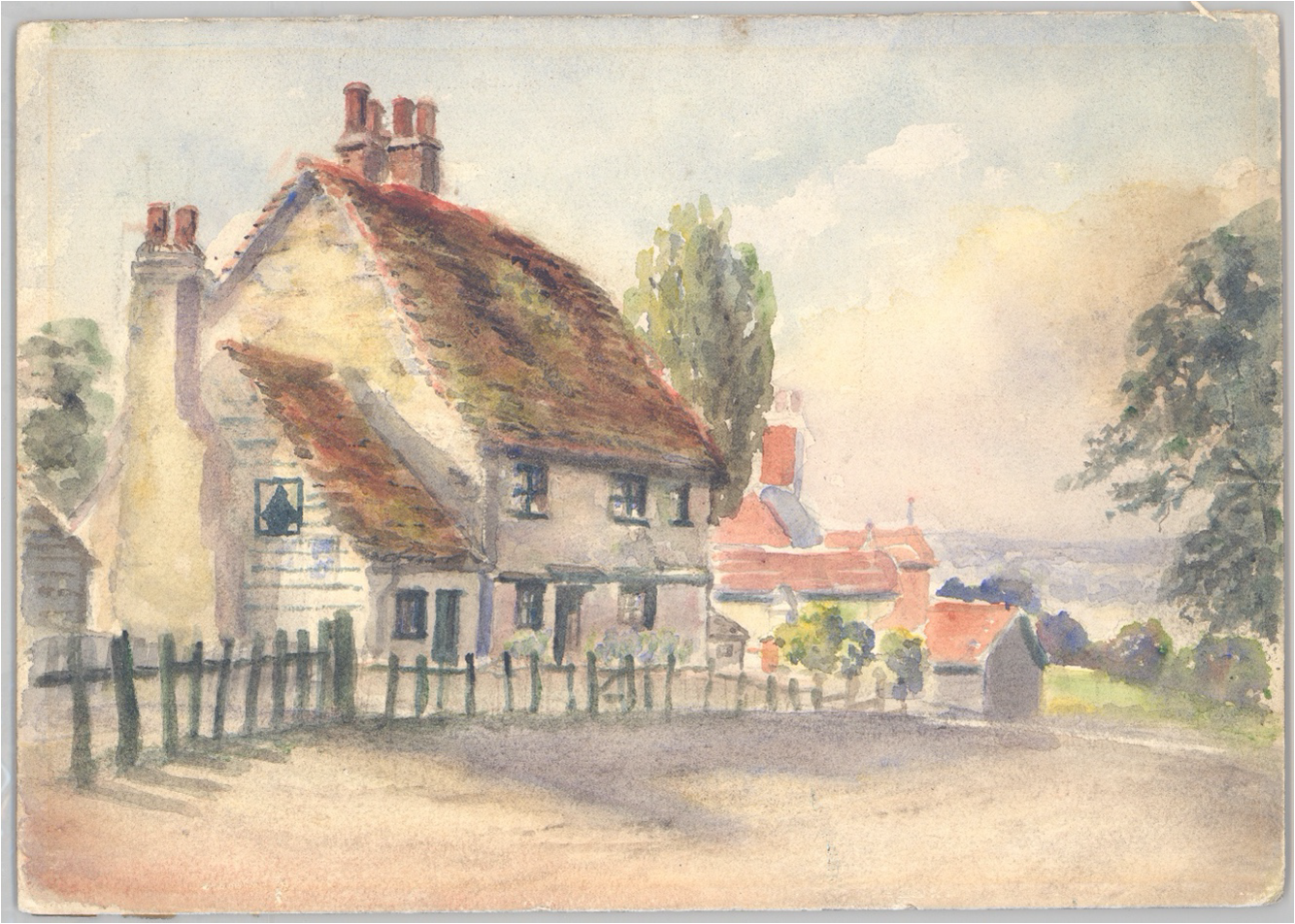
The objectives of our excavation are to:
1. Establish the phasing, uses, occupation and development of Vines Cottages.
2. Establish likely date of construction of Vines cottages’
3. Establish whether there is evidence of earlier building and uses on this site.
4. Understand the wider context and setting of Vines Cottages drawing on previous historical and
excavation work undertaken by HADAS and others.

2

Do come along and see the HADAS excavation in action, – and then have a quiet reflection on it in the Greyhound Public House opposite.

If you want to know more do drop a line to Roger Chapman at; roger.chapman99@btinternet.com.

Roger and his wife Kate Brown, both recently received Barnet Civic awards, more info here:
http://www.the-archer.co.uk/archive/2025/2025Jun05.pdf. Well done to Roger and Kate.

Church Road, Hendon, NW4, HADAS Excavation 2024, Site Code CVA24 (Part 1) Bill Bass

Previous mentions of this dig and the site’s history need to be referred to in conjunction with this report,
please see Newsletters December 2024 (for an overview by Andy Simpson including photos and an
illustration). Also, a further illustration of buildings known on this site was published in the February 2025
issue of the HADAS Newsletter and further details were given in the April 2025 edition. A comprehensive
project design proposal written by Roger Chapman (RC unpublished) will be referred to.

The site owned by Barnet Council (now re-landscaped) was a small incidental open space with grassed
areas, paths and seating. It abuts the east end of the Grade II Listed Building of Daniel Almshouses. It lies
opposite the Claddagh Ring pub on Church Road. The east of the site is bounded by Wroughton Terrace and the historic footpath of West View which runs through this part of Hendon (RC).

The project aims included identifying any remains of the former 18th century Bennet’s Schoolhouse which
stood on the site and any earlier archaeology as Roman, Saxon, Medieval remains are known not far from
the site. As the site fronted directly onto the pavement we could engage with the public as to what we were
doing and further encourage people to join HADAS, several newer members did join us on this excavation.

The dig took place on 6th– 8th September, a baseline was established using the east wall of the Almshouses from which 3 one metre square test-pits were laid-out, some of these were later slightly extended. These were an attempt to find some of the wall foundations as see on various maps and illustrations.
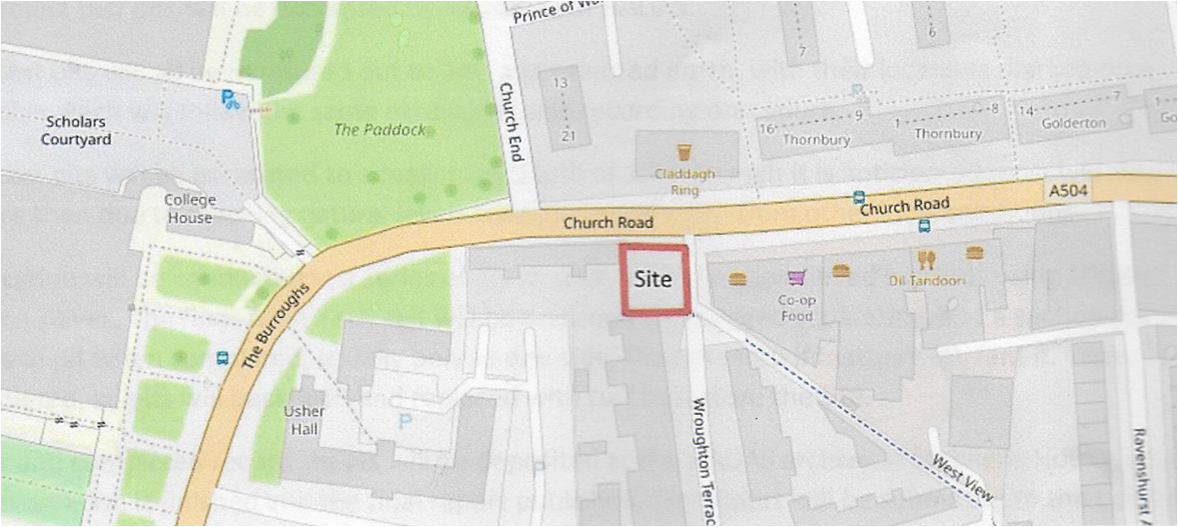
Site location courtesy RC project design

Trench 1
The turf at 84.16 OD covered topsoil approx. 12cm deep which contained finds such as pottery, bone,
glass, clay tobacco pipe and slate pencil frags, then revealed beneath a likely demolition layer 10-20cm
thick, a silty-sand clay context which included various building materials. Below this was contexts 003 and
004 both mortar-based layers 10-20cm thick with brick and tile, possible bases of a floor. Below this was a

3

clay context approx. 10cm thick containing ceramic building material (CBM) and bone. Within these mortar and clay layers in the northwest section was a red-brick wall foundation in English Bond about 50cm long E-W and 4 courses high and around 25cm wide (see page 5 of December 2024 newsletter). There were slight indications of a south return of this wall although heavily disturbed. Opposite the wall stub and at the same level (approx. 45cm below the turf line, 83.81 OD) in the SW corner was a dump of roof slate lying horizontal as if laying on a mortar floor. Associated with this was a considerable amount of brick rubble. The bottom of the trench was reached at approx. 75cm deep, 83.54 OD where clay with pebbles indicated where the natural clay started. The wall above also rested on this clay level.

Trench 2
This 1m sq. trench (later extended 50cm south) was placed some 13m east of trench 1 and further to the south. The ‘topsoil’ 001 was cleared down to around 25cm below the turf line 84.05OD, it was a mixed deposit of sandy clay soil with patches of mortar and burnt material containing pot, bone and ceramic building material (CBM). At this level a further wall was encountered running E-W, the lower 3 stepped foundation courses consisted of red-brick 44cm wide with a further 2 courses on top being 30cm wide, again all in a form of English Bond. In the south side of the wall an ‘indentation’ 25cm wide had been carved into the side of the wall and foundation structure for an unknown purpose (see page 6 photo of December 2024 newsletter). To the north side of the wall again a mortar floor like deposit 4-6cm thick abuts the top of the masonry, below this was an 18cm thick make-up, possibly a grey-black humic buried soil, this sat above natural clay some 72cm below the turf line. The equivalent on the south of the wall was a 45cm depth of brown clayey sandy soil with pot, bone and CBM resting on the natural clay.

The mortar floor context north of the wall indicates this is inside the building while the buried garden type soil points to this being outside possibly in the garden.

Trench 3
Another 1m square trench (again later extended 50cm south) trench was positioned in the SE corner of the site to pick-up what building foundations could be detected there and it was in the vicinity of an historic footpath which connected St Mary’s Church to the centre of Hendon. The 30cm of topsoil was cleared down until the SW corner of a structure was uncovered with its associated mortar floor, again indicating the inside and outside of the building. The plan of the wall and floor was largely similar to those of the other two trenches, it was decided not to excavate further as this gave a good view of how the demolished structures looked. The sampled brick detail here measured: 22cm long, 10cm wide, and 9cm in depth, the bricks were frogged (see Building Material report forthcoming). On the outside of the N-S wall it looks like a brick was removed with something inserted (now disappeared) supported by a metal-tie and roof tile wedged in, a post-demolition post support (?) or similar. (see page 7 photo of December 2024 newsletter). The mortar floor is roughly made-up of brick frags, roof slate and stone with a partial mortar covering, an intact stoneware inkwell bottle was found contained in the mortar floor.

Trench interpretation
The archaeology shows that all the buildings on site were demolished in 1937 to a uniform level (approx. 83.80 OD) with about 5-6 courses of the foundations left, these spaces were then packed with some of the demolition rubble and finds (see below). A rough mortar floor appears to have been formed over the rubble to the same level as the top of the demolished foundations. Gradually the site became covered in topsoil and a small public space was formed with benches, paths and flowerbeds.

It is possible that the substantial E-W brick wall found in trench 2 is for the rear wall of the east gabled (central of three) blocks, while the wall footings in trench 1 are part of the lower gabled building (with porch) situated between there and the still extant almshouses. (based on Andy Simpson Feb 2025 newsletter). The return wall foundations seen in trench 3 appears to be the rear of the eastern outer block adjacent to Wroughton Terrace and the historic footpath of West View.

4

Although only test-trenches there was no evidence of earlier structures or archaeological interventions other than the 18th century seen.
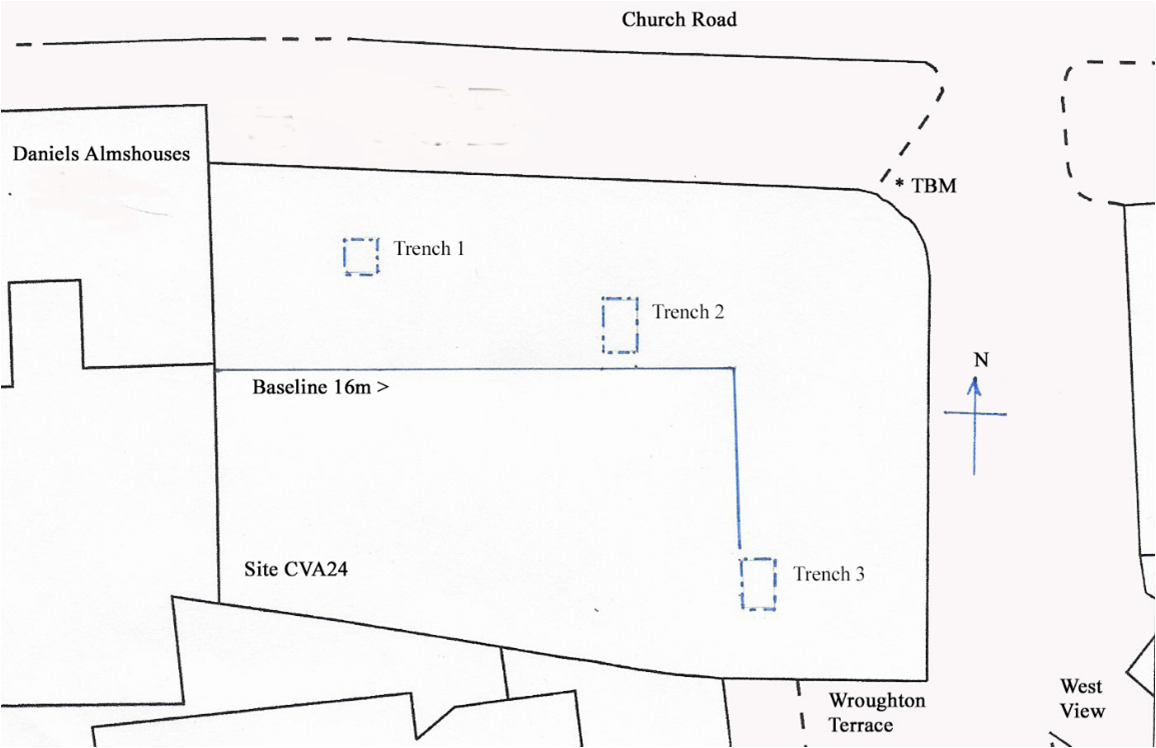
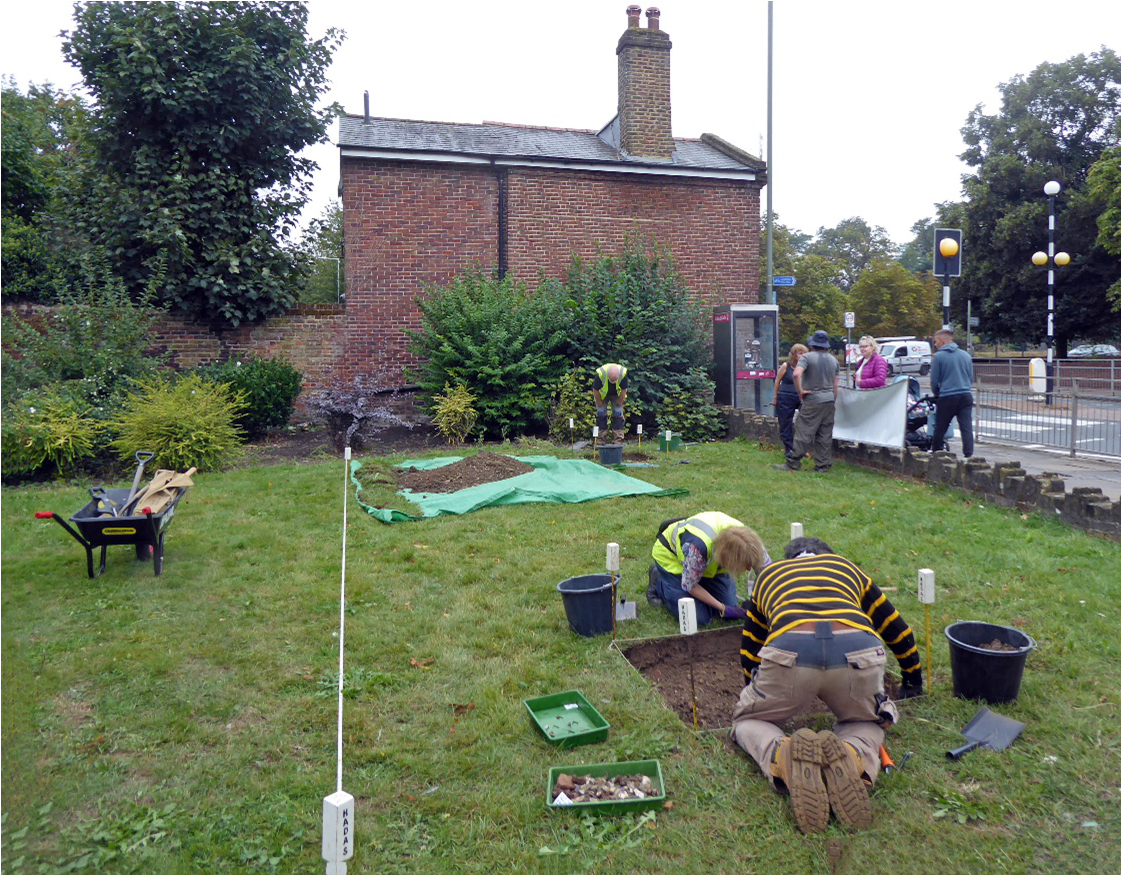
The trench layout plan and position of the temporary bench mark (TBM) at 83.79 OD
The site looking west showing the east end of the almshouses, the baseline tape, trenches 2 and 1. HADAS
members are engaging with the public. For further site photos please see the December 2024 newsletter.

Further instalments will include the finds and phasing of the site.

5

Community Excavations at Cranford Park – Talk in May by Les Capon from AOC Archaeology
Sue Willetts

Les was a very engaging speaker and gave us a good overview of the work done on a a community /
Heritage Lottery Funded excavation at Cranford Park (just north-east of Heathrow Airport) and owned by
the London Borough of Hillingdon. In 2018 work began on evaluation trenches which led to further work
over 4 seasons involving a small group of volunteers, during the week, rising to over 50 at the weekends
included many returning each season until 2024 culminating with a Heritage Open Day Festival.

The volunteers – over 100 in total were not only digging but also photographing and recording with training / guidance from the professional team. It was so good to hear about the dedicated / enthusiastic volunteers and how they had connected with the history of their local area through this community project. An initial GPS survey produced was useful in planning the excavations which found that there had been occupation in the area since the Bronze Age right up to the 19th century. Les explained the post-hole evidence which indicated Romano British round houses and later Saxon houses. Later buildings showed medieval, Tudor and post-medieval remains with intact cellars.
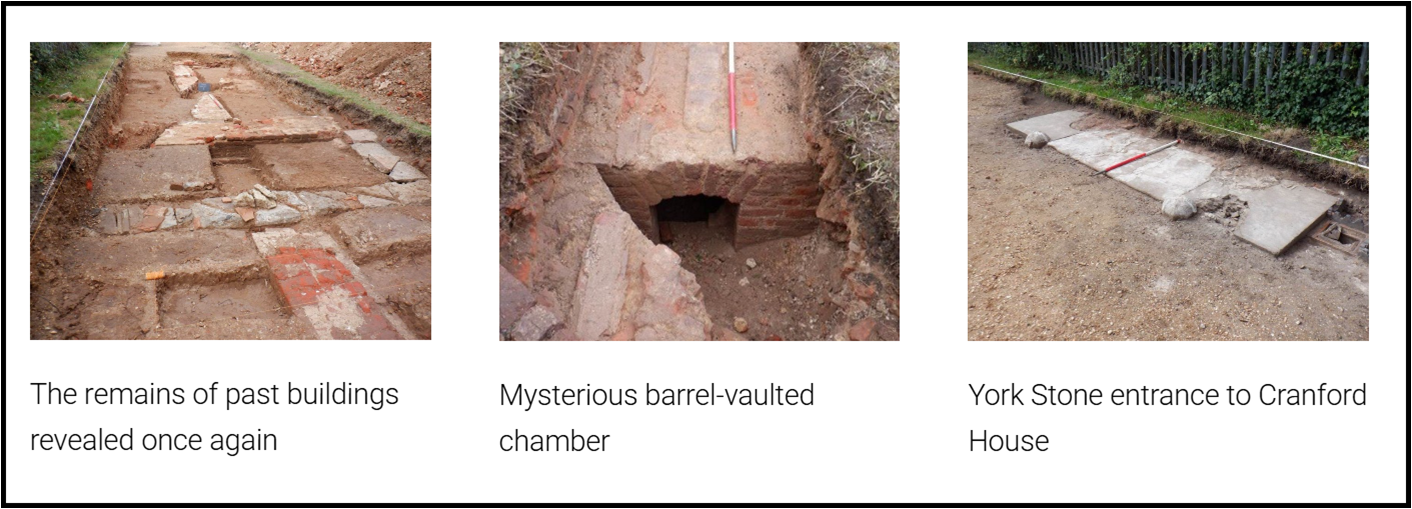
Photographs copyright AOC Archaeology

The history of Cranford Park is bound up with the the Berkeley family who owned it for over 300 years,
starting with Lady Elizabeth Berkeley, a cousin of Queen Elizabeth I. Successive generations expanded and
upgraded the manor house and its gardens, but in time the family moved away and much of the land was
sold off for house building.

Excavations found that there was a later phase of Tudor walls belonging to the original manor house found towards the southern half of the excavation area. This had an associated demolition layer which included glass and lead strips from windows, green glazed floor tiles, roof tiles, and shaped bricks from windows – all indicative of a Tudor date. Beneath the demolition debris, the latest 19th century phases of Cranford House were revealed. This included projecting bays, the main threshold to the house, a gravel pathway and flowerbed edgings.

A large park remains with a surviving 18th century stable block will be restored with a new cafe and
playground. The underground cellars will also be restored and converted into space for community events. Test pits revealed the tops of the cellars, and an additional barrel-vaulted chamber which has no visible entrance from within the existing cellars themselves which is intriguing. AOC and Les Capon are proud to have been a part of this project which will have an important impact on the local community.
For anyone who missed this talk, there is a version of it with slides recorded by LAMAS and available on
YouTube:
https://www.youtube.com/watch?v=tg0R67bADG0.

For this summary, I have used some information from AOC’s website, https://www.aocarchaeology.com/news/community-excavations-at-cranford-park.

6

Mini ice age ‘had pivotal role in fall of the Roman Empire’ Stewart Wild

A “Little Ice Age’ in the sixth century was so intense that it may have been the “primary driver” in the fall
of the Roman Empire, scientists believe.

Between 536AD and 547AD, three massive volcanic eruptions blocked out the sun and ushered in a rapid
period of cooling that saw average temperatures fall by several degrees. Researchers at the University of
Southampton have found that the mini Ice Age was so intense that it moved rocks from Greenland to
Iceland.

The scientists found smooth rounded rocks known as “cobbles” on the beaches of Iceland’s west coast which must have been carried on icebergs from Greenland. It suggests that the cooling event sparked changes even more widespread and severe than previously thought, causing major climate upheavals in the northern hemisphere that probably played a pivotal role in the collapse of the Roman Empire.
“When it comes to the fall of the Roman Empire, this climate shift may have been the straw that broke the
camel’s back,” said Prof Tom Gernon, co-author of the research and an earth science professor at the
University of Southampton.

“The Roman Empire was likely already in decline when the Little Ice Age began. However our findings
support the idea that climate change in the northern hemisphere was more severe than previously thought. Indeed it may have been a primary driver of major societal change, rather than just one of several contributing factors.”

The period of cooling lasted around 200 to 300 years and is known to have coincided with a period of
widespread social unrest across Europe and Asia with crop failures.

The findings are published in the journal Geology.

SOURCE: Daily Telegraph, 9 April 2025.

Viking treasures found in cauliflower field Stewart Wild

A Viking hoard of gold objects was found in a corner of a ploughed field of cauliflowers by a metal
detectorist. Maurice Thomas discovered the fourteen objects between February and April 2020 in the
Penrith area of Cornwall, an inquest in Truro has heard.

Assistant coroner for Cornwall Guy Davies said that the objects were probably from the Viking period. Mr
Davies added that not all the objects could be dated but may have come from between the mid- to late
Bronze Age between 1300 and 1000BC.

Both the finder and landowner will receive rewards as all treasure found in Cornwall belongs to the Duchy
of Cornwall.

SOURCE: Daily Telegraph, 13 April 2025.

7

The Highgate Wood Kiln’s Site Melvyn Dresner

Nick Peacey MBE, secretary of Friends of Highgate Roman Kiln gave the 11th February 2025 lecture on Highgate Kiln. The article in November2024 issue of the HADAS newsletter (NL No.644) gave the story of the kiln. The slogan is firing London’s imagination, with ambition to inspire people of all ages to explore, engage with and enjoy every aspect of the kiln’s story.

Highgate Wood’s Roman pottery site is hugely significant. It is a rare Roman pottery factory from Greater
London. It’s also an important part of Highgate Wood’s history and that of the Borough of Haringey,
particularly as little other evidence for Haringey during the Roman Period has so far been found. The kiln
was discovered by archaeologists Tony Brown and Harvey Sheldon in 1967 after a following up on dense
scatter of Roman pottery.

Nick explain how he was first associated with experimental archaeology in Highgate Wood since building
and firing reconstructions of Roman kilns there as a young teacher. The first experimental kiln was set up in 1971, six kilns were built up to 1973. Bruce Castle Museum initiated the Haringey Potter in 2010 part of the 2012 London Cultural Olympiad where Kiln 2 was kept. On 27th August 2024 the Roman kiln was returned to Highgate Wood, and can visited almost every day of the year, with plans to improve the visitor in 2025 and 2026.

News story: https://youtu.be/N-TlsMigoCA?si=sqpeNpPrfjQcEi4N.
Film made of the original firing in the 1970s: https://youtu.be/pff4AS3b_WE?si=wtti9nG6Nih9AaMh.

Nick read classics at Oxford University. Most of Nick’s professional life has been spent on national and
international work in the field of special educational needs and disability (SEND). He is a Fellow of the
UCL institute of Education Centre for Educational Inclusion.
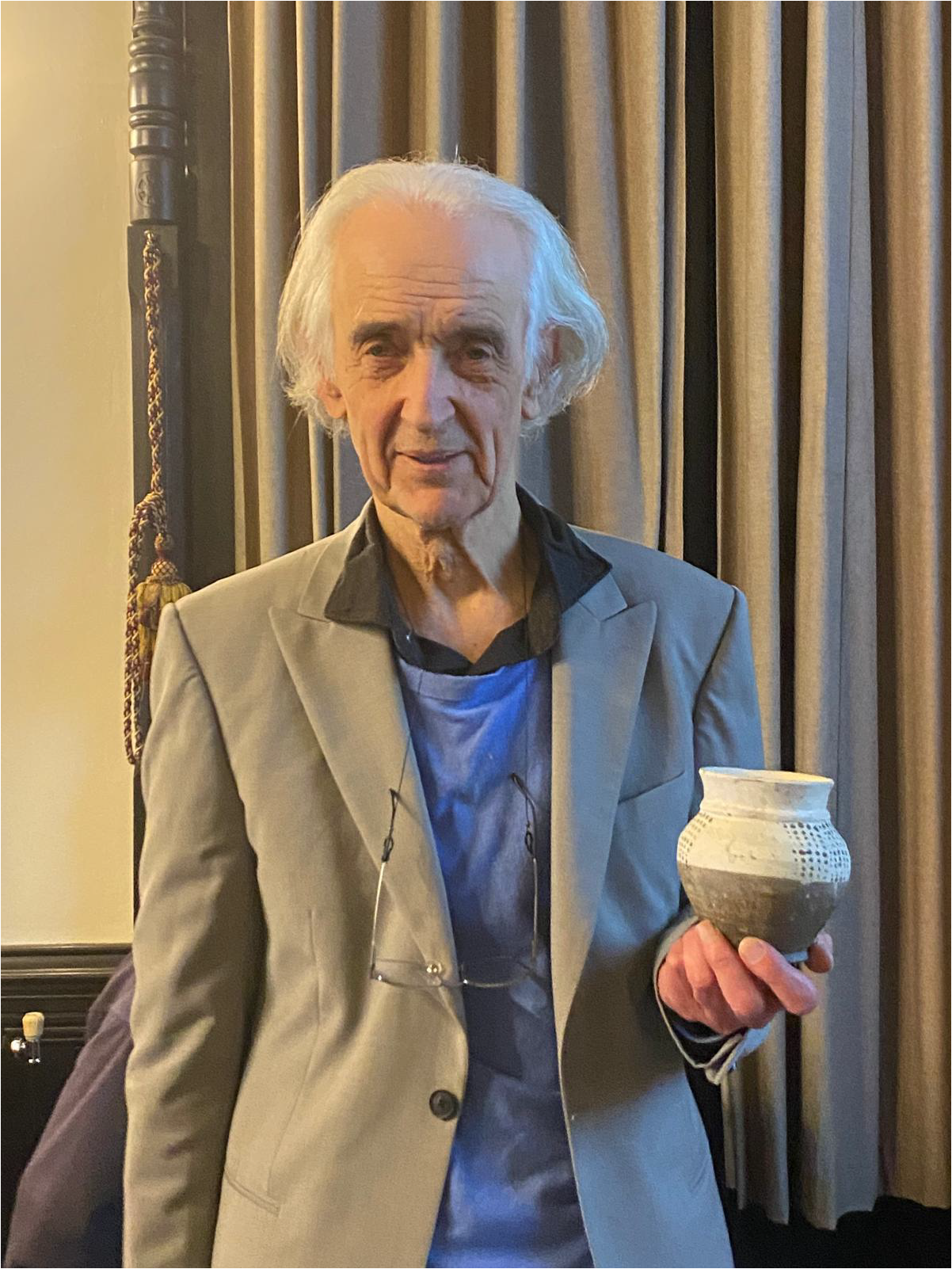
8

HADAS as we have for a few years, had a stall at the Barnet Medieval Festival, 7th and 8th
June 2025
. There were volunteers from HADAS including Sandra Claggett, Bill Bass, Andy Simpson and Eric Morgan.Here are some photos from the day:

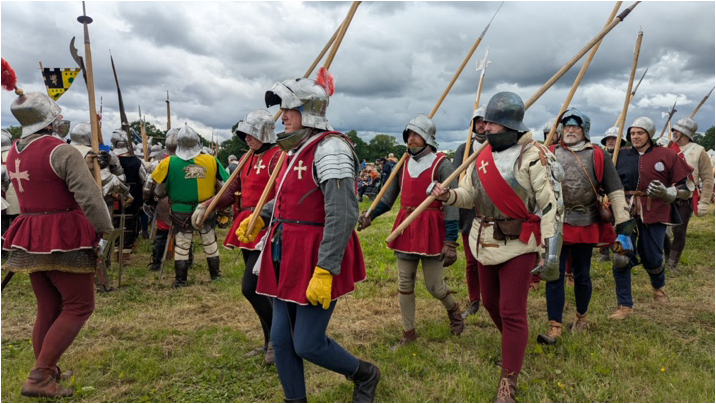
HADAS banner
Re-enactors on foot
Don engaging the public at the HADAS stall
HADAS member, Rodney Burt, showing me how to draw a bow
HADAS stall
Re-enactor on horseback
Re-enactors after battle

Newsletter contributions welcome
In order to keep our monthly newsletter going, we welcome contributions. Please help us by sending us an article, or perhaps just a paragraph or two about something relevant you have found of interest. You can even just send us a comment about one of the previous articles – all contributions gratefully received!

Please send contributions to the next editor, details at the end of this newsletter. Thank you!

9

Fancy a coach break?
HADAS committee has been researching ideas for a 4- or 5-day coach break in the UK most likely not too
far from London for our first excursion after a few years break. As some of you will remember we did used
to have coach trips in the past and we are hopeful of starting this practice again this will depend on there
being enough interest from members. To see if there might be enough people to make this feasible an
expression of interest sheet was available to sign after our May lecture and will be available after our other lectures. We have some signatures already which is good. If you are not able to attend lectures and wish to express an interest please email chairman@hadas.org.uk.

At a further date we will be emailing those who have said that they are interested and have provided their
email details a suggested itinerary and price based on numbers attending. It is likely that the trip will be
early on next year.

OTHER SOCIETIES’ EVENTS

Other Organisations / Societies’ events Eric Morgan

As always please check with the societies’ websites before planning to attend since not all societies and
organisations have returned to pre-covid conditions.

Sunday 6th July – Sunday 20th July. Enfield Archaeological Society – Elsyng Palace Excavation in the grounds of Forty Hall, Forty Hill, Enfield. EN2 9HA. This 21st year will focus on revealing more of theInner Gatehouse of the Palace, following the previous excavation of its turret-flanked pedestrian entrance.To join the dig please contact research@enfarchsoc.org or visit www.enfarchsoc.org or email martin.dearne@talktalk.net and if you are not already a member, please join (cost £12) by 20th June 2025. On Saturday 12th July 11 am. – 4 pm. there is a public Open Day.

Tuesday 8th July, 8 pm. Amateur Geological Society. Finchley Baptist Church Hall, 6 East EndRoad/corner Stanhope Avenue, London. N3 3LX (almost opposite Stephens’ (Avenue) House) –The Evolution Garden –uncovering a history of plants. Talk by Dr Paul Kenrick (Natural History Museum) who re-opened its gardens in South Kensington and has created an accessible and free green space. A keyfeature of the re-design is the New Evolution Garden – an immersive journey through 2-7 billion years of Earth’s history told through plants, geological features and representations of animals. Full details on www.amgeosoc.wordpress.com.

Monday 14th July, 3 pm. Barnet Museum and Local History Society. St. John the Baptist Church,Chipping Barnet, corner High Street/Wood Street, Barnet. EN5 4BW. The talk shown in the June Newsletter has been changed to The East End at War – Blitzed, Battered but Never Beaten by John Lynch. Please visit www.barnetmuseum.co.uk for further details. Refreshments to be available afterwards.

Wednesday 16th July, 2 pm. Heath and Hampstead Society. Guided walk of Hampstead’s Historic Plaques. Led by Carol Seigel. Meeting outside Hampstead Underground station and finishing at Burgh House approximately an hour and a half later. Cost is £10 paid at the start. To reserve a place please email events@heathandhampstead.org.uk.

Wednesday 16th July, 7.30 pm. Camden History Society. St. Mary’s Church, Elsworthy Road, Primrose Hill, London. NW3 3DJ. (The corner near King Henry’s Road). Streets of Primrose Hill and Regents Park. Book launch and talk by members of the research team, preceded by A.G.M. 7 pm. Please visit www.camdenhistory.org for further details.

Thursday 17th July, 11 am. Amateur Geological Society. Guided walk of The Natural History Museum’s ‘Evolution Garden’ led by Mike Howgate (A.G.S. Chair, meet at South Kensington tube, to reserve a place please email

10

mikeeh1086@hotmail.com. Also visit https://amgeosoc.wordpress.com for further details. This is a follow up to the talk on Tuesday 8th July shown in the June Newsletter.

Friday 18th July, 7 pm. C.O.L.A.S. St. Olave’s Church, Hart Street, London. EC3R 7NB. Talks also on Zoom. Members’ Night. Short Talks by C.O.L.A.S. members. Please book via Eventbrite. Visit www.colas.org.uk. HADAS may send out link details to its members.

Also on Friday 20th June, 7 pm. Across the pre-historic landscape of West London. Talk by Dr. SteveFord (Thames Valley Archaeological Services). Also on zoom (details as above).

Friday 18th July, 7.30 pm. Wembley History Society. St. Andrew’s Church Hall (behind St. Andrew’s New Church) Church Lane, Kingsbury, London. NW9 8RZ. Kingsbury – how it all began – Farms, Bridges and Churches. Talk by Councillor Ketan Sheth on following the development of the community of Kingsbury. Visitors request to pay £3. Refreshments to be available in the interval.

Monday 21st July, 7.30 pm. Enfield Society. Jubilee Hall, 2 Parsonage Lane/Junction Chase Side, Enfield, EN2 0AJ. Charles Lamb and Thomas Hood. Talk by Sara Lodge about their friendship, their similarities and differences and how the qualities of their writing blinded critics to the pointed political nature of their works. Please visit www.enfield.society.org.uk. Non-members charge £1 at the door.

Sunday 3rd August, London Canal Museum. 12-13 New Wharf Road, Kings Cross, London. N1 9RT.Ice Heritage Sunday. Celebrates all things ice and the history of the building, part of the Festival of Archaeology, including boat trips and Victorian ice cream making demonstrations and a chance to descend into the historic underground ice well. Please visit www.canalmuseum.org.uk. Normal charges.

Tuesday 5th August, 2 pm. Mill Hill Historical Society. History walk along the Ridgeway, Mill Hill. Led by Dr. Michael Worms (Society member) lasts 1.5 to 2 hours. Meet at the Old Forge (Junction of Holders Hill, Flower Lane and the Ridgeway. Finish near Mill Hill East. Book by Friday, 1st August. Contact Julia Haynes, 38 Marion Road, London. NW7 4AN. Phone 07803 892496. e-mail outings-mhhs@gmail.com quoting your name, phone number then e-mail and number of members and guests. Please visit www.millhill-hs.org.uk for further details.

Tuesday 5th August, 11 am. Enfield Society. Jubilee Hall (address as for Monday 21st July) Thompson and Bywater – Edwardian Justice on Trial. Talk by Doreen Taylor, about a Judge’s bias assumptions and a woman destroyed for morals and word crimes.

Wednesday 6th August, 8 pm. Orpington and District Archaeological Society. Talk on Zoom. Bartmann goes Global. When German Stoneware travelled around the known world in the C16th and C17th by Jacqui Pearce (HADAS President). This is a follow-up talk to the one she gave after our A.G.M. Details on website www.odas.org.uk on 16/7.

Tuesday 12th August, 8 pm. Amateur Geological Society. Finchley Baptist Church Hall, 6 East End Road, Corner Stanhope Avenue, London. N3 3LX. (Almost opposite Avenue House). A Conversazione Style Members Evening with the theme of Chalk Sea Ecosystems. Talks by Society members. Full details on www.amgeosoc.wordpress.com.

Thanks to our contributors this month: Eric Morgan, Stewart Wild, Bill Bass, Sue Willetts, Janet Mortimer, Roger Chapman and me.

11

Hendon and District Archaeological Society

Chair   Sandra Claggett, c/o Avenue House, 17 East End Road, Finchley N3 3QE
email : chairman@hadas.org.uk

Hon. Secretary   Janet Mortimer 34 Cloister Road, Childs Hill, London NW2 2NP
(07449 978121), email: secretary@hadas.org.uk

Hon. Treasurer  Roger Chapman, 50 Summerlee Ave, London N2 9QP (07855 304488),
email: treasurer@hadas.org.uk

Membership Sec.  Jim Nelhams, 61 Potters Road, Barnet EN5 5HS (020 8449 7076)
email: membership@hadas.org.uk

Website:          www.hadas.org.uk

12
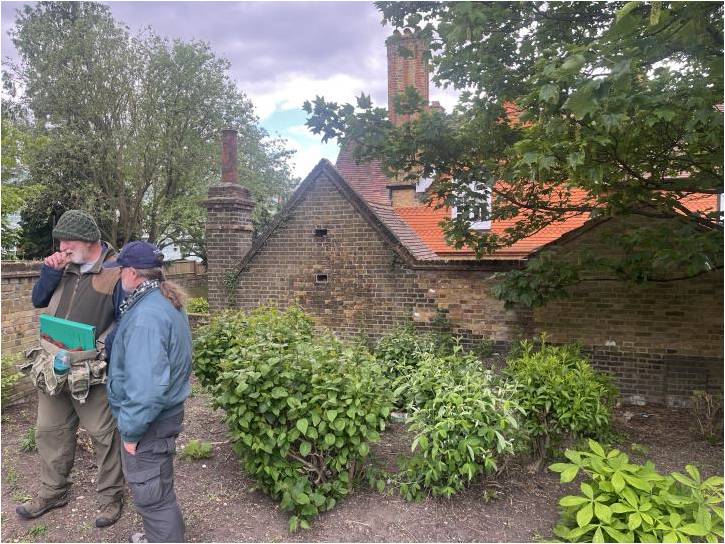
Newsletter 651 – June 2025

By | HADAS, Latest Newsletter, News, Past Newsletters, Volume 12 : 2025-2029 | No Comments

No. 651 June 2025 Edited by Melvyn Dresner

HADAS DIARY – Forthcoming Lectures and Events

Weekend of 7th to 8th June 2025: It’s back! Barnet Medieval Festival at Lewis of London Ice Cream Farm, Galley Lane, Barnet, Herts EN5 4RA Note new venue – not Barnet Rugby club as before due to redevelopment. Barnet Medieval Festival – Reenactment of the Battle of Barnet 1471

Tuesday 10 June 2025 at 7.30 pm: Annual General Meeting to be followed by a lecture by our president, Jacqui Pearce, A web of influences – imported ceramics in London 1000-1700.

Throughout the medieval and early post-medieval period, pottery from countries outside Britain was entering the country alongside other imports. Many different wares had a deep impact on local potters, influencing their styles of decoration, and even their technology. We will be looking at a wide range of pottery, from many centres in Europe, particularly France, the Low Countries, Germany, Italy and Spain, as well as the significant and long-lasting impact of wares from the Far East. London was a particularly rich source of inspiration as a major hub for imported goods and this is reflected in the wide range of pottery recovered in archaeological excavations.

Lectures held in the Drawing Room, Avenue House, 17 East End Road, Finchley N3 3QE. 7.45 for 8pm.

Buses 13, 125, 143, 326, 382, and 460 pass close by, and it is a five-ten-minute walk from Finchley Central Station on the Barnet Branch of the Northern Line where the Super Loop SL10 express bus from North Finchley to Harrow also stops.

Tea/Coffee/biscuits available for purchase after each talk.

Dear HADAS members.

Newsletter contributions welcome.

In order to keep our monthly newsletter going, we welcome contributions. Please help us by sending us an article, or perhaps just a paragraph or two about something relevant you have found of interest. You can even just send us a comment about one of the previous articles – all contributions gratefully received!

Please send contributions to the next editor, details at the end of the distributed version of this newsletter. Thank you!

Fancy a coach break?

The HADAS committee has been researching ideas for a 4- or 5-day coach break in the UK most likely not too far from London for our first excursion after a few years break. As some of you will remember we did used to have coach trips in the past and we are hopeful of starting this practice again this will depend on there being enough interest from members. To see if there might be enough people to make this feasible an expression of interest sheet was available to sign after our May lecture and will be available after our other lectures. We have some signatures already which is good. If you are not able to attend lectures and wish to express an interest please email chairman@hadas.org.uk.

1

At a further date we will be emailing those who have said that they are interested and have provided their email details a suggested itinerary and price based on numbers attending. It is likely that the trip will not be before late this year but more likely next year.

Next HADAS dig: 31st of July – 4th August 2025: Vine Cottage, Greyhound Hill, Hendon NW4

Initial survey work undertaken and preparation work under way. If you like to get involved contact Roger Chapman treasurer@hadas.org.uk Photos courtesy of Andy Simpson.

Photo 1, above left, Bill Bass and Roger Chapman sorting out datum points for Bennet’s School (previous dig on nearby site on Church Road next to almshouses) and Vine Cottage, and baselines for the Vine Cottage site, based on the Ordinance Datum point sited low down on the church tower (St Mary’s Church, Hendon).

Photo 2, above right, Roger, Don, Kate and Bill looking at base of the church tower to identify location of the OD.

College Farm – an update Peter Pickering

HADAS has always been interested in College Farm – that refreshing piece of green land on the left as you come north on Regent’s Park Road from Henly’s Corner. Our Secretary, Brigid Grafton Green, wrote a booklet ‘Milk for the Millions’ about it in 1983; and for many years we stored some of our material there. In the last century it was a lively farm, with open days that were very popular with families. Since the foot and mouth disease outbreak, however ,it has been hard of access, and there has been real concern about the listed farm buildings as well as the open land. All is now changing. The Charity Commission intervened to completely replace the Trust that owned the farm, and the new Trust, one of whose members is the Chairman of the Finchley Society, Mick Crick, will be

2

working on plans to make the farm once more an active community asset. With backing from a wealthy philanthropist there is every likelihood of success.

Crosby Blitz Beach Jane Mortimer

Just outside Liverpool lies Crosby Beach where you can see Anthony Gormley’s famous art installation, Another Place, comprising 100 life size iron men. However less well known is another beach a short distance from here which is made up of the rubble of war time Liverpool.

Liverpool was one of the most heavily bombed cities in World War Two and much of the city lay in ruins afterwards. Some of the rubble was shipped out for use as ballast but a huge amount was unceremoniously dumped on this nearby beach. With the cash strapped city having to rebuild, there was no money to clear the rubble and it was left and largely forgotten. Over the last 80 years the Irish Sea has pounded and rounded the bricks, glass, stone blocks and marble and it is now an imposing and strangely magnificent sight. It is also a sobering monument to the 4,000 who were killed in the Liverpool blitz and the 70,000 who were made homeless.

3

Caral-Supe Civilization of Peru David Willoughby

Flourishing around 3000 BCE there was a civilization so advanced that it developed earthquake-resistant architecture millennia before modern engineering. The Caral-Supe civilization of Peru, achieved just that with an ingenious technique known as “Shicras.” These were woven baskets made from vegetable fibres, filled with stones, and strategically placed within building foundations. This method effectively absorbed seismic energy, allowing structures to withstand earthquakes—a testament to their sophisticated understanding of construction and environmental challenges.
The Shicra technique involved crafting baskets from local plant fibres, such as reeds, and filling them with stones. These were then integrated into the foundations of buildings, particularly in ceremonial temples and pyramids. The flexibility of the fibre and the mass of the stones worked together to dissipate seismic energy, reducing the risk of structural collapse during earthquakes.

4

Archaeological excavations at Caral and other sites like Pisquillo have revealed the extensive use of Shicras in ancient construction. Structures employing this technique have remained intact for over 5,000 years, enduring numerous seismic events. This durability underscores the effectiveness of the Shicra system and highlights the Caral-Supe civilization’s innovative approach to building in a seismically active region.

The legacy of Shicras extends beyond ancient Peru. Modern engineering employs similar principles in the form of gabions—wire mesh containers filled with stones used for erosion control and as foundations in construction. These contemporary applications echo the ancient wisdom of the Caral-Supe people, demonstrating the enduring relevance of their techniques.

The Caral-Supe civilization’s use of Shicras exemplifies a harmonious blend of innovation, sustainability, and resilience. Their methods offer valuable insights for modern engineering, particularly in developing earthquake-resistant structures that are both effective and environmentally conscious. As we face increasing seismic risks worldwide, revisiting and adapting such ancient technologies could inform and enhance our contemporary building practices.

Was the Late Bronze Age eruption at Santorini responsible for the demise of Minoan society? David Willoughby

The demise of Minoan society refers to the period after the end of the LM IB phase, ca. 1450 BCE when frequent interaction between Crete and the Aegean ended. This two-hundred year period is marked by the transition of Crete and other islands to a Mycenaean material culture (Shelmerdine, 2008).

In LM IA (ca 1700 – ca 1600 BCE) the Minoan culture was at the peak of its achievement with high art being much in evidence (Driessen & Macdonald, 1997). They had developed a writing system, Linear A that they used to manage an efficient bureaucracy. Also architectural accomplishment reached a high point with magnificent palaces being built at Knossos and elsewhere (Shelmerdine, 2008). Minoan influence could be seen all over the Aegean with evidence of their material culture being found in the Cyclades (e.g. Ayia Irini on Keos), the coast of Anatolia (e.g. Miletos) and on the Greek mainland (e.g. in the Grave circles at Mycenae). Islands like Thera and Kythera show such a degree

5

degree of Minoanization that they may have been colonized by the Minoans (Shelmerdine, 2008). Linear A was not confined to Crete with examples of this writing having been discovered in Samothrace, Thera and in Miletos (Callender). The occurrence of Minoan high prestige items in Egypt, the Cyclades and Mycenaean Greece, and the presence of Minoan style frescos on Thera, Melos and at Near Eastern sites such as Tell el-Dab’a in Egypt point to the possibility of Minoan craftsmen working abroad (Bietak, 2008). It appears that the Minoans had extensive trade routes and dominated the Aegean region during this period. At this time Mycenaean material culture traces outside of mainland Greece were slight (Callender).

At the end of LM IB Crete shows wide-spread destruction and abandonment throughout the island. Remains were burned indicating human involvement and evidence of brush wood to start at least some the fires has been found (Driessen J. , 2019). It would appear that many sites were prepared as in many cases valuables were removed or hoarded and efforts were made to protect livestock and water supplies. During destruction, prestigious artworks were deliberately destroyed. The destruction occurred in phases over a period of time and was selective. Most of the palaces were destroyed but Knossos and Aghia Triada were spared and reused. The port of Kommos was also reused. At Knossos however the town was destroyed and at certain sites such as Myrtos-Pyrgos, only the central buildings were burnt down, with the surrounding houses escaping destruction. (Driessen J. , 2019). Following these destructions the palace at Knossos was occupied by a culturally Mycenaean elite. It is unclear as to whether this elite was the cause of the destruction or whether this was an opportunistic takeover following a period of internal turmoil (Shelmerdine, 2008).

After the widespread destructions of the palaces at the end of LM IB significant cultural changes took place over the next two hundred years on Crete and by LM IIIB the traditional Minoan cemeteries had been abandoned and the elite were buried in Mycenaean style Tholos and chamber tombs. Warrior burials also occurred around Chania.

By the LM IIIB Minoan Linear A had been replaced by Linear B at Knossos. The administration was characteristically Mycenaean with Greek being used as the administrative language (Driessen & Macdonald, 1997). Linear B had been adapted from Linear A to record a language to which it was not really suited (Preziosi & Hitchcock, 1999) implying a switch from a Minoan language. There was also a significant change to the economy with sheep, textiles, oil and weapons being the main industries. Wealth overall increased and the elite became very affluent. This was mainly because of the gearing up of the economy for overseas trade (Shelmerdine, 2008) but the health of the general population had deteriorated (Callender).

By the LM IIIB Minoan commerce in the Aegean had become negligible whereas Mycenaean pottery was to be found throughout the Aegean and Mycenaean exports from Crete and elsewhere had increased significantly (Callender).

It has long been known that the Santorini volcano erupted in the Late Bronze Age completely burying the Minoanised settlements on the island of Thera in several metres of volcanic debris. As early as 1939 it was claimed that this eruption was responsible for the downfall of the Minoan civilisation on Crete, some 110 kilometres south of Thera.

The scale of the eruption has recently been reassessed as being one of the largest volcanic eruptions in history being on the same order of magnitude as the Tambora eruption of 1815 (Callender). The deposits produced by the volcano include 2km3 of Plinian ash from the main eruption column, 17km3 of ash associated with pyroclastic flows and 41km3 of underwater pyroclastic flows (Sigurdsson, et al., 2006). Archaeological excavations at Akrotiri on Thera indicate that the eruption was preceded by major seismic activity.

6

Fallout of ash from the eruption was extensive with a deep deposits have been found as far as Trianda in Rhodes, elsewhere in the Dodecanese and even in Miletos (Shelmerdine, 2008). In Eastern Crete some 5 cms of volcanic ash has been found and acidity from it might have affected agriculture for years (Callender). However, these ash deposits were not believed to have been responsible for the collapse of the Minoan civilization (Dunn).

The eruption of the Thera volcano would have pushed small particles and gases high up into the atmosphere and it has been suggested that this could have lowered annual average temperatures by one to two degrees across the world and resulting in cold, wet summers that caused crop failures over several years (Cecil, 2011). Such an effect was recorded in the aftermath of the 1815 Tambora eruption (Editors of the Encyclopedia Britannica).

Recent discoveries in Palaikastro in Crete found evidence of sea microorganisms and species usually found on the seabed, well away from the coast. Also found were deposits of smashed or powdered pottery and stone and deposits of volcanic ash. Similar discoveries were also made at Amnissos near Knossos. Radio carbon dating indicated that these deposits were associated with the Thera eruption. Analysis of these discoveries concluded that Crete was hit by successive tsunamis with waves 50 feet high destroying crops, salting fields and devastating ports and other infrastructure near the coast. Any ship in harbour would have been destroyed. This destruction would have affected primarily the northern and eastern coast of Crete. Settlements in the central and on the south and west coasts would have remained relatively unscathed (Dunn).

The date of the Thera eruption has long been a matter of conjecture with radio carbon dating from a buried olive branch on Thera producing a date of 1650-1600 BCE with archaeological evidence suggesting dates of between mid 16th C to early 15th C BCE. Recent work to reconcile these dates using bristle cone pine dendrochronology dating has produced a likely date range of 1600 to 1525 BCE with a significant event in 1560 BCE (Pearson, et al., 2018).

Taking a the likely date of 1560 BCE, this would put the eruption in the at the start of the LM IB phase some 70 years before the demise of the Minoan civilization at the end of LM IB around 1490 BCE.

7

After the eruption the Minoan ports and infrastructure destroyed by the tsunamis were never rebuilt (Dunn). Also there appears to have been an exodus of population from the eastern regions of Crete and Galatas palace was abandoned. No new palaces were built and repairs to existing ones appear shoddy. Many houses and the palaces increased their food and water storage facilities implying possible food shortages and water contamination. There appears to have been a reduction in olive oil production (Callender). The Minoans may have sought food supplies from Egypt or from the Mycenaeans (Driessen & Macdonald, 1997).

In the LM IB phase contact between Crete and the Aegean continued, implying the loss of Thera as a hub was not an insurmountable impediment to trade (Shelmerdine, 2008). However, much of the LM IB pottery was exported to mainland Greece (Callender). There appears to have been substantial contact with Egypt with most Egyptian objects found in Crete dating to LM IB. Also there are references to Keftiu (Cretans) in Egyptian texts (Shelmerdine, 2008).

The eruption may have affected Minoan beliefs. Afterwards many peak sanctuaries were abandoned with the focus of worship shifting to caves (Callender). At a number of sites like Palaikastro stone horns of consecration were discarded and used as a building material. Also Theran pumice appears to have been carefully collected and stored (Shelmerdine, 2008) and has been found as an offering in a cup in a well at Kato Zakros (Preziosi & Hitchcock, 1999).

Dating suggests that the Theran volcanic eruption did not immediately result in the demise of Minoan civilization but it may have changed it in such a way to set it on that path. Perhaps the population started questioning their belief system and eventually overthrew the priestly establishment at the palaces (Cecil, 2011) or perhaps society broke down as a result of the apparent movement of wealth towards the elite at the expense of a population weakened by famine and other effects of the eruption (Brogan & Hallager, 2011). Minoan trading patterns may have changed due to the destruction of the ports in Northern and Western Crete allowing Mycenaeans to fill a vacuum in the Aegean.

Perhaps the use of the word ‘transition’ rather than ‘demise’ is more appropriate. Crete under the new administration was prosperous. Although culturally Mycenaean there is no clear evidence that it was not dominated by ethnic Minoans. After the collapse of this administration in LM IIIA2a and by LM IIIC, burial ritual in some parts of Crete showed a renewed link with Minoan tradition with burials in caves and older buildings and with more typically Minoan burial offerings (Perna, 2003), Minoan cult practices involving offering benches and representations of goddesses with uplifted arms continued at Gournia, Gazi and Kavousi (Preziosi & Hitchcock, 1999). The practice of dedicating bronze votive figurines and other items at sacred caves continued into the classical period (Preziosi & Hitchcock, 1999). Also presumed Minoan language (eteocretan) inscriptions in the Greek alphabet have been found dating as late as the 3rd C BCE (Eteocretan Language, 2019).

Bibliography

Bietak, M. (2008). Minoan Artists at the Court of Avaris. In J. Aruz, K. Benzel, & E. J.M, Beyond Babylon: art, trade, and diplomacy in the second millennium B.C. New York Metropolitan Museum of Ar: Yale University Press.

Brogan, T., & Hallager, E. (2011). LM IB Pottery Relative Chronology and Regional Differences. Monographs of the Danish Institute of Athens Volume 11, 1.

8

Callender, G. (n.d.). The Collapse of the Minoan Social System. Retrieved 2020, from Academia: https://www.academia.edu/34451175/Collapse_of_Minoan_Social_System.

Cecil, J. (2011, 02 17). The Fall of the Minoan Civilization. Retrieved from The Great Ancient Greek Temples: https://sites.google.com/site/thegreatancientgreektemples/the-minoan-civilization—the-fall-of.

Driessen, J. (2019). The Santorini eruption. An archaeological investigation of its distal impacts on Minoan Crete. Quaternary International 499 , 195-204.

Driessen, J., & Macdonald, C. (1997). The Troubled Island, Minoan Crete before and after the Santorini eruption. Aegium 17 (Vol. Aegeum 17). Liege: Liege University.

Dunn, S. (n.d.). The Destruction of the Minoan Civilization. Retrieved from www.explorecrete.com: http://www.explorecrete.com/archaeology/minoan-civilization-destruction.html.

Editors of the Encyclopedia Britannica. (n.d.). Mount Tambora. Retrieved from www.britannica.com: https://www.britannica.com/place/Mount-Tambora.

Eteocretan Language. (2019). Retrieved from en.wikipedia.org: https://en.wikipedia.org/wiki/Eteocretan_language.

McGillivray, S. (n.d.). The Destruction of the Minoan Civilization. Retrieved from www.explorecrete.com: http://www.explorecrete.com/archaeology/minoan-civilization-destruction.html.

Pearson, C., Brewer, P., Brown, D., Heaton, T., Hodgins, G., Jull, A. T., et al. (2018, Aug 15). Annual radiocarbon record indicates 16th century BCE date for the Thera eruption. Science Advances Vol. 4, no. 8.

Perna, K. (2003). Between Mycenaean Culture and Minoan Tradition: Social Dynamic in Crete at the End of the Bronze Age. Mediterranean Archaeology and Archaeometry, Vol 3, No 2 , pp. 7-34.

Preziosi, D., & Hitchcock, L. A. (1999). Aegean Art and Architecture. Oxford University Press.

Shelmerdine, C. W. (2008). The Aegean Bronze Age. New York: Cambridge University Press.

Sigurdsson, H., Carey, S., Alexandri, M., Vougioukalakis, G., Croff, K., Roman, C., et al. (2006). Marine investigations of Greece’s Santorini volcanic field. Transactions American Geophysical Union 87 (24), pp. 337-342.

OTHER SOCIETIES’ EVENTS

Other Organisations / Societies’ events Eric Morgan

As always please check with the societies’ websites before planning to attend since not all societies and organisations have returned to pre-covid conditions.

Saturday 7th June, 12-5 pm. Highgate Festival, Pond Square and South Grove, Highgate Village, London. N6 5BS. Lots of stalls including Highgate Society and Highgate Literary and Scientific Institute. Also craft, books and clothes, stalls and music stage. Free. Also Tower Tours of Church.

9

Monday 9th June, 3 pm. Barnet Museum and Local History Society. St. John the Baptist Church, Chipping Barnet, corner High Street/Wood Street, Barnet, EN5 4BW. Behind The Battle of Barnet Banners. Talk by Scott Harrison. For Further information please visit www.barnetmuseum.org.uk.

Friday 13th June, 7.30 pm. Enfield Archaeological Society. Jubilee Hall (Address as for Enfield Society – Tuesday 3rd June). Roman Egypt. Talk by Stefania Afarano (U.C.L). Please visit www.enfarchsoc.org.uk. for further details. Visitors charge £1.50. Refreshments, Sales and information to be available.

Friday 20th June, 7.30 pm. Wembley History Society. St. Andrew’s Church Hall, (behind St. Andrew’s new church), Church Lane, Kingsbury, London. NW9 8RZ. Frankenstein – Food, Fun, Family and more. Talk by Lester Hillman. Visitors charge £3. Refreshments to be available in the interval.

Sunday 22nd June 12 -6 pm. East Finchley Festival. Cherry Tree Wood, East Finchley, N2 9QH. (Entrance off High Road, opposite Tube Station). Lots of stalls including Finchley Society, Friends of Cherry Tree wood (Roger Chapman, HADAS), North London U3A. Also craft and food stalls and music stages.

Wednesday 25th June, 7.45 pm. Friern Barnet and District Local History Society. North Middlesex Golf club (address as for Wednesday 28th May). Transport for London. Talk by David Le Boff, Non-members charged £2.

Thursday 26th June, 7.30 pm. Finchley Society. Drawing Room, Avenue (Stephens) House. (Address as for Thursday 29th May). Annual General Meeting. For further details please visit www.finchleysociety.org.uk. Charge £2.

Friday 20th – Sunday 29th June. Hampstead Summer Festival including Friday 20th – Art Street canvases in Keats Grove, London, NW3 2RS for a month. Sunday 22nd Art Fair 12 – 5 pm. In Keats’ House Garden, 10 Keats Grove, London. NW3 2PR. Free entry. Please see www.hampsteadsummerfestival.org.uk.

10

Saturday 21st – Sunday 29th June. Proms at St. Jude’s Music and Literary Festival. Central Square, Hampstead Garden Suburb, London. NW11 7AH. Including Talks and Heritage Walks. For full details please visit www.promsatstjudes.org.uk. Tickets for guided walks must be booked in advance.

Saturday 5th and Sunday 6th July, 12 – 9 pm. East Barnet Festival. Oak Hill Park, Church Hill Road, East Barnet, EN4 8JP. Lots of stalls including craft and food stalls, a Bar, music stage, Classic cars show on the Sunday. Please visit www.eastbarnetfestival.co.uk for details.

Sunday 6th July, 12 -5 pm. Hampstead Summer Festival, Big Fair in Heath Street, Hampstead NW3 – (up from Hampstead underground station towards Whitestone Pond). Over 100 stalls of craft, food and drink. Music. Free. Please visit www.hampsteadsummerfestival.org.uk.

Sunday 6th July – Sunday 20th July. Enfield Archaeological Society – Elsyng Palace Excavation in the grounds of Forty Hall, Forty Hill, Enfield. EN2 9HA. This 21st year will focus on revealing more of the Inner Gatehouse of the Palace, following the previous excavation of its turret-flanked pedestrian entrance. To join the dig please contact research@enfarchsoc.org or visit www.enfarchsoc.org or email martin.dearne@talktalk.net and if you are not already a member, please join (cost £12) by 20th June 2025. On Saturday 12th July 11 am. – 4 pm. there is a public Open Day.

Tuesday 8th July, 8 pm. Amateur Geological Society. Finchley Baptist Church Hall, 6 East End Road/corner Stanhope Avenue, London. N3 3LX (almost opposite Stephens’ (Avenue) House) –The Evolution Garden –uncovering a history of plants. Talk by Dr Paul Kenrick (Natural History Museum) who re-opened its gardens in South Kensington and has created an accessible and free green space. A key feature of the re-design is the New Evolution Garden – an immersive journey through 2-7 billion years of Earth’s history told through plants, geological features and representations of animals. Full details on www.amgeosoc.wordpress.com.

Monday 14th July, 3 pm. Barnet Museum and Local History Society. St. John the Baptist Church, Chipping Barnet, corner High Street/Wood Street, Barnet. EN5 4BW. London Colney Airfield and the Royal Flying Corps. Talk by Guy Thomas. Please visit www.barnetmuseum.co.uk. for further details. Refreshments to be available afterwards.

Friday 18th July, 7 pm. C.O.L.A.S. St. Olave’s Church, Hart Street, London. EC3R 7NB. Talks also on Zoom. Members’ Night. Short Talks by C.O.L.A.S. members. Please book via Eventbrite. Visit www.colas.org.uk. HADAS may send out link details to its members.

Also on Friday 20th June, 7 pm. Across the pre-historic landscape of West London. Talk by Dr. Steve Ford (Thames Valley Archaeological Services). Also on zoom (details as above).

Friday 18th July, 7.30 pm. Wembley History Society. St. Andrew’s Church Hall (behind St. Andrew’s New church) Church Lane, Kingsbury, London. NW9 8RZ. Kingsbury – how it all began – Farms, Bridges and Churches. Talk by Councillor Ketan Sheth on following the development of the community of Kingsbury. Visitors request to pay £3. Refreshments to be available in the interval.

Thanks to our contributors this month: Eric Morgan, Janet Mortimer, Peter Pickering, Andy Simpson, and David Willoughby.

11

Hendon and District Archaeological Society

Chair   Sandra Claggett, c/o Avenue House, 17 East End Road, Finchley N3 3QE
email : chairman@hadas.org.uk

Hon. Secretary   Janet Mortimer 34 Cloister Road, Childs Hill, London NW2 2NP
(07449 978121), email: secretary@hadas.org.uk

Hon. Treasurer  Roger Chapman, 50 Summerlee Ave, London N2 9QP (07855 304488),
email: treasurer@hadas.org.uk

Membership Sec.  Jim Nelhams, 61 Potters Road, Barnet EN5 5HS (020 8449 7076)
email: membership@hadas.org.uk

Website:         www.hadas.org.uk

12
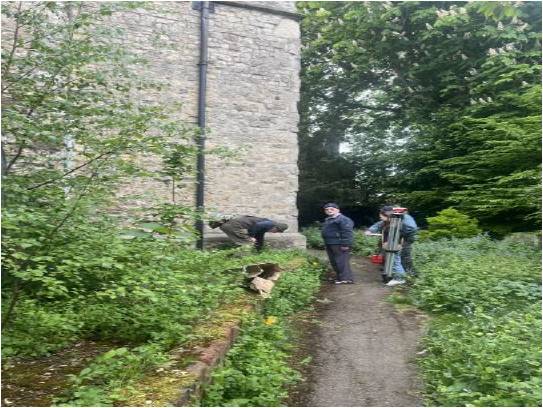
HADAS
Privacy Overview

This website uses cookies so that we can provide you with the best user experience possible. Cookie information is stored in your browser and performs functions such as recognising you when you return to our website and helping our team to understand which sections of the website you find most interesting and useful.